.png)
 2 days ago
16
Article content
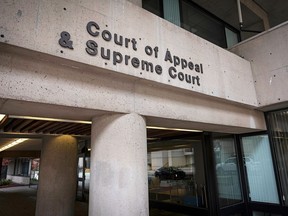
On October 9, 2026, the Supreme Court of Canada rendered a lengthy judgment in R. v. Cope, grappling with provisions in Canada’s Criminal Code that govern the sentencing of Aboriginal offenders, and how sentences should be imposed when the crime victim is Aboriginal.

THIS CONTENT IS RESERVED FOR SUBSCRIBERS
Enjoy the latest local, national and international news.
- Exclusive articles by Conrad Black, Barbara Kay and others. Plus, special edition NP Platformed and First Reading newsletters and virtual events.
- Unlimited online access to National Post.
- National Post ePaper, an electronic replica of the print edition to view on any device, share and comment on.
- Daily puzzles including the New York Times Crossword.
- Support local journalism.
SUBSCRIBE FOR MORE ARTICLES
Enjoy the latest local, national and international news.
- Exclusive articles by Conrad Black, Barbara Kay and others. Plus, special edition NP Platformed and First Reading newsletters and virtual events.
- Unlimited online access to National Post.
- National Post ePaper, an electronic replica of the print edition to view on any device, share and comment on.
- Daily puzzles including the New York Times Crossword.
- Support local journalism.
REGISTER / SIGN IN TO UNLOCK MORE ARTICLES
Create an account or sign in to continue with your reading experience.
- Access articles from across Canada with one account.
- Share your thoughts and join the conversation in the comments.
- Enjoy additional articles per month.
- Get email updates from your favourite authors.
THIS ARTICLE IS FREE TO READ REGISTER TO UNLOCK.
Create an account or sign in to continue with your reading experience.
- Access articles from across Canada with one account
- Share your thoughts and join the conversation in the comments
- Enjoy additional articles per month
- Get email updates from your favourite authors
Sign In or Create an Account
or
Article content
The tragic facts before the Court arose in Halifax in 2021, when Harry Cope brutally attacked Brittany Sack, his common law partner. A video recording documented a vicious, prolonged beating, during which Harry repeatedly punched and kicked Brittany. Found lying on the sidewalk, Brittany had a broken bone in her face, a possible break in her breastbone, pooling of blood under the skin of her breastbone and significant swelling of her eye.
Article content
Article content
Advertisement 1
Article content
Harry Cope had experienced poverty, abuse and a violent alcoholic father during his chaotic, traumatic childhood. His mother’s subsequent partners also abused alcohol. Harry was introduced to drugs by his father at age 10. He was bullied at school, struggled with learning disabilities, started using cannabis and alcohol on a daily basis and dropped out after Grade 10. He resorted to crime to support his dependency on prescription pills and street drugs.
Article content
By signing up you consent to receive the above newsletter from Postmedia Network Inc.
Article content
Both Harry Code and Brittany Sack are Aboriginal Canadians.
Article content
In 1995, Parliament added section 718.2(e) to the Criminal Code, requiring judges to consider “all available sanctions other than imprisonment, that are reasonable in the circumstances … with particular attention to the circumstances of aboriginal offenders.” Parliament noted the fact that nearly one third of inmates in Canadian jails were Aboriginal, while making up about 5 per cent of Canada’s population.
Article content
In 2012, the Supreme Court asserted in R. v. Ipeelee that “Section 718.2(e) of the Criminal Code has not had a discernible impact on the overrepresentation of Aboriginal people in the criminal justice system,” and that “the overrepresentation and alienation of Aboriginal peoples in the criminal justice system has only worsened.” The Court blamed “colonialism” and residential schools for the “lower educational attainment, lower incomes, higher unemployment, higher rates of substance abuse and suicide, and of course higher levels of incarceration for Aboriginal peoples.”
Article content
Advertisement 2
Article content
In 2019, Parliament added sections 718.04 and 718.201 to the Criminal Code. Section 718.04 requires judges to focus on denunciation and deterrence when sentencing an offender who abused a vulnerable person — especially someone who is female or Aboriginal. Section 718.201 requires judges to consider “the increased vulnerability of female persons …giving particular attention to the circumstances of Aboriginal female victims” when sentencing an offender guilty of abusing an intimate partner.
Article content
Article content
When imposing a sentence on Harry Code, trial judge Christine Driscoll had instructions from the Criminal Code that victimizing Aboriginal women and Aboriginal intimate partners (like Brittany Sack) should lead to a harsher sentence that emphasizes denunciation and deterrence. She also had instructions from the Criminal Code that Aboriginal offenders (like Harry Code) should not be jailed, or (if jailed) should receive a lighter sentence.
Article content
Driscoll imposed a five-year jail term. The Nova Scotia Court of Appeal reduced the sentence to three years, ruling that she had given too little consideration to Criminal Code section 718.2(e), and too much consideration to sections 718.04 and 718.201. Neither the Supreme Court’s majority (which agreed with the Court of Appeal) nor the dissent (which agreed with the trial judge) brought much clarity to these contradictory, race-based provisions in Canada’s Criminal Code.






























 Bengali (BD) ·
 English (US) ·