.png)
 1 day ago
13
James Cameron’s sci-fi has often returned to the danger of treating living beings as expendable tools. The Terminator and its sequel imagined machines turning humanity’s military ambitions against it. The ongoing Avatar movies explore exploitation through the eyes of those expected to submit. Between those franchises, Cameron helped create a television series about a young woman engineered to serve people she wanted nothing to do with.
One of Cameron’s television projects approached those concerns through a young woman engineered to become the perfect soldier. Played by Jessica Alba, she escapes her creators and tries to build an ordinary life in a fractured America. The premise recalls Terminator, but reverses its central threat: here, the human weapon is the person we’re rooting for, and the authorities want her back.
That series was Dark Angel, which Cameron co-created with Charles H. Eglee. Led by Alba in her breakthrough role, it aired on Fox from 2000 to 2002, following genetically enhanced fugitive Max Guevara and underground journalist Logan Cale, played by Michael Weatherly. Cancellation ended its television run after two seasons, but three novels by Max Allan Collins expanded Max’s past and continued her unfinished story.
Dark Angel’s Books Resolve What Its Two-Season Run Left Unfinished
Published in 2002 and 2003, Collins’ trilogy consists of Before the Dawn, Skin Game, and After the Dark. There is an important distinction for anyone seeking the next chapter: the first novel is a prequel, while the remaining two take the story beyond the television series. These are long-established tie-ins rather than a newly announced continuation.
Before the Dawn explores the years between Max’s childhood escape and her adventures in Seattle. It follows her life as a thief in Los Angeles and her eventual move north, filling in experiences and relationships that helped shape the character viewers already knew.
Skin Game moves into the aftermath of the show, with the transgenic community sheltering in Terminal City. A series of murders threatens the already fragile relationship between humans and transgenics. Max investigates because allowing the violence to continue would give an antagonistic outside world another excuse to target her people. The premise develops one of the series’ strongest tensions: surviving persecution while refusing to surrender responsibility toward others.
After the Dark provides the more substantial resolution to lingering mythology and character questions. It addresses the breeding cult’s agenda, Max’s unusual purpose, and the obstacle preventing physical intimacy between her and Logan. Readers receive answers that the television series never had the opportunity to deliver.
Beyond Collins’ trilogy, fans can also explore Dark Angel: The Eyes Only Dossier by D. A. Stern, a companion volume that expands the show’s world through fictional documents and reports.
The books therefore offer two different rewards: more time in Max’s world and a destination for a story television left suspended. For viewers frustrated by the cancellation, the latter is especially valuable.
Dark Angel Deserved More Than a Brief James Cameron TV Experiment
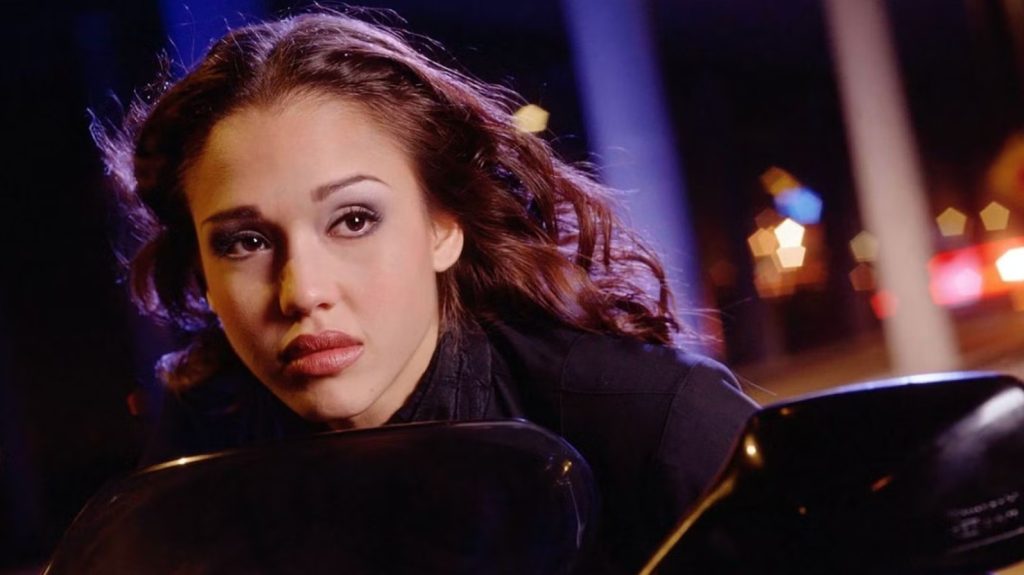 Jessica Alba in Dark Angel | Credits: 20th Century Fox Television
What made James Cameron’s Dark Angel worth continuing was the uneasy relationship between Max’s extraordinary abilities and her ordinary ambitions. Escaping a laboratory did not mean escaping exploitation. She still had to work, build friendships, and find room for herself in a society that regarded people like her as threats.
That gives the Terminator comparison an interesting reversal. Sarah Connor faces a weapon disguised as a person. Max is a person whom her creators insist on regarding as a weapon. Her humanity is something the audience recognizes long before the institutions pursuing her are willing to acknowledge it.
James Cameron show also had room to grow beyond the individual fugitive story. Its final stretch pushed questions of belonging toward a larger conflict involving the transgenic community. Max’s struggle was becoming about what freedom could look like for everyone who had escaped, rather than whether she alone could remain hidden.
Cameron himself directed the episode that became the series finale, but Fox canceled Dark Angel in 2002. The novels supplied an ending; a longer television run could have allowed those conflicts and relationships to develop through the cast that first made them compelling.
James Cameron’s Dark Angel received mostly positive reviews, with a Tomatometer score of 65% as of October 24.
Did you know Dark Angel continued in books, or are those novels going straight onto your reading list? Tell us in the comments!

















 Bengali (BD) ·
 English (US) ·