.png)
 1 hour ago
7
1 hour ago
7
Article content
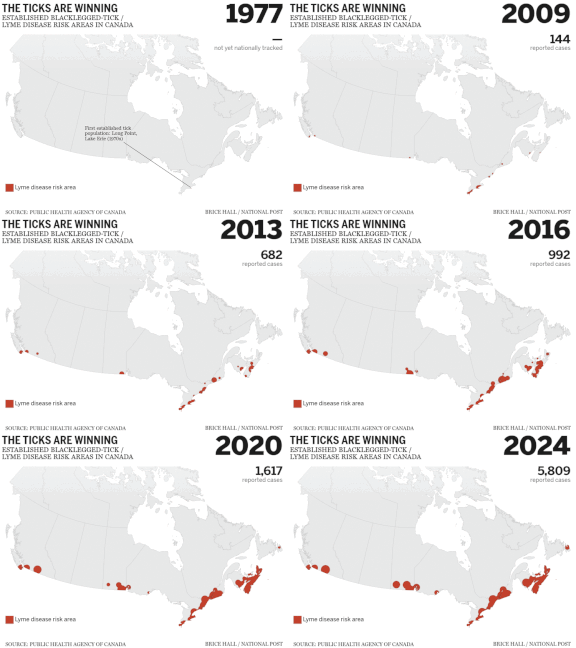
Ticks are pushing farther across Canada every year, and the diseases they carry are coming with them. Reported Lyme disease cases climbed from 522 in 2014 to 5,239 in 2024, according to the Public Health Agency of Canada.

THIS CONTENT IS RESERVED FOR SUBSCRIBERS
Enjoy the latest local, national and international news.
- Exclusive articles by Conrad Black, Barbara Kay and others. Plus, special edition NP Platformed and First Reading newsletters and virtual events.
- Unlimited online access to National Post.
- National Post ePaper, an electronic replica of the print edition to view on any device, share and comment on.
- Daily puzzles including the New York Times Crossword.
- Support local journalism.
SUBSCRIBE FOR MORE ARTICLES
Enjoy the latest local, national and international news.
- Exclusive articles by Conrad Black, Barbara Kay and others. Plus, special edition NP Platformed and First Reading newsletters and virtual events.
- Unlimited online access to National Post.
- National Post ePaper, an electronic replica of the print edition to view on any device, share and comment on.
- Daily puzzles including the New York Times Crossword.
- Support local journalism.
REGISTER / SIGN IN TO UNLOCK MORE ARTICLES
Create an account or sign in to continue with your reading experience.
- Access articles from across Canada with one account.
- Share your thoughts and join the conversation in the comments.
- Enjoy additional articles per month.
- Get email updates from your favourite authors.
THIS ARTICLE IS FREE TO READ REGISTER TO UNLOCK.
Create an account or sign in to continue with your reading experience.
- Access articles from across Canada with one account
- Share your thoughts and join the conversation in the comments
- Enjoy additional articles per month
- Get email updates from your favourite authors
Sign In or Create an Account
or
Article content
National Post reached out to three experts for more information on where ticks are spreading, why and how to stay safe. Manisha Kulkarni is a professor at the University of Ottawa’s School of Epidemiology and Public Health. Virginie Millien is a biologist at McGill University. Luis Anholeto is a lab manager at the Canadian Tick Research and Innovation Centre at Acadia University.
Article content
Article content
Article content
Millien spoke by phone. Kulkarni and Anholeto responded by email. Their answers have been edited and condensed for clarity and length.
Article content
By signing up you consent to receive the above newsletter from Postmedia Network Inc.
Article content
How big is Canada’s tick problem now compared to a decade ago?
Article content
Kulkarni: We’ve seen a dramatic increase in tick populations across Canada in the last decade, especially the blacklegged ticks (deer ticks) that can carry Lyme disease. Ten years ago, there were established tick populations in defined pockets of southern Manitoba, southern and eastern Ontario, southern Quebec, New Brunswick and Nova Scotia, but since then we’ve seen an expansion of these populations further north in all provinces, including around major population centres like Toronto, Ottawa and Montreal.
Article content
Which parts of the country have been hit hardest, and is that map still changing?
Article content
Millien: Ontario is actually a hotspot. It’s number one in terms of abundance of ticks and number of Lyme disease cases. Quebec is not far behind, but Ontario, this is where it started, Long Point.
Article content
Anholeto: Nova Scotia has consistently had the highest incidence rates in the country.
Article content
Article content
Article content
What’s driving the spread, and how much of it comes down to climate?
Article content
Article content
Kulkarni: Climate change and the associated warming temperatures are a major force behind the spread of blacklegged ticks in Canada. They can survive further north, where it was once too cold, and there’s a longer warm season for them to complete their life cycle. But other factors, like land-use changes, are also at play. Urban expansion into woodlands and resulting forest fragmentation creates an ideal habitat for white-tailed deer and white-footed mice, and in turn, ticks.
Article content
Millien: Up until recently, none of them would survive the winter. But now that we have ticks that survive, they reproduce locally, so the pathogen is circulating and it’s established.
Article content
Which tick-borne illnesses should people actually worry about, and how serious are they?
Article content
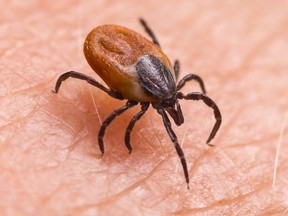
Kulkarni: The most common tick-borne illness in Canada is Lyme disease, which can be very serious if it’s not treated promptly. Other serious tick-borne illnesses are also on the rise, such as Anaplasmosis, Babesiosis and Powassan virus.
Article content
Anholeto: Beyond Lyme, anaplasmosis is increasing in Canada. Powassan virus is rare but can cause encephalitis. We also have Rocky Mountain spotted fever, a rare but potentially deadly infection that is spreading northward in Canada due to climate change.




























/https%3A%2F%2Fsportsmole-media-prod.s3.gra.io.cloud.ovh.net%2Fuploads%2F2026%2F05%2Fns-collage-background-v2-email-3-6a086d6eaa1a0057506880.jpg)
 Bengali (BD) ·
  English (US) ·