.png)
 2 hours ago
5
2 hours ago
5
How did Kim Jong-il like his fish cooked? How do you reckon with the morality of satiating a man responsible for the deaths of countless innocent people? What is the punishment for messing up a dish for a tyrant like Saddam Hussein or Idi Amin? These questions about the banality of evil are explored in How to Feed a Dictator, a documentary that offers interesting insights into a dictatorial culinary world with repetitive results.
How to Feed a Dictator Tribeca Review
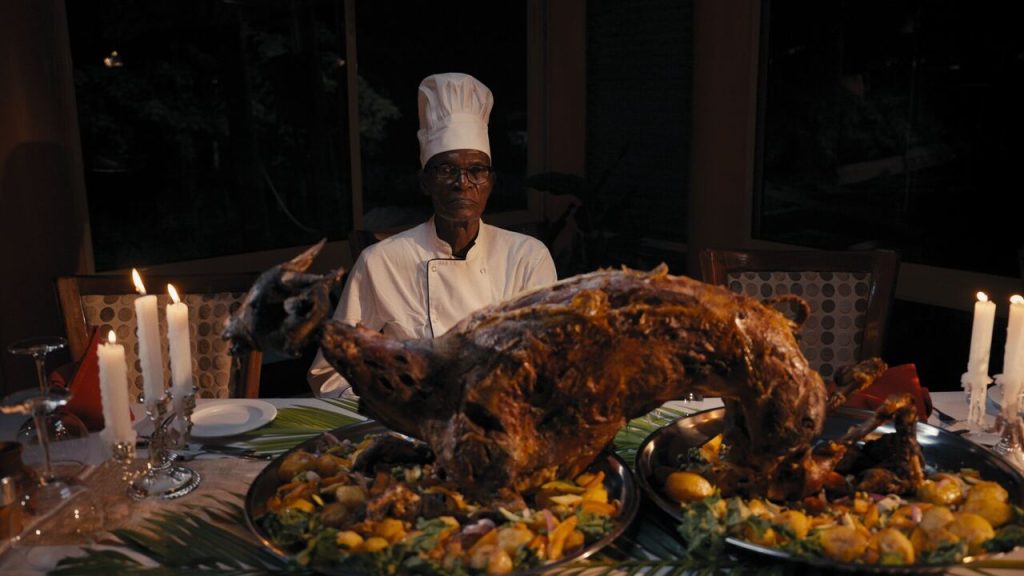 A still from How to Feed a Dictator, which premiered at the Tribeca Film Festival on June 10, 2026.
How to Feed a Dictator takes us around the world to explore the private lives of personal chefs who worked for some of the most notorious autocrats of the last century. Many of these cooks are now old and finally safe from the shackles of their deposed, executed, or otherwise deceased bosses. They provide an artfully shot, Chef‘s Table-style experience, exploring their own traumatic lives and offering commentary on global politics while showcasing their culinary prowess.
It’s an engaging documentary that blends the high art of cooking with an insider look into the terrifying world of some of the most disastrous leaders to ever hold a grip on a country. The film also smartly touches on the visceral, sickening contrast between the opulent meals served to these men and the brutal living conditions of the citizens they starved.
However, as it turns out, the ruling power of a dictator is experienced in the exact same way by the people working closest to them. Across its brisk 95-minute runtime, Neel covers a wide variety of personal chefs with a great sense of precision and diversity. Yet it follows a rigid format for each segment that feels like an episodic television series rather than a cohesive cinematic vision. We see a chef from a certain region talk about their dictator, they explore the specific quirks and intricacies of their former boss, and then they present us with another artfully plated meal.
The main issue with How to Feed a Dictator is that its structure reads more like a story suited for a tight, fifteen-minute Vox documentary on YouTube than a sweeping feature-length film. The varied cast of interviewees each has their own unique insight, but I’m not sure if the cinematic throughline is as fascinating as the topic could have been. It’s fine entertainment that becomes predictable by the third act.
Because human nature in these extremes is surprisingly uniform, it’s easy to predict what a dictator would do and how they would handle their personal staff. Every story follows a similar pattern. A person talks about how they were roped into the job, often by force or desperation, and then they describe how the dictator used a surprising level of personal charm to keep them loyal.
It’s a chilling juxtaposition to hear about this warmth from men responsible for mass atrocities, but the narrative beat repeats itself constantly. Each chef survives because the dictator appreciates their food, forcing them to walk a careful tightrope. They’re constantly terrified of accidentally giving their boss food poisoning and winding up decapitated one afternoon.
Is How to Feed a Dictator worth watching?
These stories are interesting in isolated parts. But since they all feature an identical pattern of events, you’ve effectively seen all there is to see in the first thirty minutes or so. How to Feed a Dictator is a worthwhile watch for history buffs and fans of cooking shows. While it infuses the culinary documentary genre with some dark psychological depth, it isn’t essential viewing for anyone already familiar with either subject.
How to Feed a Dictator premiered at the Tribeca Film Festival, which runs from June 3 – 14, 2026.
How to Feed a Dictator Tribeca Review: A Culinary Look at Tyranny
How to Feed a Dictator blends true crime history with culinary artistry, but its repetitive, episodic structure makes the fascinating premise feel overly predictable by the time the credits roll.




























 Bengali (BD) ·
  English (US) ·