.png)
 1 day ago
15
1 day ago
15
Indonesia has birthed some of the most exciting voices in genre cinema in recent years, few of whom have enjoyed as much of an international breakout as Joko Anwar. Anwar’s latest film, Ghost in the Cell, recently took home the Horror Competition jury award at Fantastic Fest, recognizing the gory, action-packed, twistedly funny prison-set ghost story as one of this year’s coolest genre pictures.
We at FandomWire got to speak with Ghost in the Cell director Joko Anwar about his action/comedy/horror hybrid, his unique approach to writing characters, and how that informs everything he does from humor to action.
Ghost in the Cell Joko Anwar Interview
Ghost in the Cell has this very confined setting of a prison, but it feels like a massive, epic film. Was this juxtaposition purposeful, and what interested you about this?
Well, actually, I was only trying to make a movie with interesting characters, and it happened to be in prison. And we created the prison set in two months. Of course, in prison, we cannot just have seven characters; we have to have all the inmates. That’s why it feels huge. But I never have [had an] interest in making a big, epic film. I’m always interested in characters and how they’re doing.
That’s why before I shot the film, before I shot all my films, I have character sheets for all the characters from the day they were born until they get into the story of the script. So when they meet in a scene, of course they’re going to be agreeable, and sometimes the disagreement becomes suspenseful. Sometimes disagreement becomes comedy, and that’s why I come up with comedic situations. I’m not trying to be funny as a writer, and the characters are not trying to be funny. It’s just situational.
You mention how big this ensemble is and the process of writing those characters. Did you have that for every single one of the characters?
Every single one of the characters, even the ones that only have one [line]. My colleagues and my actors said, “You wrote all those character sheets?” I said, “Yes, because it makes it easier for the actors.” Because I’ve acted in films too, sometimes, and if I don’t know my character, it’s very hard for me to even move my hands or know where to look because you don’t know who you are.
And as a director, if my actors know who they are, the directing is minimal because they know who they are and what will happen if they are facing a particular situation and how they are going to react to it. So it’s easy for both parts.
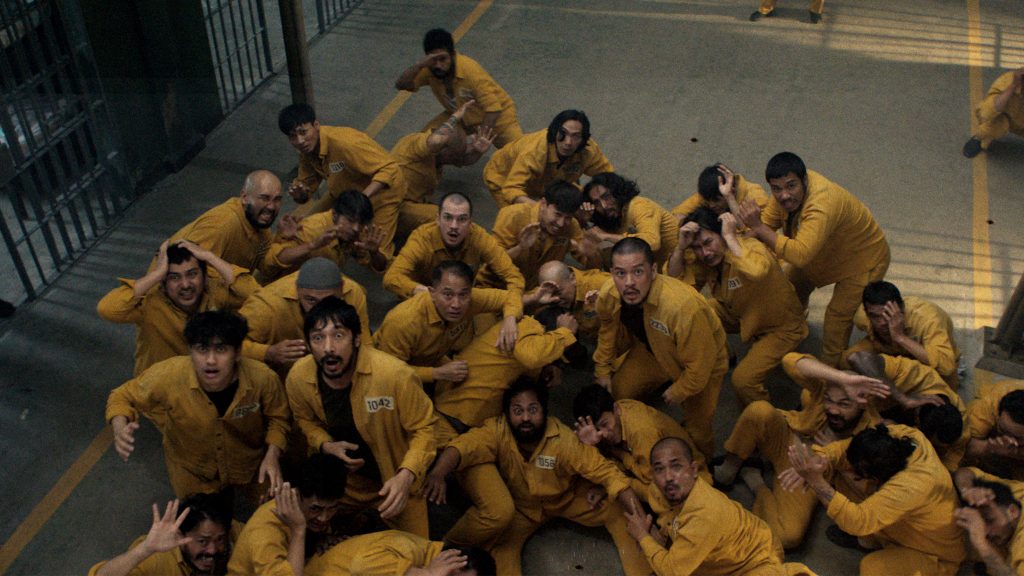
And working with such a large ensemble of actors and stunt performers — did you find it to be a challenge, or exciting, or a bit of both?
It was like a playground doing Ghost in the Cell with all those actors because they are very talented, all of them, and they are very professional. It’s very easy to direct them. I didn’t have to do a lot of things. I did pre-vis before we shot the film, so we knew what to do on set. What we had was just probably two takes at most, and in one day we only shot five hours.
Usually Indonesian productions need like 14 hours, but after five hours, we’d wrap and then we went to the cinema and watched two movies a day and went to the cafe and just talked about what we’d do the next day. So it was very easy to do.
A lot of your films blend genres, and I think that’s never really been the case as much as it is here. You’ve got that comedy you mentioned that comes from the characters, but you also have horror and action. How do you go about finding that tone through those characters?
Sometimes when people ask me about how I blend genres, it’s difficult to answer because I’m a film buff and I love all genres. I watch all kinds of films, and sometimes if I make a film, if I make a comedy for instance, I put action not because I want it to be a mix of the genres, but because I think it’s just natural to have that situation. Like in Ghost in the Cell, sometimes there were situations that I didn’t think were funny in the script, but then the actors got on set and they did the scenes, it became funny because the characters were alive.
So I think the most important thing is not trying to be funny or not trying to be scary or not trying to be anything when doing a film. Just stay true to the characters and have your characters consistent based on the character biography you have created and stick to that. I think that’s the main recipe to do many genres in one film: don’t try to be anything.
Many of your films, this one included, focus really heavily on practical effects. What do you enjoy about working in camera?
I love them because I believe that when making a film, it’s not just the end product that matters but also the situation you are facing when you are shooting it. And the actors, when they are looking at real things, and for me as a director, when I look at the real thing, I really know the timing of a scene and everything within a scene, we can see it right away.
It doesn’t mean that we lack imagination, but we want them to be tangible. And you cannot fake it. I mean, we also use VFX to complement the weaknesses of the practical effects, but if you have everything in camera and you can see it in your own eyes, it really pumps you up and makes you really in the situation instead of the things that you create that will be able to be seen as an end product.
One of the things that really impressed me most about this movie, in particular, were the prosthetics. Some of the face designs were genuinely creepy. How do you go about building these images?
So the entity will kill, and the dead bodies will be recreated. The entity comes from a forest that has been demolished by people, and this is enabled by rampant corruption in Indonesia. So it is very close to nature, and nature is synonymous with creation and art is synonymous with creation also, so it has to be artistic because that’s the biggest thing this entity understands. And the macabre look of it comes from the worst version of the victims when they were killed, plus the situation and the location that it happened.
So the three combined — artistic understanding by the entity, the worst version of the victim, and the location — that made the shape of the mock-up art.
There are these really big action scenes and set pieces in Ghost in the Cell. So when you’re making a movie like this, do you start with these action scenes in mind, or do you start with the story and build those action scenes through how they progress the story?
Story, of course. Story first, and characters also. The choreography of the action scenes is never separated from the characters, and the way they fight has to reflect the characters and the story. It has to progress the story. Without that, it’s just going to be a spectacle that people will forget about. You can have the most elaborate fighting scenes, but if it doesn’t reflect the characters, and it doesn’t progress the story, it will not be interesting.
I think my favorite of the action sequences in this film is the one where you use all the found items, like the toilet brush, because it feels so naturalistic and improves. I know that it is obviously very choreographed and planned, but how do you strike this balance of having this well thought-out, pre-vised action sequence but make it feel like it’s in the heat of the moment?
I think the main recipe is not to have the fighting become too goofy, and then it becomes inconsequential. It has to feel painful. It has to feel gross. I mean, the toilet brush is gross but also painful because it’s sharp and it will hit the gums of the characters, so it hurts. Even though it’s funny because of the situation, it cannot be too goofy and then not have consequences. It has to feel really hurtful and painful when the clash happens between characters.
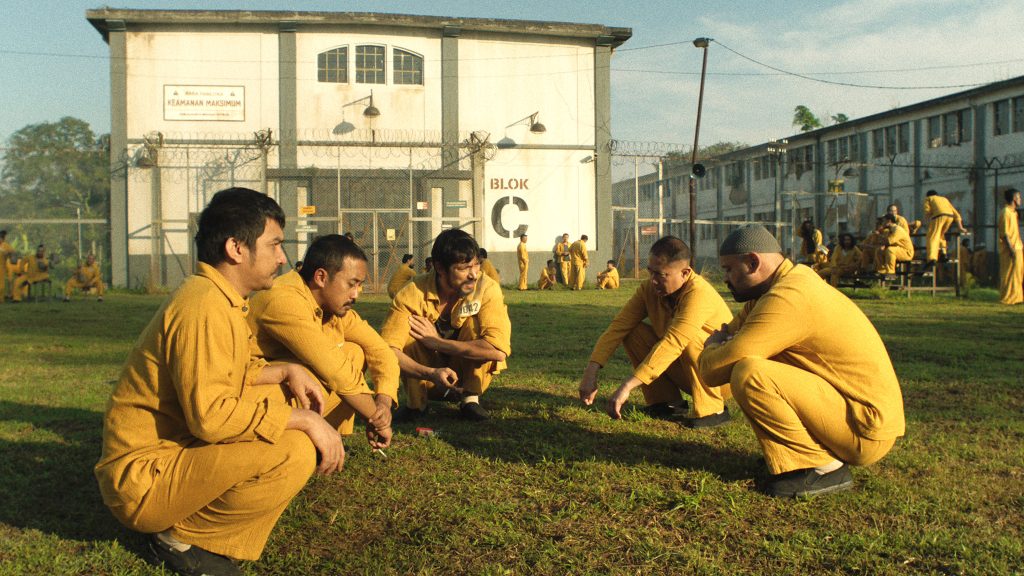
I think it’s interesting that you mention that you have to feel the consequences because I think a lot of what works about this film is that you feel the consequences since you feel a connection to the characters. Could you talk about the importance of character in action films, because not every action film has that?
I think it’s the same for every movie in any genre. I mean, if you make horror and people don’t care for the characters, it’s not going to be scary because people aren’t frightened by the horror films they are watching on screen because it’s just a screen and it’s just a film. But if they care about the characters and can relate to the characters because the characters reflect real human emotion, they can relate to the motive of the characters, and then it becomes scary because we want them to survive. We want them to be able to get whatever they achieve in the story.
Same for the action film. We have to understand these characters; we have to relate to them; we have to root for them. I believe that even the villains, the bad people in Ghost in the Cell, have their own character biographies and none of them were born bad.
For instance, Tokek, the guy with the very disgusting movement who died first in the film as the shower head, you can see that he’s not just evil. He’s not just villainous. From his eyes, you can feel pain. You can feel what he has gone through. He doesn’t say that through dialogue, but because he understands who he is, it is reflected in his expression, his eyes, and his movement. So he’s not evil, but he has gone through some difficult s**t and bad s**t to be able to morph into that kind of character.
I think this film is really interesting because it plays with these ideas that some can almost call tropes, but I think it subverts them. We’ve seen movies set in a prison before, we’ve seen these ideas before, but you play with them. How do you set out to subvert those ideas?
Tropes are very important to understand. You can use tropes because you want to give people what they want, but you can also subvert tropes because you know that’s the kind of tropes that people don’t want to see again. So I think it’s very important to be a fan of the genre that you are making. You have to be a fan of the horror genre. You have to be a fan of action and comedy to understand which tropes you can still use because audiences want to go along with them, and which tropes you should leave out.
Ghost in the Cell is now in theaters.




















/https%3A%2F%2Fsportsmole-media-prod.s3.gra.io.cloud.ovh.net%2Fuploads%2F2026%2F09%2Fmikel-arteta-21-6ab9a6087b35f019707296.jpg)
 Bengali (BD) ·
  English (US) ·