.png)
 1 day ago
13
1 day ago
13
Hashira Training is the Demon Slayer Corps‘ last major preparation before Muzan’s inevitable assault. After Nezuko conquers the sun and the Demon Slayer Mark begins appearing in Demon Slayer, the Hashira organize specialized training to strengthen the Corps from the bottom up. Each Hashira brings a completely different philosophy to the process, from Tengen’s stamina drills to Gyomei’s punishing physical conditioning.
We often discuss every Hashira ranked based on their personality, power, or more. However, what about their training styles? With that in mind, here is every Hashira Training method ranked by its combat relevance and contribution to the final battle.
6 Mitsuri’s Flexibility Training Tests Mobility and Pain Tolerance
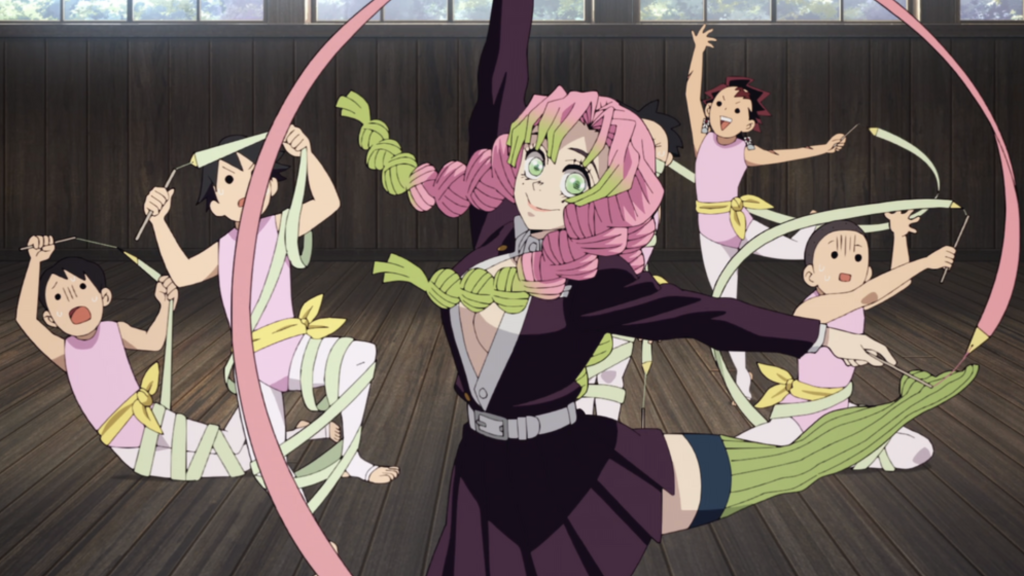 Mitsuri from the Demon Slayer: Hashira Training Arc. [Credit: Ufotable]
Mitsuri’s training looks almost comically cheerful until the stretching begins. Trainees dance continuously to music before being subjected to forceful flexibility exercises using Mitsuri’s extraordinary strength. Tanjiro’s experience shows that the stage demands genuine pain tolerance alongside mobility, and his improved physical control helps him advance toward Obanai’s sword training.
The regimen is distinctive because it targets an attribute that conventional sword training can easily overlook: freedom of movement. Mitsuri’s bright personality makes the setting deceptively playful, but the physical demands are serious. Its combat value is real, although less immediately comprehensive than the later strength and resilience-focused stages.
5 Tengen’s Fitness Training Builds Essential Stamina and Endurance
 Tengen from Demon Slayer: Hashira Training Arc. [Credit: Ufotable]
Tengen handles the program’s opening stage with basic stamina training, forcing exhausted trainees to keep running at a demanding pace. It may look less spectacular than Gyomei’s boulder challenge, but its placement is deliberate: the Corps needs a physical foundation before attempting the increasingly specialized stages. Tengen’s retired status also gives the scene an interesting edge.
Despite losing an eye and arm in the Entertainment District, he returns to contribute as an instructor. His station builds the endurance needed to survive everything that follows, making it fundamental even if its exercises are comparatively straightforward.
4 Muichiro’s Rapid Movement Training Elevates Speed and Coordination
Muichiro’s stage focuses on quick movement and smoother control of the body. Tanjiro spars with him at remarkable speed while learning to attack rapidly without sacrificing strength, and Tanjiro is able to progress after five days. The training also exposes the enormous gap between ordinary Corps members and a Hashira: other trainees struggle to earn Muichiro’s permission to advance.
What makes the method distinctive is its emphasis on efficiency rather than simply moving faster. Against demons who can exploit the smallest opening, coordination between footwork, body movement, and sword attacks becomes vital. It is a compact but highly practical lesson in battlefield mobility.
3 Obanai’s Sword Skill Training Sharpens Combat Precision
 Obanai in Demon Slayer: Hashira Training Arc. [Credit: Ufotable]
Obanai’s training strips swordsmanship down to timing, control and unpredictability. Trainees repeatedly spar with the Serpent Hashira, whose unusual fighting style makes simply anticipating his blade a challenge. Tanjiro receives an especially nasty variation involving tied-up trainees serving as obstacles while he fights Obanai. The stage is less about raw conditioning and more about making every movement count.
This stage prepares trainees for the Infinity Castle, where cramped spaces, shifting enemies and Upper Rank-level opponents leave little room for sloppy swordwork. Obanai essentially turns combat precision into a survival skill, making this one of the program’s most directly transferable lessons.
2 Sanemi’s Infinite Striking Training Builds Extreme Battle Resilience
 Sanemi from Demon Slayer: Hashira Training Arc. [Credit: Ufotable]
Sanemi’s stage throws trainees straight into the deep end: they spar against the Wind Hashira while he relentlessly attacks, with the session continuing until exhaustion becomes overwhelming. Tanjiro’s first attempt leaves him badly bruised, while Zenitsu desperately tries to escape the training.
The method is brutally simple but highly combat-relevant: learn to keep functioning while an opponent refuses to give you breathing room. It also reflects Sanemi’s own battlefield mentality, which is based on constant pressure, zero comfort. Its greatest value is psychological as much as physical, forcing ordinary Corps members to experience what surviving a demon’s relentless assault can actually feel like.
1 Gyomei’s Muscle Reinforcement Training Pushes Bodies to the Limit
Gyomei’s final station is built around the body’s ability to produce and sustain force: enduring a waterfall, carrying three logs and pushing a massive boulder through a town. The manga explicitly explains that strengthening the limbs stabilizes the body for accurate attacks and tireless defense. That makes this more than “strength training.”
Muscular endurance lets a fighter keep producing force after fatigue has accumulated, while a stronger base supports movement, balance, and repeated attacks. Tanjiro’s struggle pushing the boulder, and his use of Repetitive Action to overcome it, make the point brutally clear. Even UFC fighters have to build their body strong enough that they can endure standing after several grueling rounds. Before technique, the body has to be capable of staying in the fight, or else none of the skills would matter at all.
Comment your ranking below and let the debate begin!
Demon Slayer (all seasons) is available on Crunchyroll and Netflix.




























/https%3A%2F%2Fsportsmole-media-prod.s3.gra.io.cloud.ovh.net%2Fuploads%2F2026%2F09%2Fmikel-arteta-21-6ab9a6087b35f019707296.jpg)
 Bengali (BD) ·
  English (US) ·