.png)
 2 hours ago
9
2 hours ago
9
Article content
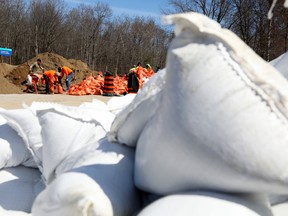
Clarke Kelly has been city councillor for West Carleton ward since the fall of 2022. In that time, he has been involved in three flood responses.

THIS CONTENT IS RESERVED FOR SUBSCRIBERS ONLY
Subscribe now to read the latest news in your city and across Canada.
- Unlimited digital access to the Ottawa Citizen.
- Analysis on all things Ottawa by Bruce Deachman, Elizabeth Payne, David Pugliese, and others, award-winning newsletters and virtual events.
- Opportunity to engage with our commenting community.
- Ottawa Citizen ePaper.
- Ottawa Citizen App.
SUBSCRIBE TO UNLOCK MORE ARTICLES
Subscribe now to read the latest news in your city and across Canada.
- Exclusive articles from Elizabeth Payne, David Pugliese, Andrew Duffy, Bruce Deachman and others. Plus, food reviews and event listings in the weekly newsletter, Ottawa, Out of Office.
- Unlimited online access to Ottawa Citizen and 15 news sites with one account.
- Ottawa Citizen ePaper, an electronic replica of the print edition to view on any device, share and comment on.
- Daily puzzles, including the New York Times Crossword.
- Support local journalism.
REGISTER / SIGN IN TO UNLOCK MORE ARTICLES
Create an account or sign in to continue with your reading experience.
- Access articles from across Canada with one account.
- Share your thoughts and join the conversation in the comments.
- Enjoy additional articles per month.
- Get email updates from your favourite authors.
Register to unlock this article — it’s free
Create an account or sign in to continue with your reading experience.
- Access articles from across Canada with one account
- Share your thoughts and join the conversation in the comments
- Enjoy additional articles per month
- Get email updates from your favourite authors
Sign In or Create an Account
or
Article content
Flood waters in Constance Bay have plateaued for now, but on April 21, the Ottawa River reached the highest point for that specific day and time, Kelly said.
Article content
Article content
“It was higher at that day than it was in 2017, 2019, 2023, when we got hit really hard. So I think that leaves people still a bit nervous.”
Article content
Article content
Floods don’t respect national, provincial or municipal boundaries. But, after flood waters recede, the question remains: What can municipalities do to prevent or reduce the damage caused by increasingly frequent flooding?
Article content
By signing up you consent to receive the above newsletter from Postmedia Network Inc.
Article content
Nature is throwing more water at municipalities than can be managed, the Association of Municipalities of Ontario said in Come Hell or High Water, a 2020 discussion paper released in the wake of major floods in 2017 and 2019.
Article content
At the same time, municipalities face flood-related costs ranging from replacing infrastructure to compensating residents and businesses, insurance costs, lawsuits, increased energy costs and disruptions to departmental budgets and productivity, the discussion paper noted.
Article content
Article content
So what can be done? One strategy is municipal “hazard avoidance policies” that use building permits, official plans and zoning by-laws to restrict development on known floodplains.
Article content
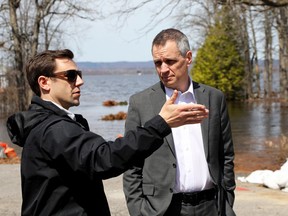
“Obviously we’re going to need to look at where new housing is being built and make sure that it’s not in areas that are now more likely to be flooded than maybe they were 10 years ago, 20 years ago, 30 years ago,” said Mayor Mark Sutcliffe, who was visiting Constance Bay on April 23 to survey the damage.
Article content
Article content
“I think that’s one of the main things we can do going forward, but it’s still challenging when there were homes that were built long before the climate changed and the water levels started rising to higher levels.”
Article content
Article content
Another strategy is the “build back better” principle, which saves municipalities from future costs. In Constance Bay, for example, many houses have been replaced or upgraded with flood-proofing measures.
Article content
“Every year that we’ve responded to floods or potential floods, the number of homes and residences that we’ve had to go to to provide help has been reduced. In between floods, they’ve taken measures to mitigate those risks,” Kelly said.
Article content
Some residents tapped into Disaster Recovery for Ontarians after the 2023 floods and used it to make changes to their properties, ranging from walls to raising their homes or installing additional pumps, he said.
Article content
“A lot of people their homes could still be surrounded by water, but they’ve taken steps to mitigate that,” Kelly said. “They’re able to stay in their home and protect the key pieces of infrastructure.”
Article content
The downside: Property owners typically don’t receive enough funding for the full gamut of measures. Some homeowners can’t be insured, which can mean they’re stuck living at a flood-prone property that can’t be sold.






















 Bengali (BD) ·
  English (US) ·