.png)
 8 hours ago
10
8 hours ago
10
Article content
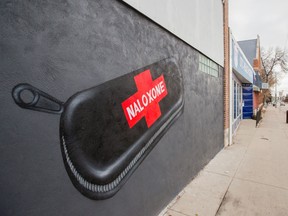
A recent study about what happened when an injection site in Red Deer, Alberta, shut down has opened a highly contentious new chapter in the ongoing debate over supervised consumption sites.

THIS CONTENT IS RESERVED FOR SUBSCRIBERS
Enjoy the latest local, national and international news.
- Exclusive articles by Conrad Black, Barbara Kay and others. Plus, special edition NP Platformed and First Reading newsletters and virtual events.
- Unlimited online access to National Post.
- National Post ePaper, an electronic replica of the print edition to view on any device, share and comment on.
- Daily puzzles including the New York Times Crossword.
- Support local journalism.
SUBSCRIBE FOR MORE ARTICLES
Enjoy the latest local, national and international news.
- Exclusive articles by Conrad Black, Barbara Kay and others. Plus, special edition NP Platformed and First Reading newsletters and virtual events.
- Unlimited online access to National Post.
- National Post ePaper, an electronic replica of the print edition to view on any device, share and comment on.
- Daily puzzles including the New York Times Crossword.
- Support local journalism.
REGISTER / SIGN IN TO UNLOCK MORE ARTICLES
Create an account or sign in to continue with your reading experience.
- Access articles from across Canada with one account.
- Share your thoughts and join the conversation in the comments.
- Enjoy additional articles per month.
- Get email updates from your favourite authors.
THIS ARTICLE IS FREE TO READ REGISTER TO UNLOCK.
Create an account or sign in to continue with your reading experience.
- Access articles from across Canada with one account
- Share your thoughts and join the conversation in the comments
- Enjoy additional articles per month
- Get email updates from your favourite authors
Sign In or Create an Account
or
Article content
The study, published in early March by the journal Addiction, concluded that fatalities and emergency department visits did not increase for the site’s clients after it closed. The findings attracted the attention of Alberta Premier Danielle Smith, who shared my column about it on social media.
Article content
Article content
Article content
Days later, one of Canada’s most vocal pro-injection site social media influencers, Guy Felicella, denounced the study as “methodologically flawed.” “SOMETHING STINKS,” he insisted. More articulate criticism soon landed in the form of an op-ed in the Edmonton Journal, and later, a letter to the editor in Addiction.
Article content
By signing up you consent to receive the above newsletter from Postmedia Network Inc.
Article content
The study also drew the ire of Dan Werb, a proponent of injection sites and scientist with MAP Centre for Urban Health Solutions in Toronto, who was quoted in a March CBC article, saying he found aspects of the Red Deer study “troubling as an academic.”
Article content
The main criticism Werb levelled was that the study was produced by the Canadian Centre of Recovery Excellence (CoRE), a recovery-oriented research entity created in 2024 by the Alberta government. The study includes the following disclaimer about funding: “This research did not receive a specific project-based grant. (CoRE), with which several authors are affiliated, receives public funding from the Government of Alberta. The funder had no role in the study design, data analysis, interpretation of results, manuscript preparation or the decision to submit this work for publication.” Werb was concerned that this amounted to a conflict of interest.
Article content
Article content
Werb also expressed dismay that CoRE had been able to track the Red Deer injection site clients by using their health-care numbers. In 2024, Alberta began requiring injection site clients to provide enough information (name, birth date) to connect to a personal health identifier, something other provinces don’t do. This data was used in the Red Deer study, which, to the authors’ knowledge, made them the first “to assess the effects of (injection site) closure using individual-level, linkable administrative health data.”
Article content
Though the lead author of the study, Dr. Nathaniel Day, made it clear that the data CoRE received was “anonymized” to protect the privacy of the clients, Werb still saw the requirement for health numbers at injection sites as akin to being “surveiled” at what “are supposed to be low-barrier services.”
Article content
Apart from the fact that research shows that providing personal information isn’t a barrier to service (a 2024 report by the University of Alberta on drug users in Edmonton’s inner city found that only 1.2 per cent of those surveyed said having to provide enough information to connect to their personal health numbers was a barrier to using an injection site), it’s a bit of a headscratcher that Werb would object to a study tracking what happened to clients after such a site was closed.

























/https%3A%2F%2Fsportsmole-media-prod.s3.gra.io.cloud.ovh.net%2Fuploads%2F2026%2F05%2Fns-collage-background-v2-email-3-6a086d6eaa1a0057506880.jpg)
 Bengali (BD) ·
  English (US) ·