.png)
 7 hours ago
12
7 hours ago
12
Article content
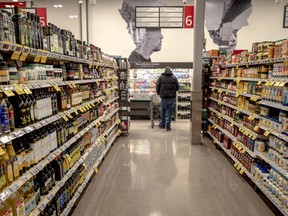
New data from Statistics Canada shows that food prices rose by 3.5 per cent year-over-year in April 2026, although many grocery staples saw their prices increase by significantly more than that.

THIS CONTENT IS RESERVED FOR SUBSCRIBERS
Enjoy the latest local, national and international news.
- Exclusive articles by Conrad Black, Barbara Kay and others. Plus, special edition NP Platformed and First Reading newsletters and virtual events.
- Unlimited online access to National Post.
- National Post ePaper, an electronic replica of the print edition to view on any device, share and comment on.
- Daily puzzles including the New York Times Crossword.
- Support local journalism.
SUBSCRIBE FOR MORE ARTICLES
Enjoy the latest local, national and international news.
- Exclusive articles by Conrad Black, Barbara Kay and others. Plus, special edition NP Platformed and First Reading newsletters and virtual events.
- Unlimited online access to National Post.
- National Post ePaper, an electronic replica of the print edition to view on any device, share and comment on.
- Daily puzzles including the New York Times Crossword.
- Support local journalism.
REGISTER / SIGN IN TO UNLOCK MORE ARTICLES
Create an account or sign in to continue with your reading experience.
- Access articles from across Canada with one account.
- Share your thoughts and join the conversation in the comments.
- Enjoy additional articles per month.
- Get email updates from your favourite authors.
THIS ARTICLE IS FREE TO READ REGISTER TO UNLOCK.
Create an account or sign in to continue with your reading experience.
- Access articles from across Canada with one account
- Share your thoughts and join the conversation in the comments
- Enjoy additional articles per month
- Get email updates from your favourite authors
Sign In or Create an Account
or
Article content
Meat is one of the biggest drivers of food price inflation, with beef prices continuing to climb amid tight supplies and strong consumer demand.
Article content
Article content
Beef striploin cuts saw their price increase most year-over-year to $42.42 — an increase of $9.61 or 29.29 per cent.
Article content
Article content
Similarly, the average price of beef top sirloin cuts increased by $2.74 to an average price of $28.94 per kilogram, while beef rib cuts per kilogram increased by $2.35 to $30.56 as of April 2026.
Article content
By signing up you consent to receive the above newsletter from Postmedia Network Inc.
Article content
Beef stewing cuts saw a price increase of $1.86 per kilogram to $22.51 on average, and ground beef reached $15.59 per kilogram in April, a $1.42 increase compared to last year.
Article content
Other protein that saw price increases include salmon (+$1.24), canned salmon (+$0.73), chicken breasts (+$0.88), chicken drumsticks (+$0.59), whole chicken (+$0.32) and bacon (+$0.31).
Article content
Elsewhere, coffee also saw steep price hikes compared to other products. A 340g bag of roasted or ground coffee now costs $9.39, compared to $7.78 in April 2025.
Article content
Bananas rose in price by roughly 12 per cent, from $1.66 to $1.87 per kilogram. The price of tomatoes increased by $1.49 from $4.69 to $6.18.
Article content
Not all grocery prices moved higher, however. A handful of products became slightly cheaper compared with a year ago.
Article content
These include eggs, which fell from $4.92 to $4.80 per dozen; onions, which declined from $5.64 to $5.54 per kilogram; and chicken thighs, which edged down by one cent, from $12.17 to $12.16 per kilogram.
Article content
Article content
Overall inflation increased to 2.8 per cent in April, up from 2.4 per cent in March. RBC said in a report last month that this figure is “less than expected, driven primarily by higher gasoline prices and fading favourable energy base effects.”
Article content
Article content
Meanwhile, the latest data on food prices comes just days after new figures indicated Canada has entered a technical recession.
Article content
Recessions are generally defined as two consecutive quarters of negative GDP growth. On Friday, Statistics Canada announced that GDP contracted by 0.1 per cent in the first quarter of 2026, following a one per cent contraction in the fourth quarter of 2025.
Article content
Robert Kavcic, senior economist at BMO Capital Markets, wrote in a note to investors that the decline in the Canadian economy seen over the last six months is “barely a scratch in GDP terms.”
Article content
But Conservative Leader Pierre Poilievre said Canadians need answers about why Canada has the only shrinking economy in the G7 while speaking in front of the House of Commons on Monday, and blamed Liberal economic policies for the result.
Article content
Our website is the place for the latest breaking news, exclusive scoops, longreads and provocative commentary. Please bookmark nationalpost.com and sign up for our daily newsletter, Posted, here.
Article content
























/https%3A%2F%2Fsportsmole-media-prod.s3.gra.io.cloud.ovh.net%2Fuploads%2F2026%2F05%2Fns-collage-background-v2-email-3-6a086d6eaa1a0057506880.jpg)
 Bengali (BD) ·
  English (US) ·