.png)
 1 day ago
15
1 day ago
15
Article content
If events in Orillia, Ontario are anything to go by, reconciliation in the Canada of 2026 seems to mean that if a few angry Indigenous protesters don’t want something to happen, they get a veto.

THIS CONTENT IS RESERVED FOR SUBSCRIBERS
Enjoy the latest local, national and international news.
- Exclusive articles by Conrad Black, Barbara Kay and others. Plus, special edition NP Platformed and First Reading newsletters and virtual events.
- Unlimited online access to National Post.
- National Post ePaper, an electronic replica of the print edition to view on any device, share and comment on.
- Daily puzzles including the New York Times Crossword.
- Support local journalism.
SUBSCRIBE FOR MORE ARTICLES
Enjoy the latest local, national and international news.
- Exclusive articles by Conrad Black, Barbara Kay and others. Plus, special edition NP Platformed and First Reading newsletters and virtual events.
- Unlimited online access to National Post.
- National Post ePaper, an electronic replica of the print edition to view on any device, share and comment on.
- Daily puzzles including the New York Times Crossword.
- Support local journalism.
REGISTER / SIGN IN TO UNLOCK MORE ARTICLES
Create an account or sign in to continue with your reading experience.
- Access articles from across Canada with one account.
- Share your thoughts and join the conversation in the comments.
- Enjoy additional articles per month.
- Get email updates from your favourite authors.
THIS ARTICLE IS FREE TO READ REGISTER TO UNLOCK.
Create an account or sign in to continue with your reading experience.
- Access articles from across Canada with one account
- Share your thoughts and join the conversation in the comments
- Enjoy additional articles per month
- Get email updates from your favourite authors
Sign In or Create an Account
or
Article content
It wasn’t supposed to be like this. The South African model of reconciliation was built on the idea of a single collective exercise of truth-telling, after which individuals and groups could live together in peace. Not in Canada. Not in Orillia.
Article content
Article content
Article content
It’s all about statues. Again.
Article content
By signing up you consent to receive the above newsletter from Postmedia Network Inc.
Article content
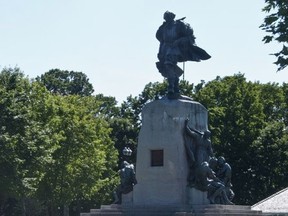
This time it’s a statue of the French explorer Samuel de Champlain that once stood on the waterfront in the little Ontario town of Orillia — the town Stephen Leacock made famous in his 1912 classic Sunshine Sketches of a Little Town. Locals erected the statue in 1925 to mark 300 years when, in 1615, Champlain first travelled through this part of what is now Ontario on his way to visit the Huron-Wendat, who were important French trading partners.
Article content
In the years around the Great War, relations between French and English in Ontario and across Canada were strained, and the statue was meant as a gesture of symbolic rapprochement — as well as a piece of local boosterism. It was conceived with all the confidence in western civilization, Christianity, and even what its own plaque called “the white race” that many of us would find awkward and troubling today.
Article content
Almost a 100 years later after the statue was first unveiled, in 2017, the monument needed repair and was removed. But in the midst of the restoration came the era of the Truth and Reconciliation Commission. It was decided that something had to change, and a working group was struck to determine whether the statue should return, and if so, in what form. This appears to have been done with genuine sympathy for, and input from, local First Nations. Smaller figures of Indigenous people that had surrounded and knelt below Champlain would not be returned, and a new plaque would be written. With those modifications, Champlain was supposed to go back to his lakeside plinth.
Article content
Article content
Then came 2021 and the Kamloops graves moral panic.
Article content
Article content
The return was delayed, and then delayed again.
Article content
This spring, it seems, Orillia’s current mayor decided enough was enough. It cost money to keep the monument in storage, and what if something happened to it? Why not finally return it to the plinth? Most locals seemed to agree: back in 2019, the working group solicited feedback, and of those who responded to its online survey, 70 per cent favoured reinstalling Champlain.
Article content
But that’s not what happened.
Article content
The mayor had the statue reinstalled last month, seemingly without broad consultation. The predictable followed. Within hours of its re-erection, someone had vandalized it. Local First Nations objected that they had not been consulted and demanded the statue come down. City council caved, and Champlain was taken down again.
Article content
What did this round of erection and removal cost? Apparently about $200,000.
Article content
Nothing in this whole debate is really about history, or Champlain, or the wishes of the local community. It’s about power, and who gets to wield it in this era of so-called reconciliation. It’s about giving vandals a veto. Someone has spray painted the words “Rama said no” on the plinth — seemingly a link to the local Rama First Nation.






















/https%3A%2F%2Fsportsmole-media-prod.s3.gra.io.cloud.ovh.net%2Fuploads%2F2026%2F06%2Frio-ngumoha-email-sportmole-6a27b73e9a471352625861.png)
 Bengali (BD) ·
  English (US) ·