.png)
 11 hours ago
18
11 hours ago
18
Article content
The recent Walrus article “Why Canada Needs to Walk Away from NORAD” points to the Netflix thriller “A House of Dynamite” and suggests that among the very “realistic” aspects of the film is the absence of Canadians from the command centres involved in the response to a nuclear attack on the U.S. or North America. Like the film, that suggestion is a fiction.

THIS CONTENT IS RESERVED FOR SUBSCRIBERS
Enjoy the latest local, national and international news.
- Exclusive articles by Conrad Black, Barbara Kay and others. Plus, special edition NP Platformed and First Reading newsletters and virtual events.
- Unlimited online access to National Post.
- National Post ePaper, an electronic replica of the print edition to view on any device, share and comment on.
- Daily puzzles including the New York Times Crossword.
- Support local journalism.
SUBSCRIBE FOR MORE ARTICLES
Enjoy the latest local, national and international news.
- Exclusive articles by Conrad Black, Barbara Kay and others. Plus, special edition NP Platformed and First Reading newsletters and virtual events.
- Unlimited online access to National Post.
- National Post ePaper, an electronic replica of the print edition to view on any device, share and comment on.
- Daily puzzles including the New York Times Crossword.
- Support local journalism.
REGISTER / SIGN IN TO UNLOCK MORE ARTICLES
Create an account or sign in to continue with your reading experience.
- Access articles from across Canada with one account.
- Share your thoughts and join the conversation in the comments.
- Enjoy additional articles per month.
- Get email updates from your favourite authors.
THIS ARTICLE IS FREE TO READ REGISTER TO UNLOCK.
Create an account or sign in to continue with your reading experience.
- Access articles from across Canada with one account
- Share your thoughts and join the conversation in the comments
- Enjoy additional articles per month
- Get email updates from your favourite authors
Sign In or Create an Account
or
Article content
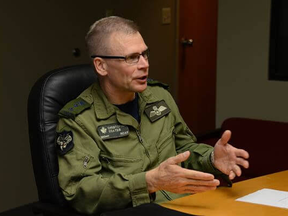
The film the author comments on does just enough to be “believable,” but as a former deputy commander of NORAD, I can tell you it does not accurately represent the actions of the Canadians within NORAD in assessing and warning of an inbound missile attack on North America. Nor does it accurately portray the role of the United States Northern Command (USNORTHCOM), NORAD’s sister command in Colorado, in the ballistic missile defence actions (e.g. the launching of the interceptor missiles). Neither of these command activities are represented in the film — they aren’t required to generate the cinematic tension the film relies on — but they are central to the defence of North America.
Article content
Article content
Article content
Citing an inaccurate film representation of Canada’s defence role to build a case for NORAD’s irrelevance in the real world is irresponsible and dangerous.
Article content
By signing up you consent to receive the above newsletter from Postmedia Network Inc.
Article content
Notwithstanding the importance of either Richards-Gebaur Air Force Base (AFB) Kansas or Malmstrom AFB in Montana — to which the author cites a personal connection — and the NORAD roles that were accomplished there, they bear little connection to the role of today’s NORAD headquarters or NORTHCOM headquarters in Colorado or the United States Strategic Command or U.S. Space Command — all active players in today’s continental defence activities.
Article content
To diminish NORAD’s value to Canada’s defences, the article strangely asserts that “The NORAD conundrum is that what was once good for Canada’s interests, generated by a threat picture that prevailed for much of the Cold War, now threatens to erode both our sovereignty and security.”
Article content
But contrary to the author’s claims, NORAD’s “threat picture” has adjusted, and continues to adjust, to a range of modern threats, including the cruise missiles and drones that he mentions. If there are deficiencies in NORAD’s capabilities, especially those relative to protecting Canada, the party to hold responsible for that is Canada — not the United States and not NORAD. At the same time, it is entirely wrong to conclude that participation in NORAD somehow erodes Canada’s sovereignty and security.
Article content
Article content
NORAD was, and is, a response to short notice threats that require a quick response showing up in North American airspace, including Soviet bombers or Russian cruise missiles or terrorist-commandeered aircraft. For other threats, such as the hybrid threats identified by the Walrus article, Canada and its allies have other means and mechanisms to respond, including our current North Atlantic Treaty Organization (NATO) relationships — although the will may be lacking.
Article content
Article content
The Walrus article maintains that “(e)ven if Canada were to … move beyond NORAD as the organizing principle of continental defence, the Canada–U.S. defence relationship would not disappear. Nor should it.” The author then says that “Instead, it would be grounded in a more balanced partnership, with Canada contributing more capabilities of its own.”
Article content
But the logic here is backwards. Yes, Canada is going to have to contribute more, but there’s no reason that doing so outside of NORAD would address the perceived imbalance better than doing so within the NORAD construct. In fact, it makes more sense to use that increased contribution to increase Canada’s influence in NORAD, reducing the perceived power imbalance, rather than believing that Canada would somehow have more influence over the U.S. from outside NORAD.
























/https%3A%2F%2Fsportsmole-media-prod.s3.gra.io.cloud.ovh.net%2Fuploads%2F2026%2F07%2Fdaniel-mcgregor-huyer-zuma-press-wire-luciano-gonzalez-anadolu-abacapress-com-estadio-azteca-harry-kane-jude-bellingham-composite-6a49eb8857b70695441164.png)
 Bengali (BD) ·
  English (US) ·