.png)
 55 minutes ago
19
55 minutes ago
19
Article content
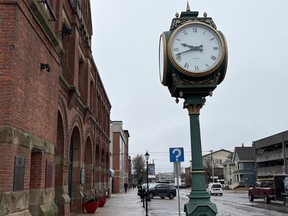
The U.S. House of Representatives voted on Tuesday to end the annual practice of springing forward to daylight saving time and falling back to standard time. Instead, the Sunshine Protection Act aims to place most of the U.S. permanently on daylight saving time, except for the few parts of the country already on year-round standard time.

THIS CONTENT IS RESERVED FOR SUBSCRIBERS
Enjoy the latest local, national and international news.
- Exclusive articles by Conrad Black, Barbara Kay and others. Plus, special edition NP Platformed and First Reading newsletters and virtual events.
- Unlimited online access to National Post.
- National Post ePaper, an electronic replica of the print edition to view on any device, share and comment on.
- Daily puzzles including the New York Times Crossword.
- Support local journalism.
SUBSCRIBE FOR MORE ARTICLES
Enjoy the latest local, national and international news.
- Exclusive articles by Conrad Black, Barbara Kay and others. Plus, special edition NP Platformed and First Reading newsletters and virtual events.
- Unlimited online access to National Post.
- National Post ePaper, an electronic replica of the print edition to view on any device, share and comment on.
- Daily puzzles including the New York Times Crossword.
- Support local journalism.
REGISTER / SIGN IN TO UNLOCK MORE ARTICLES
Create an account or sign in to continue with your reading experience.
- Access articles from across Canada with one account.
- Share your thoughts and join the conversation in the comments.
- Enjoy additional articles per month.
- Get email updates from your favourite authors.
THIS ARTICLE IS FREE TO READ REGISTER TO UNLOCK.
Create an account or sign in to continue with your reading experience.
- Access articles from across Canada with one account
- Share your thoughts and join the conversation in the comments
- Enjoy additional articles per month
- Get email updates from your favourite authors
Sign In or Create an Account
or
Article content
The change would in effect extend winter sunsets and delay sunrises by about an hour. However, several U.S. lawmakers have predicted the bill will ultimately fail to pass the Republican-controlled Senate, despite the fact President Donald Trump has long called for permanent daylight saving time.
Article content
Article content
Article content
The first time Congress enacted year-round daylight saving time, in the 1970s, it backfired. The change became unpopular quickly, especially among parents worried about their children waiting in the morning darkness for school buses. It was repealed in less than a year.
Article content
By signing up you consent to receive the above newsletter from Postmedia Network Inc.
Article content
On the other hand, only 12 per cent of Americans today are in favour of the current system, according to a 2025 AP-NORC poll. Another 47 per cent oppose it. But there’s little consensus about what to adopt instead.
Article content
Where does Canada stand on the annual time changes?
Article content
Most Canadians change their clocks twice a year, moving them forward one hour on the second Sunday in March and back one hour on the first Sunday in November. That March–November schedule has been in place since 2007.
Article content
What is the history of regulating time in Canada?
Article content
Originally, DST was implemented in Canada during the First and Second World Wars to preserve energy and increase productivity, especially on farms. It was intended to give Canadians another usable hour of daylight in the evening during the spring and summer months.
Article content
Between 1988 and 2006, Canada adopted the American schedule, moving ahead on the first Sunday in April and back on the last Sunday of October. That shifted in 2007 to March and November.
Article content
Article content
Article content
What do individual provinces do?
Article content
Provincial, territorial and municipal governments took over the regulation of time zones and daylight savings time in 1987.
Article content
Yukon stopped changing clocks in 2020 and stays on permanent daylight time.
Article content
In March 2026, British Columbia announced the adoption of year‑round daylight saving time. The March 8 clock change was declared the last seasonal change for most of B.C.
Article content
“This decision isn’t just about clocks,” said B.C. Premier David Eby at the time. “It’s about making life easier for families, reducing disruptions for businesses and supporting a stable, thriving economy. I am hopeful that our American neighbours will soon join us in ending disruptive time changes.”
Article content
Since B.C. made the switch, Alberta Premier Danielle Smith has said her government is again looking into a possible change to DST. Albertans voted on a DST-related referendum question in 2021. Just over 50 per cent voted against a permanent change to daylight saving time.
Article content
Most of Saskatchewan stays on Central Standard Time year‑round. A few smaller communities — such as Creston, B.C. and certain parts of Nunavut— also stay on standard time year‑round.




























/https%3A%2F%2Fsportsmole-media-prod.s3.gra.io.cloud.ovh.net%2Fuploads%2F2026%2F07%2Fdaniel-mcgregor-huyer-zuma-press-wire-luciano-gonzalez-anadolu-abacapress-com-estadio-azteca-harry-kane-jude-bellingham-composite-6a49eb8857b70695441164.png)
 Bengali (BD) ·
  English (US) ·