.png)
 1 hour ago
17
1 hour ago
17
Article content
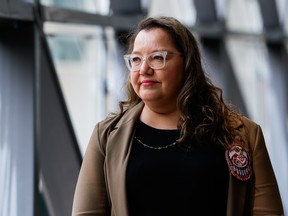
OTTAWA – The Assembly of First Nations (AFN) has unanimously passed a resolution calling on the federal government to criminalize Indian Residential School denialism in Canada.

THIS CONTENT IS RESERVED FOR SUBSCRIBERS
Enjoy the latest local, national and international news.
- Exclusive articles by Conrad Black, Barbara Kay and others. Plus, special edition NP Platformed and First Reading newsletters and virtual events.
- Unlimited online access to National Post.
- National Post ePaper, an electronic replica of the print edition to view on any device, share and comment on.
- Daily puzzles including the New York Times Crossword.
- Support local journalism.
SUBSCRIBE FOR MORE ARTICLES
Enjoy the latest local, national and international news.
- Exclusive articles by Conrad Black, Barbara Kay and others. Plus, special edition NP Platformed and First Reading newsletters and virtual events.
- Unlimited online access to National Post.
- National Post ePaper, an electronic replica of the print edition to view on any device, share and comment on.
- Daily puzzles including the New York Times Crossword.
- Support local journalism.
REGISTER / SIGN IN TO UNLOCK MORE ARTICLES
Create an account or sign in to continue with your reading experience.
- Access articles from across Canada with one account.
- Share your thoughts and join the conversation in the comments.
- Enjoy additional articles per month.
- Get email updates from your favourite authors.
THIS ARTICLE IS FREE TO READ REGISTER TO UNLOCK.
Create an account or sign in to continue with your reading experience.
- Access articles from across Canada with one account
- Share your thoughts and join the conversation in the comments
- Enjoy additional articles per month
- Get email updates from your favourite authors
Sign In or Create an Account
or
Article content
“Yesterday, the chiefs of assembly passed a resolution to address a situation that really needs dire attention,” said Chief Sheldon Kent, from Black River First Nation, who seconded the resolution that was passed unanimously on Tuesday. “It is a shame to live in a country that will not protect our people from hate crimes.”
Article content
Article content
Article content
In the spring, an amendment was made by Nunavut Sen. Nancy Karetak-Lindell to the Liberal government’s Bill C-9, also known as the Combatting Hate Act, to include residential school denialism in the suite of measures designed to protect places of worship and to address hate-motivated crimes.
Article content
Article content
Karetak-Lindell’s amendment said that any Canadian caught “condoning, denying or downplaying” residential schools, unless it was in private conversation, would be “guilty of an indictable offence and liable to imprisonment not exceeding two years.” The amendment was presented during the Senate’s standing committee on human rights, but ultimately defeated by the Senate as a whole. Bill C-9 received royal assent on June 18.
Article content
“Denialism seeks to minimize, distort and deny the harms of residential schools,” said Chief David Monias from Pimicikamak Cree Nation. “That’s what the Senate did.”
Article content
After the amendment was voted down, a spokesperson from Justice Minister Sean Fraser’s office, Jeremy Bellefeuille, said Indian Residential School denialism is a “serious and distinct issue” that does not fit within the scope of what the Combatting Hate Act was designed to do.
Article content
Article content
Free-speech advocates also characterized the wording of Karetek-Lindell’s amendment as overly broad.
Article content
Article content
AFN National Chief Cindy Woodhouse Nepinak called the Senate’s rejection of the amendment “regressive.”
Article content
The AFN’s resolution calls on the federal government to introduce stand-alone legislation to address the issue.
Article content
The resolution also directs the AFN to call on the federal government “to take concrete measures to advance public awareness and education, including curriculum and public campaigns on the truth of Indian Residential Schools and other colonial policies.”
Article content
According to the Truth and Reconciliation Commission’s 2015 report, 150,000 Indigenous children were forced to attend residential schools over 150 years. The commission characterized the system as a “cultural genocide” in 2015 and seven years later members of Parliament unanimously passed a motion that called the residential school system a genocide.
Article content
AFN B.C. Regional Chief Terry Teegee said there has been growing anti-Indigenous sentiment over the last five years following the 2021 discovery of over 200 suspected unmarked graves at the Kamloops residential school in B.C., which were detected using ground-penetrating radar. Similar discoveries at other sites sparked a national outcry.























/https%3A%2F%2Fsportsmole-media-prod.s3.gra.io.cloud.ovh.net%2Fuploads%2F2026%2F07%2Fdaniel-mcgregor-huyer-zuma-press-wire-luciano-gonzalez-anadolu-abacapress-com-estadio-azteca-harry-kane-jude-bellingham-composite-6a49eb8857b70695441164.png)
 Bengali (BD) ·
  English (US) ·