.png)
 2 hours ago
10
2 hours ago
10

Article content
If you want to derive the full measure of A Study in Red, the fourth novel by Connie Gault, start by familiarizing yourself with Edgar Degas’ painting, Combing the Hair. Colloquially dubbed “the big red monster,” for its mesmerizing use of a colour saturated in meaning — passion, love, danger, violence — it inflames a deceptively simple, domesticated but searing image, a young woman having her hair brushed by an older woman.

THIS CONTENT IS RESERVED FOR SUBSCRIBERS
Enjoy the latest local, national and international news.
- Exclusive articles by Conrad Black, Barbara Kay and others. Plus, special edition NP Platformed and First Reading newsletters and virtual events.
- Unlimited online access to National Post.
- National Post ePaper, an electronic replica of the print edition to view on any device, share and comment on.
- Daily puzzles including the New York Times Crossword.
- Support local journalism.
SUBSCRIBE FOR MORE ARTICLES
Enjoy the latest local, national and international news.
- Exclusive articles by Conrad Black, Barbara Kay and others. Plus, special edition NP Platformed and First Reading newsletters and virtual events.
- Unlimited online access to National Post.
- National Post ePaper, an electronic replica of the print edition to view on any device, share and comment on.
- Daily puzzles including the New York Times Crossword.
- Support local journalism.
REGISTER / SIGN IN TO UNLOCK MORE ARTICLES
Create an account or sign in to continue with your reading experience.
- Access articles from across Canada with one account.
- Share your thoughts and join the conversation in the comments.
- Enjoy additional articles per month.
- Get email updates from your favourite authors.
THIS ARTICLE IS FREE TO READ REGISTER TO UNLOCK.
Create an account or sign in to continue with your reading experience.
- Access articles from across Canada with one account
- Share your thoughts and join the conversation in the comments
- Enjoy additional articles per month
- Get email updates from your favourite authors
Sign In or Create an Account
or
Article content
Article content
There is a story here. We can see and intuit it, the tension between the two women, separate but aligned, tethered together by a crimson rope of hair. Look too long and the uncertainty only deepens—call it, the red see.
Article content
Article content
Perhaps, Degas and author Gault, who recruits the enigmatic image as both motif and blueprint for how to tell a whole other story, are reminding us that some mysteries resist explanation. Brush away, but there’s always another tangle that resists unravelling. Maybe that’s a good thing, in art and in life, where resolution rarely lives up to the power and allure of wonderment. Maybe mystery once solved loses its authority and its magic — and even its talent to enact change.
Article content
Just ask Amy and Carol, the novel’s duel narrators who tell sometimes conflicting versions of events in alternating chapters that hearken back to their memorable first encounter in 1962, when they were among a few guests, mostly girls and women, holidaying at the woodsy Northern Alberta retreat owned by Hattie, a pivotal if inscrutable presence and a spectacularly successful romance novelist who publishes as Miranda Morehart.
Article content
Article content
Carol is 13, captivated by the arrival of a golden girl, feminine half of an erotically charged pair she nicknamed the “honey couple.” Carol’s sexual awakening skips spring and propels headlong into the heat of summer as she watches the couple, engaged to be married, humidly paw away at each other, all that voyeuristic young-girl yearning a precursor to catastrophe.
Held hostage to her romantic imagination, Carol wants to “feel death the way I felt poetry,” and desperately craves a “secret she could carry to her grave.”
Article content
Let’s say, she gets one.
Article content
Article content
Article content
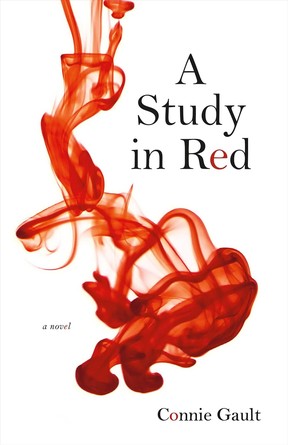
A Study in Red
Connie Gault
Thistledown
Article content
Gault, a master of understated revelation, wastes no time making us privy to what happened poolside, how it happened and to whom it happened. Even why it happened. So, now we know. The question is what do we do about what we know? The facts and the truth are not always mutually reconcilable even as the truth, unlike the facts, is not always knowable, even to those who bore witness.
Article content
The women and the girls, convinced by Hattie, to unsee what they saw, disperse, and try to resume normalcy. Amy and Carol, forever tethered to each other by their shared secret, vanish from each other’s lives, but are roused decades later, from a kind of self-induced stupor, by the death at 102, of Hattie. Her demise resurrects the undisclosed past in ways they can’t any longer control. Gault tasks Amy and Carol with the complicated job of reviving the unspeakable — less the devastating event itself, more the decision to consign it to silence.
And what have each of them done since with their one wild and precious life?




























/https%3A%2F%2Fsportsmole-media-prod.s3.gra.io.cloud.ovh.net%2Fuploads%2F2026%2F06%2Frio-ngumoha-email-sportmole-6a27b73e9a471352625861.png)
 Bengali (BD) ·
  English (US) ·