.png)
 1 hour ago
8
1 hour ago
8
Article content
Article content

Article content
Article content
Latest News
Article content
Article content
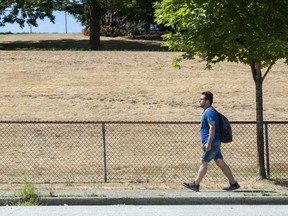
Lawn sprinklers across Metro Vancouver will soon go dry, as the region moves straight into stricter Stage 2 water restrictions weeks earlier than usual because of drought concerns and a shrinking snowpack.
Article content
Stage 1 restrictions typically begin May 1, limiting lawn watering to specific days and times. But Stage 2 — which bans all lawn watering — is usually reserved for later in the summer, when reservoirs come under pressure.
Article content
This year, officials are skipping ahead.
Article content
Metro said it’s activating Stage 2 restrictions earlier this year because of drought concerns, with below-normal snowpack levels and forecasts indicating a dry summer ahead.
Article content
Article content
—Cheryl Chan
Article content
Article content
Article content
A garden can be an oasis from life’s chaos, an idea that has long sent British Columbians to local garden shops at the first sign of spring. But this weekend, with record-high temperatures forecast for Sunday and Monday, the impulse might be more practical.
Article content
Article content
“It’s been very busy already,” said Rebecca Stevenson, assistant manager at Hunters Garden Centre in Vancouver. “Everyone wants their own little oasis.”
Article content
In Vancouver, temperatures could rise to 23 C on Sunday and 24 C on Monday, with 27 and 28 C forecast for Abbotsford, according to Environment Canada.
Article content
“Those are unusual temperatures in the sense of the daily temperature,” said meteorologist Colin Fong. “But on the flip side, it’s not all that unusual to see higher temperatures in May.”
Article content
While the average daytime high for early May is about 14, there are plenty of instances where the temperature has been much higher than that, with a record of 30 set later in the month. But Fong said there are indications the next three months will continue to be warmer than usual, with a “strong signal for above-normal temperatures” through May, June and July.
Article content
Article content
—Glenda Luymes
Article content
Article content
Kenya’s economy expanded at its slowest pace in five years in 2025, as drought weighed on the East African nation’s key agricultural sector.
Article content
Article content
Gross domestic product grew 4.6 per cent in 2025, compared with 4.7 per cent a year earlier, data from the Kenya National Bureau of Statistics showed Wednesday. That marked the slowest pace since 2020, at the height of the coronavirus pandemic.
Article content
Agricultural activity, which includes fishing and forestry, slowed to 3.1 per cent, from 4.4 per cent in 2024, the agency said. The sector contributes as much as a quarter to overall output.
Article content
Agriculture is largely “rain-fed and so that’s something that we are not able to control,” the statistics agency’s director general MacDonald Obudho said at a briefing in Nairobi, the capital.
Article content
—Bloomberg News
Article content
Article content
Tropical forest loss declined significantly last year, falling 36 per cent after reaching a record level in 2024. Still, the world lost 4.3 million hectares of rainforest — an area roughly the size of Denmark, or more than 11 soccer fields every minute.
Article content
New data from the University of Maryland, published through the World Resources Institute’s Global Forest Watch, shows that the loss of primary — or mature and largely undisturbed — humid tropical forests slowed down in 2025. But it was still 46 per cent higher than a decade earlier, and last year saw a relative lull in wildfires after an exceptionally bad fire year in 2024. Blazes are increasing in the tropics due to warmer temperatures and more severe droughts.

























/https%3A%2F%2Fsportsmole-media-prod.s3.gra.io.cloud.ovh.net%2Fuploads%2F2026%2F02%2Fimago1072832028-1-1-6996d086195c8904803070.jpg)
 Bengali (BD) ·
  English (US) ·