.png)
 1 week ago
119
1 week ago
119
 NASA's Artemis II moon rocket lifts off from the Kennedy Space Center in Florida on Wednesday. Photo by Scott Tilley
Article content
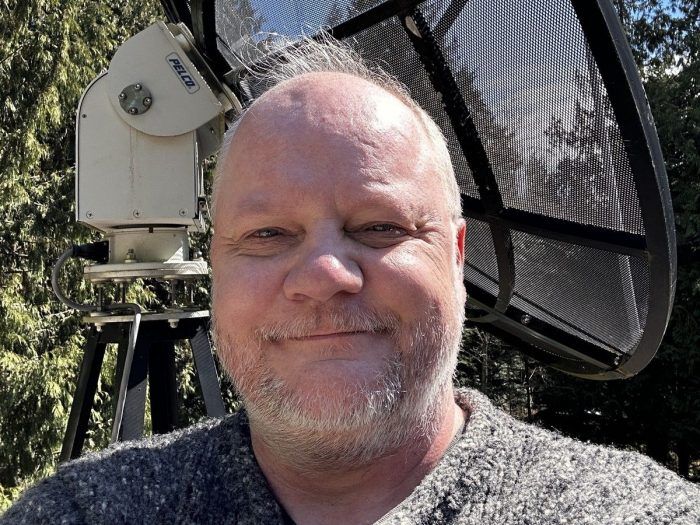
Scott Tilley has long been fascinated by the distant whispers of satellites and spacecraft drifting far above the Earth.

THIS CONTENT IS RESERVED FOR SUBSCRIBERS ONLY
Subscribe now to read the latest news in your city and across Canada.
- Unlimited online access to articles from across Canada with one account.
- Get exclusive access to the Vancouver Sun ePaper, an electronic replica of the print edition that you can share, download and comment on.
- Enjoy insights and behind-the-scenes analysis from our award-winning journalists.
- Support local journalists and the next generation of journalists.
- Daily puzzles including the New York Times Crossword.
SUBSCRIBE TO UNLOCK MORE ARTICLES
Subscribe now to read the latest news in your city and across Canada.
- Unlimited online access to articles from across Canada with one account.
- Get exclusive access to the Vancouver Sun ePaper, an electronic replica of the print edition that you can share, download and comment on.
- Enjoy insights and behind-the-scenes analysis from our award-winning journalists.
- Support local journalists and the next generation of journalists.
- Daily puzzles including the New York Times Crossword.
REGISTER / SIGN IN TO UNLOCK MORE ARTICLES
Create an account or sign in to continue with your reading experience.
- Access articles from across Canada with one account.
- Share your thoughts and join the conversation in the comments.
- Enjoy additional articles per month.
- Get email updates from your favourite authors.
THIS ARTICLE IS FREE TO READ REGISTER TO UNLOCK.
Create an account or sign in to continue with your reading experience.
- Access articles from across Canada with one account
- Share your thoughts and join the conversation in the comments
- Enjoy additional articles per month
- Get email updates from your favourite authors
Sign In or Create an Account
or
Article content
From his home on the Sunshine Coast, the amateur astronomer follows secret space missions, once discovered a missing satellite, and keeps tabs on space traffic — all by examining radio waves.
Article content
Article content
This week, he is tracking NASA’s Artemis II rocket as one of 34 individuals and organizations from around the world selected by the American space agency to monitor its first crewed mission to orbit the moon in more than 50 years.
Article content
Article content
“I’m excited to be part of it,” he said in an interview Thursday afternoon when the Artemis II had dipped 24 degrees below the horizon and was no longer traceable from the B.C. coast. But he admitted the mission was a “little bland.”
Article content
By signing up you consent to receive the above newsletter from Postmedia Network Inc.
Article content
“There’s so much information in the media. It’s so much more followed than other missions,” he said.
Article content
Tilley, whose blog is called Riddles In The Sky, is accustomed to finding and observing classified satellites whose launches are not publicized. Using an S-band radio and a two-metre dish mounted on a platform on the roof of his house, he scans the skies for radio signals. A software program records the frequency numbers, which he then extracts, using a “whole lot of math,” to determine a satellite’s position.
Article content
In contrast, the Artemis II, which launched Wednesday afternoon from Florida with a crew of four, including Canadian astronaut Jeremy Hansen, is being carefully watched, including by NASA’s Deep Space Network, an international array of giant radio antennas that support interplanetary spacecraft missions. The antennas, positioned in California, Spain and Australia, are part of the agency’s primary system for tracking space travel — although they might not be the most efficient.
Article content
Article content
 The Artemis II crewed lunar mission lifts off from Pad 39B at Kennedy Space Center in Cape Canaveral, Florida, on April 1, 2026. Photo by JIM WATSON /AFP via Getty Images
Article content
Last August, NASA issued a request for proposals seeking volunteers willing to track the spacecraft using radio waves. Tilley, who tracked the Artemis I, was one of the Canadian applicants selected, along with the Canadian Space Agency and the University of New Brunswick. Over the course of the 10-day mission, the groups will send their data to NASA.
Article content
Read More


Article content
“It’s like a test of non-NASA systems, to see how well they can keep track,” said Tilley.
Article content
The data will help NASA “identify ways to augment future moon and Mars mission support,” according to an agency statement. Or, as Tilley puts it, it’s a way to see if smaller stations that use technology such as his could be used on future moon missions, so they don’t have to task the larger, more costly primary systems.
Article content
Tilley, an electrical technologist who designs, installs and fixes power systems for boats, has been interested in radio waves since he was a boy. He remembers watching a 60 Minutes program with his father about kids who tracked Soviet satellites during the Cold War. He studied engineering in university and over time began tracking satellites as a hobby, hoping to learn more about celestial mechanics and the math behind it.

























 Bengali (BD) ·
  English (US) ·