.png)
 1 hour ago
9
1 hour ago
9
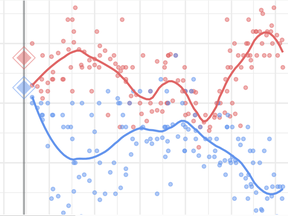
Article content
First Reading is a Canadian politics newsletter curated by the National Post’s own Tristin Hopper. To get an early version sent directly to your inbox, sign up here.

THIS CONTENT IS RESERVED FOR SUBSCRIBERS
Enjoy the latest local, national and international news.
- Exclusive articles by Conrad Black, Barbara Kay and others. Plus, special edition NP Platformed and First Reading newsletters and virtual events.
- Unlimited online access to National Post.
- National Post ePaper, an electronic replica of the print edition to view on any device, share and comment on.
- Daily puzzles including the New York Times Crossword.
- Support local journalism.
SUBSCRIBE FOR MORE ARTICLES
Enjoy the latest local, national and international news.
- Exclusive articles by Conrad Black, Barbara Kay and others. Plus, special edition NP Platformed and First Reading newsletters and virtual events.
- Unlimited online access to National Post.
- National Post ePaper, an electronic replica of the print edition to view on any device, share and comment on.
- Daily puzzles including the New York Times Crossword.
- Support local journalism.
REGISTER / SIGN IN TO UNLOCK MORE ARTICLES
Create an account or sign in to continue with your reading experience.
- Access articles from across Canada with one account.
- Share your thoughts and join the conversation in the comments.
- Enjoy additional articles per month.
- Get email updates from your favourite authors.
THIS ARTICLE IS FREE TO READ REGISTER TO UNLOCK.
Create an account or sign in to continue with your reading experience.
- Access articles from across Canada with one account
- Share your thoughts and join the conversation in the comments
- Enjoy additional articles per month
- Get email updates from your favourite authors
Sign In or Create an Account
or
Article content
TOP STORY
Article content
Article content
As the Liberals enjoy some of the most explosive polling leads in Canadian history, a leading pollster is suggesting that it’s mostly a product of mathematical error.
Article content
This week, Abacus Data CEO David Coletto suggested that many of his peers are chronically undercounting Conservative voters, presenting a “distorted version” of the electorate to the public.
Article content
Article content
“I do not believe that other pollsters are purposively doing anything wrong,” he wrote in an online post. He then suggested that Canadian surveys were routinely showing “a larger Liberal advantage than may actually exist in the electorate.”
Article content
By signing up you consent to receive the above newsletter from Postmedia Network Inc.
Article content
Abacus Data’s own surveys have indeed been showing a Liberal lead for the last few months, but not at the same margins as other polls.
Article content
One of their most recent surveys, published on March 24, showed the Liberals with a seven-point lead over the Conservatives (44 per cent Liberal to 37 per cent Conservative).
Article content
This is way out of step with other Canadian pollsters, all of whom are reporting a Liberal lead of at least 10 points.
Article content
An Ipsos poll on April 7 tracked a lead of 12 points (45 per cent Liberal, 33 per cent Conservative). A Leger poll on March 30 recorded a lead of 14 points (48 per cent to 34 per cent).
Article content
And a particularly dramatic mid-March poll by Ekos recorded a lead of more than 20 points; 47.5 per cent Liberal to 27 per cent Conservative. This particular survey represents one of the largest Liberal poll leads ever recorded in the history of Canadian opinion polling.
Article content
“I don’t believe the Liberals are leading by double digits,” wrote Coletto in an April 11 social media post. He added that the disparity was arising due to “under representation of conservative voters.”
Article content
Article content
I don’t believe the Liberals are leading by double digits and I’ll have a new analysis of 10+ years of Abacus Data and the under representation of conservative voters in samples coming out next week.
The 2025 election is also an interesting case study.
If you aren’t trying to… https://t.co/BtVeXEXj2j
Article content
In a follow-up analysis published on the official Abacus Data website, Coletto suggested that the problem lay in how surveys were being weighted.
Article content
Article content
Even a poll with a sample size of a few thousand people isn’t going to be an accurate reflection of the Canadian electorate. The way pollsters traditionally get around this is by tweaking the results based on demographics such as region or age.
Article content
As an example, Manitobans represent about four per cent of the Canadian population. So if a pollster has a sample that’s only two per cent Manitobans, they might decide to give those responses extra weight in order to more accurately reflect Manitoba’s share of overall Canadian public opinion.
Article content
Coletto’s claim is that demographic weighting, on its own, is consistently misrepresenting the share of the Conservative vote, and blowing out the Liberal lead.
Article content
The blog post was motivated in part because Abacus Data keeps delivering numbers that are way more favourable to the Conservatives than any other pollster.
Article content
As recently as January, Abacus Data had the Conservatives and Liberals tied at 40 per cent, when everybody else was tracking a Liberal lead of between three and five points.




























 Bengali (BD) ·
  English (US) ·