.png)
 3 hours ago
13
J.K. Rowling made Hogwarts feel like a place readers could genuinely inhabit. Its enchanted ceilings, secret passages, moving portraits, and bustling Diagon Alley gave Harry Potter an irresistible sense of wonder. Yet beneath that magical charm, the Wizarding World’s political machinery, economy, and occasionally elastic rules of spellcasting leave plenty of room for scrutiny.
Some fantasy authors build their worlds with almost archaeological precision. Their invented civilizations possess linguistic ancestry, functioning institutions, ecological constraints, and historical grievances that shape events centuries later. This ranking examines 6 individual fantasy novels through historical depth, cultural complexity, geographical coherence, magical consistency, and narrative integration.
It’s an editorial comparison of worldbuilding, not a verdict on which books have better characters or more entertaining stories. Harry Potter excels at making magic accessible; these novels go further in explaining what makes their worlds tick.
6 A Wizard of Earthsea Binds Magic
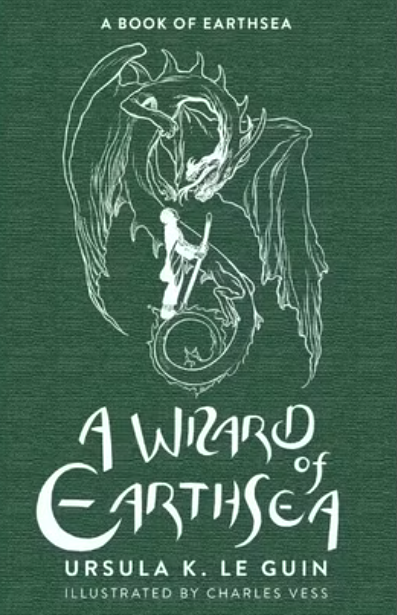 Image via Gollancz
Author: Ursula K. Le Guin | Published: 1968
Long before Hogwarts became a household name, Le Guin imagined Roke, an island school where wizards learn that magic carries consequences. In A Wizard of Earthsea, knowing something’s true name grants power over it, while careless sorcery risks disturbing the world’s equilibrium. Ged discovers this the hard way when his arrogance unleashes a shadow he cannot simply banish with a convenient spell. The National Endowment for the Arts’ reading guide explains how the Old Speech connects names, identity, and magical authority.
Earthsea’s archipelago also shapes its civilizations. Maritime travel determines communication, while isolated islands preserve distinct traditions. Le Guin ranks sixth because her magic possesses philosophical discipline that Hogwarts’ more flexible spellcasting sometimes lacks. However, her deliberately spare exposition leaves much of Earthsea’s broader history unexplained in this first novel.
5 A Game of Thrones Makes Politics Its Greatest Weapon
 Image via Bantam Spectra
Author: George R. R. Martin | Published: 1996
Westeros operates like a medieval political machine with blood in its gears. Noble houses inherit feuds, marriages redistribute influence, and geographical barriers dictate military strategy. The North’s vast distances complicate governance, the Vale’s mountains provide natural defenses, and the Riverlands repeatedly become a battlefield for competing powers. Meanwhile, the Iron Throne depends on alliances that can disintegrate with a single death.
George R. R. Martin also gives religion political consequences, from the old gods worshipped in the North to the Faith of the Seven. The publisher’s A Song of Ice and Fire collection establishes the series’ competing dynasties and historical conflicts. Unlike the Ministry of Magic, whose institutions primarily serve Harry’s immediate story, Westeros’ political system generates conflicts independently of any single protagonist.
Fifth place reflects Martin’s formidable political realism, although its magical systems remain less thoroughly defined than those of higher-ranked entries.
4 Gardens of the Moon Unearths Empires
 Image via Tor Fantasy
Author: Steven Erikson | Published: 1999
Erikson expects readers to navigate his world without a tour guide. Gardens of the Moon introduces the expansionist Malazan Empire, the ancient Tiste Andii, rival gods, and magical Warrens whose workings initially remain obscure. The setting’s extraordinary depth comes from accumulated history. The ancient conflict between the Jaghut and T’lan Imass, alongside the Malazan Empire’s struggle for Darujhistan, shows how disputes spanning millennia continue shaping the present.
Erikson’s archaeological and anthropological background helps explain this approach. Macmillan’s official author biography identifies both disciplines as part of his training. Where Hogwarts reveals history through lessons and occasional discoveries, Erikson’s characters inhabit its consequences without necessarily understanding them. Fourth place recognizes his unmatched archaeological sensibility. However, the novel’s labyrinthine exposition can make its otherwise extraordinary world difficult to appreciate on a first reading.
3 The Eye of the World Weaves Ages
 Image by Tor Books
Author: Robert Jordan | Published: 1990
Robert Jordan builds an entire civilization around the terrifying possibility that history is destined to repeat itself. In The Eye of the World, the Wheel of Time turns through recurring Ages, while the Dark One threatens the Pattern governing existence. The One Power, divided into saidin and saidar, shapes society through its dangers and the authority of the Aes Sedai.
The Dark One’s taint on saidin, the male half of the True Source, drives male channelers toward madness. Their predecessors’ destruction of civilization during the Breaking of the World explains the fear surrounding men who can channel. Jordan’s world further distinguishes the Two Rivers, Borderlands, and other regions through customs, political obligations, and competing interpretations of prophecy.
2 The Way of Kings Makes Nature King
 Image via Tor Books
Author: Brandon Sanderson | Published: 2010
Roshar is a planet where geography refuses to play second fiddle. Its devastating highstorms determine architecture, agriculture, wildlife, and even military logistics. Animals develop protective shells, vegetation retreats from violent winds, and settlements exploit natural shelter. The author’s official description establishes how this hostile environment influences virtually every aspect of civilization.
Meanwhile, Shardblades and Shardplate reshape warfare, while Stormlight and spren connect supernatural phenomena to the natural world. Sanderson explicitly described his ambitions in an official worldbuilding discussion:
I consider Roshar my showpiece for worldbuilding.
Sanderson’s broader Cosmere draws inspiration from numerous storytelling traditions, including his desire to challenge familiar fantasy conventions.
1 The Lord of the Rings Forges Ages
 Image via George Allen & Unwin
Author: J.R.R. Tolkien | Published: 1954–1955
Tolkien’s Middle-earth possesses something few fictional worlds can rival: a convincing history that predates the story by millennia. Quenya and Sindarin have grammatical structures, linguistic ancestry, and historical transformations. Gondor’s architecture reflects Númenórean heritage, while Rohan’s culture preserves its people’s distinct traditions. Even ruined watchtowers and forgotten roads carry traces of vanished civilizations.
According to the Tolkien Estate’s linguistic research, Tolkien explained:
The invention of languages is the foundation.
His fictional histories developed alongside those languages, eventually encompassing the creation mythology of The Silmarillion, the downfall of Númenor, and the events preceding the War of the Ring. Tolkien takes first place because Middle-earth feels historically independent of Frodo’s journey. Its languages, geography, and mythology suggest countless untold stories beyond the Fellowship’s adventure.
Would you crown Middle-earth fantasy’s greatest fictional world, or does Sanderson’s Roshar deserve the throne? Share your ranking in the comments and follow FandomWire for more rankings, Tolkien lore, updates, and Harry Potter comparisons.




























 Bengali (BD) ·
 English (US) ·