.png)
 2 weeks ago
10
2 weeks ago
10
There are anime arguments, and then there is saying something sacrilegious like “these five anime are better than Cowboy Bebop.” Shinichiro Watanabe’s 1998 classic remains a landmark for a reason: its effortlessly cool direction, jazz-infused soundtrack, melancholy characters and genre-hopping storytelling made 26 episodes feel like an entire universe. Sunrise itself lists the series as a 26-episode production directed by Watanabe.
But “better” does not have to mean more stylish, more influential or more beloved. It can mean deeper psychological writing, grander world-building, greater thematic ambition or a more complete emotional journey. On those fronts, five masterpieces make an unusually convincing case for stealing Bebop’s crown.
1 Monster Is A Masterclass In Psychological Storytelling
 Johan from Monster. [Credit: Madhouse]
Few anime understand that the scariest monster is the one who barely needs to raise his voice. Monster, adapted from Naoki Urasawa’s acclaimed manga by Madhouse, follows neurosurgeon Kenzo Tenma after he saves young Johan Liebert instead of a politically important patient. Years later, Tenma discovers the horrifying consequences of that decision. The anime ran for 74 episodes from 2004 to 2005.
Its greatest weapon is restraint. Johan’s menace comes less from spectacle than from psychology, while Tenma’s moral crisis gives the story an unusually human center. Urasawa’s manga won a Japan Media Arts Festival Excellence Prize, underscoring the story’s critical pedigree. Where Cowboy Bebop turns loneliness into cool noir, Monster turns morality itself into a psychological thriller. That makes its slow burn devastatingly effective.
2 Legend Of The Galactic Heroes Is An Epic Without Equal
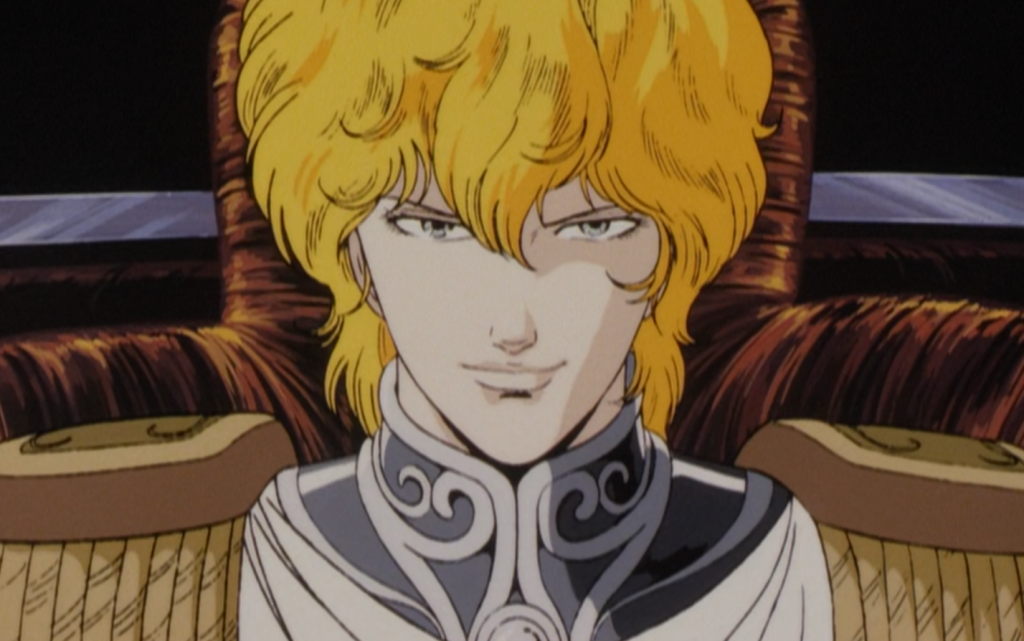 Richard from Legend Of The Galactic Heroes. [Credit: Production I.G]
If Cowboy Bebop makes space feel like a lonely highway, Legend of the Galactic Heroes makes it feel like human history happening at hyperspeed. Yoshiki Tanaka’s adaptation follows military genius Reinhard von Lohengramm and historian-turned-strategist Yang Wen-li as the Galactic Empire and Free Planets Alliance collide in a sprawling political and military struggle. The original OVA was released between 1988 and 1997 and eventually reached 110 episodes.
That enormous runtime is not bloat; it is the point. Governments rise and collapse, commanders die, ideologies evolve and minor decisions echo across generations. Bebop excels at intimate character tragedy, but Legend of the Galactic Heroes asks much bigger questions about democracy, authoritarianism, war and whether history is shaped by individuals or institutions. If epic storytelling is the measuring stick, this is less a challenger to Bebop than an entire galaxy entering the ring.
3 Neon Genesis Evangelion Changed Anime Forever
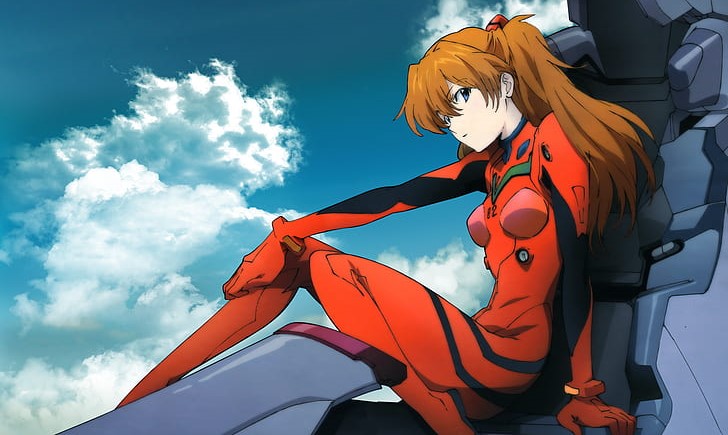 Asuka from Neon Genesis Evangelion. [Credit: Gainax]
Some anime are successful. Others arrive, kick open the door and permanently rearrange the furniture. Neon Genesis Evangelion belongs firmly in the second category. Hideaki Anno’s 1995 television series follows teenager Shinji Ikari as he is recruited to pilot an Evangelion against mysterious enemies threatening Tokyo-3. The original series contains 26 episodes and became what the official Evangelion site describes as a social phenomenon.
What makes Evangelion’s case against Cowboy Bebop so formidable is its sheer influence and formal ambition. It turns giant-robot spectacle into an examination of depression, isolation, identity and human connection, while increasingly breaking the conventions of its own genre. The Japan Media Arts Festival later recognized the series with an Animation Excellence Prize. Bebop perfected cool. Evangelion made anime uncomfortable, introspective and culturally seismic.
4 Fullmetal Alchemist Brotherhood Is Nearly Perfect
Very few long-running anime stick the landing. Fullmetal Alchemist: Brotherhood practically nails it with both hands. Produced by Bones and directed by Yasuhiro Irie, the 2009–2010 series runs for 64 episodes and follows brothers Edward and Alphonse Elric after a disastrous attempt to resurrect their mother leaves Edward missing limbs and Alphonse without a body.
The genius is its balance. Political conspiracy, war crimes, philosophical questions about equivalent exchange and gloriously inventive action all serve the same emotional story. Better yet, Brotherhood was designed as a faithful adaptation of Hiromu Arakawa’s completed manga, unlike the earlier 2003 series, which eventually developed its own storyline. Cowboy Bebop is more stylistically singular, but Brotherhood has the rare advantage of feeling almost perfectly engineered: character arcs matter, world-building matters, consequences matter, and somehow the jokes still land.
5 Mushishi Is A Hauntingly Beautiful Anime Experience
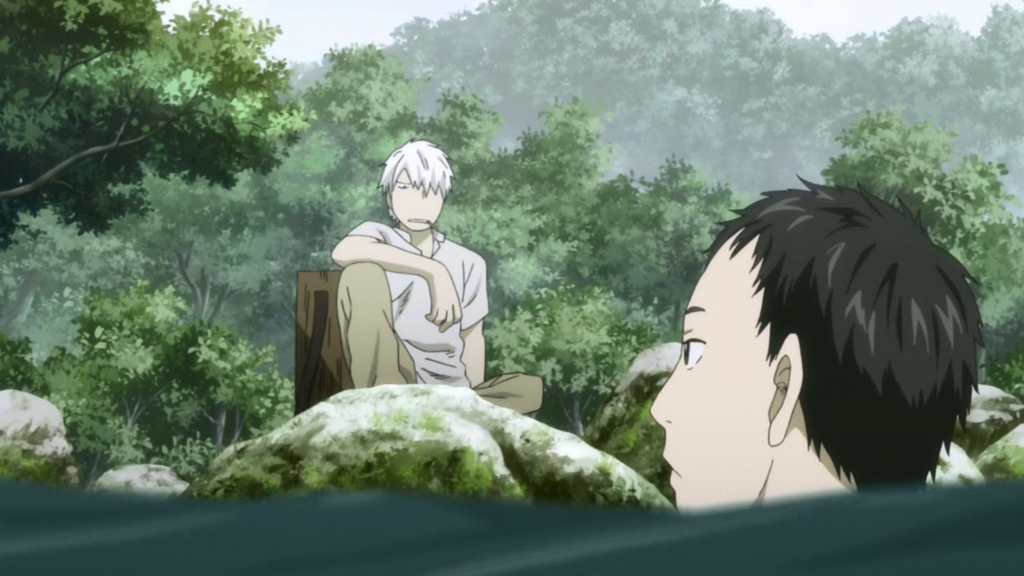 Ginko from Mushishi. [Credit: Artland]
Mushishi does something almost rebellious in modern anime: it refuses to hurry. Adapted from Yuki Urushibara’s manga, the Artland series follows Ginko, a wandering researcher who investigates mysterious lifeforms called mushi and the strange effects they have on humans. Its first television series consists of 26 episodes, originally airing from 2005 into 2006.
Instead of building toward increasingly enormous battles, Mushishi finds drama in small tragedies: a child, a village, an illness, a strange light or a family quietly losing something precious. The manga won both a Japan Media Arts Festival Excellence Prize and the Kodansha Manga Award, while the anime won Tokyo Anime Awards Grand Prizes for television series and art direction. If Cowboy Bebop makes melancholy look cool, Mushishi makes it feel elemental. It does not chase you for attention. It simply waits, and somehow leaves the deepest scar.
Is Cowboy Bebop really the best of the best? Tell us which anime deserves the crown in the comments!
















/https%3A%2F%2Fsportsmole-media-prod.s3.gra.io.cloud.ovh.net%2Fuploads%2F2026%2F09%2Ficonsport-373637-0018-6a9e6d20a27e0398293470.jpg)
 Bengali (BD) ·
  English (US) ·