.png)
 2 days ago
14
2 days ago
14
Spoiler Alert !!!
This article contains major spoilers for Toy Story 5, including details about the plot and ending. If you haven't seen it, watch it and then come back.
Pixar’s Toy Story 5 wears its anxieties about the modern world on its sleeve. In the film’s ending, Jessie (Joan Cusack) helps Bonnie (Scarlett Spears) and Blaze (Mykal-Michelle Harris) forge a genuine friendship. Lilypad (Greta Lee) finds a place alongside traditional toys. And, most importantly, the story ultimately rejects the idea that technology and imagination must be enemies. Indeed, the movie shows how both can coexist if they allow kids to form real connections. So the conclusion the movie comes to is rather realistic, rather than simplistic “technology bad”.
Andrew Stanton‘s Pixar sequel is far removed from the time when the toys were afraid of being cast out into oblivion. But this time the threat isn’t another child, a daycare center, or a collector’s shelf. It’s a glowing screen. This time, the screen itself poses a threat. However, as mentioned above, this movie is much too sophisticated (and humane) to make the obvious claim about the technological impact on children.
Now that Toy Story 5 has been released, let’s dive into it all in more detail. But first, here’s the movie in a nutshell:
| Field | Details |
| Title | Toy Story 5 |
| Director | Andrew Stanton |
| Premise | When Bonnie becomes increasingly dependent on a child-friendly tablet called Lilypad, Jessie, Woody, Buzz, and other toys grapple with a changing world where screens compete with traditional play. Their efforts to help Bonnie form a genuine friendship lead them to question whether technology and imagination can coexist. |
| Main Voice Cast | Tom Hanks, Tim Allen, Joan Cusack, Greta Lee, Scarlett Spears, Mykal-Michelle Harris |
| IMDb Rating (as of June 19, 2026) | 7.8/10 |
| Rotten Tomatoes Rating (as of June 19, 2026) | 93% | 93% |
How Does Toy Story 5 Resolve Its Toys vs. Technology Conflict?
-

Credits: Pixar Animation Studios
⛶ -

Credits: Pixar Animation Studios
⛶ -

Credits: Pixar Animation Studios
⛶


For most of Toy Story 5, which takes the franchise into a new direction, the conflict appears deceptively simple. Jessie perceives Lilypad as the next stage of evolution, which has been threatening the existence of toys for ages already. In her opinion, screens are not simply competitors of toys but speed up childhood itself. Each minute spent on the web by Bonnie means a loss of part of her imagination.
It seemed at the beginning of the movie that it was going to confirm all the worst predictions of Jessie. She tries to become popular among the people who use the Lilypad and social media, but Bonnie experiences rejection and humiliation. Worse, she eventually rejects Jessie and Bullseye altogether, insisting that she’s outgrown toys. For a franchise built on the terror of abandonment, it’s a devastating moment.
But this Pixar movie does not allow this to turn into a triumph of nostalgia. On the contrary, it ends up with a more complex resolution. Once Lilypad recognizes the harm being caused by the toxic social environment surrounding Bonnie, she stops acting as a rival to the toys and starts helping them. The final push to bring Bonnie and Blaze together requires both sides working toward the same goal.
And this is exactly the point. Bonnie and Blaze don’t become friends because technology disappears. Nor do they connect because toys somehow defeat modernity. And they are not united because toys have conquered modernity. They have found their common point of view through all the tools available to them.
The way out of the situation is surprisingly wise. Instead of imposing the choice between toys and technology on children, Toy Story 5 proves that both can have their importance when they serve a human connection. Technology was never the trouble; the trouble was that technology became an alternative to human connection
Why Does Jessie’s Journey Matter So Much?
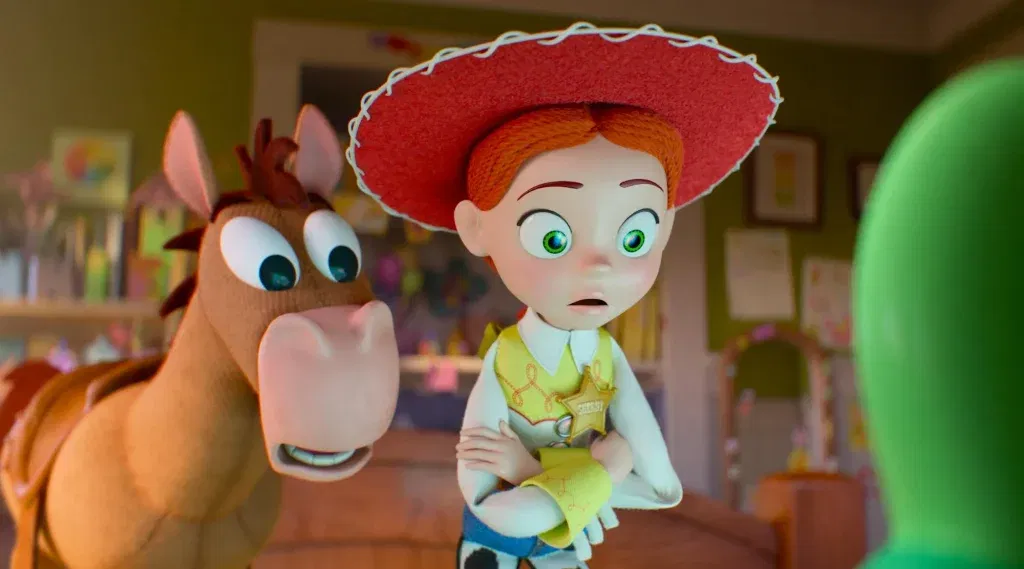 Jessie and Bullseye in Toy Story 5 | Credits: Pixar Animation Studios
Although Woody (Tom Hanks) and Buzz (Tim Allen) remain important players, this is ultimately Jessie’s story. Which is great because she is one of the franchise’s smartest toys. Fittingly, her emotional arc mirrors the film’s larger themes. Jessie has spent her entire existence haunted by what happens when children grow up. Her trauma with Emily transformed her into perhaps the franchise’s most emotionally vulnerable character. So when Bonnie leaves her behind, the wound reopens with brutal force.
What changes everything is Jessie’s discovery of the keepsakes Emily left behind. The revelation that she remained an important part of Emily’s life long after childhood allows Jessie to confront a painful truth: being loved doesn’t guarantee permanence. Children grow up. They always have. The toys can’t stop that process any more than parents can stop their children from becoming adults.
But what they can do is give help to shape that journey through childhood. And that’s an idea that runs throughout the whole franchise, although this movie gives it a fresh resonance. What the toys can do is help them grow up in the right way. We can’t wait to rewatch Toy Story 5 once its hits streaming.
What Does Lilypad’s Redemption Mean?
 Woody and Buzz come face-to-face with Lilypad | Credits: Pixar Animation Studios
One of the best decisions in this movie is the fact that Lilypad is not turned into a villain. For much of the story, she functions as an antagonist because her worldview clashes with Jessie’s. She thinks Bonnie should be caught up with her friends, whereas Jessie thinks that Bonnie is being forced to grow up too fast.
The end of the movie (and the mid-credit scene) shows that these two characters have the same thing in mind; they want Bonnie to be happy. Once Lilypad realizes how social media has influenced Bonnie, she turns things around. Rather than replacing toys, she becomes part of Bonnie’s support system. This helps bring out one of the key themes of the movie, which says that technology can either separate people or connect them.
What Is the Real Meaning of Toy Story 5‘s Ending?
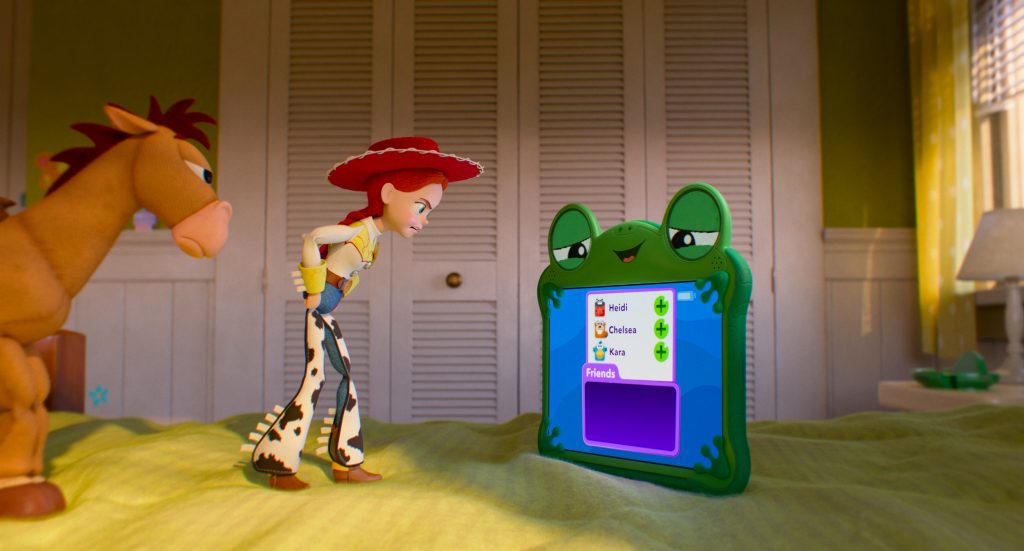 A still from Toy Story 5 | Credits: Pixar
Like every previous Toy Story movie, including Toy Story 3 (perhaps the best movie in the franchise yet), the ending is less concerned with toys than with the people who care for them. Hidden beneath the humor, action, speaking toys (and a great soundtrack) is a story about childhood itself. In using Bonnie’s problems, Stanton looks at a generation of kids being raised in a rapidly digitalized world and having to grow up quicker and pretend themselves for someone else.
And it is in no way an either/or solution. The movie does not glorify the past; it is also quite critical of technology. It stresses imagination, friendship, and play as something important, no matter what changes in the world.
Did the ending of Toy Story 5 satisfy you? Let us know your thoughts in the comments.
Toy Story 5 released in theaters in the US today (June 19, 2026).


























/https%3A%2F%2Fsportsmole-media-prod.s3.gra.io.cloud.ovh.net%2Fuploads%2F2026%2F06%2Frio-ngumoha-email-sportmole-6a27b73e9a471352625861.png)
 Bengali (BD) ·
  English (US) ·