.png)
 1 week ago
22
1 week ago
22
Every battle shonen wants its heroes to get stronger. The problem is that the stronger they become, the harder it is to keep fights exciting. When power growth spirals out of control, yesterday’s threats become irrelevant, entire casts get left behind, and victory starts feeling inevitable instead of earned. That challenge is especially relevant when discussing One Piece. Eiichiro Oda‘s legendary series remains one of manga’s greatest accomplishments, but its late-game powerscaling has sparked endless debates among fans over Haki, Devil Fruits, and where certain characters truly stand.
The anime on this list succeeded by taking a different approach. Instead of relying on endless escalation, they built clear rules, meaningful limitations, strategic depth, and consequences directly into their power systems. Hence, the tension that survives even after major power-ups. This list explores the hidden design choices that allowed these series to handle powerscaling better than One Piece.
1 Gachiakuta Proves Stronger Doesn’t Always Mean Better
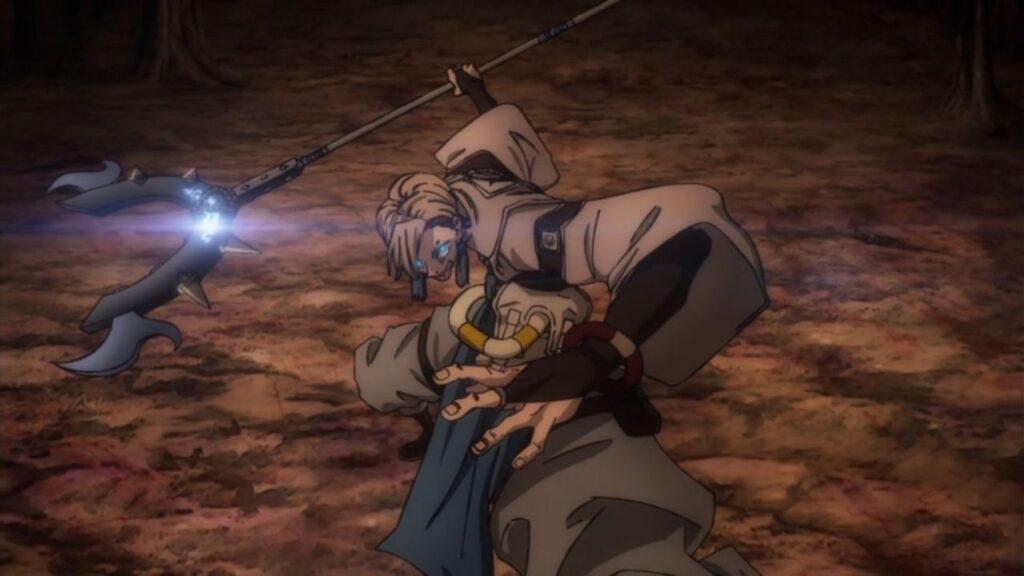 Zanka from Gachiakuta. [Credit: Bones Film]
Gachiakuta centers on “Jinkis.” These are items imbued with a user’s soul. Power is derived from the value a person places on an object, making the system deeply personal and fixed. You cannot simply “train” to get a better Jinki. You must deepen your connection to your tool. This prevents traditional power creep because a protagonist’s “trash” can be more effective than a villain’s “treasure” based on usage. It is a masterclass in keeping progression tied to character development rather than arbitrary energy numbers.
2 Demon Slayer Never Lets Power Outgrow the Story
The power of the Demon Slayer Corps is strictly biological. Total Concentration Breathing is a technique to push human limits, but it never grants the protagonists “supernatural” durability. One mistake against an Upper Moon means death or permanent disability. This mortality prevents the “narrative-breaking strength” problem, as even the strongest Hashira requires teamwork and sacrifice to win. The scaling remains tight because the fundamental vulnerability of the human body never changes.
3 YuYu Hakusho Perfected Battle Shonen Power Growth Early
 Hiei, Kurama, Yusuke, Kazuma, Keiko, and Botan from YuYu Hakusho. [Credit: Pierrot & Fuji TV]
While it uses a letter-based ranking (E to S-class), Togashi used these ranks to highlight the psychological weight of power. During the Chapter Black arc, “Territory” abilities were introduced that completely bypassed raw strength. An S-class demon could still be defeated within a “Territory” if they broke the specific rules of that space, such as forbidden words. This pivot ensured that the series didn’t become a repetitive cycle of “who can punch harder,” maintaining tension through intellectual warfare.
4 Fire Force Keeps Escalation Exciting Without Breaking Logic
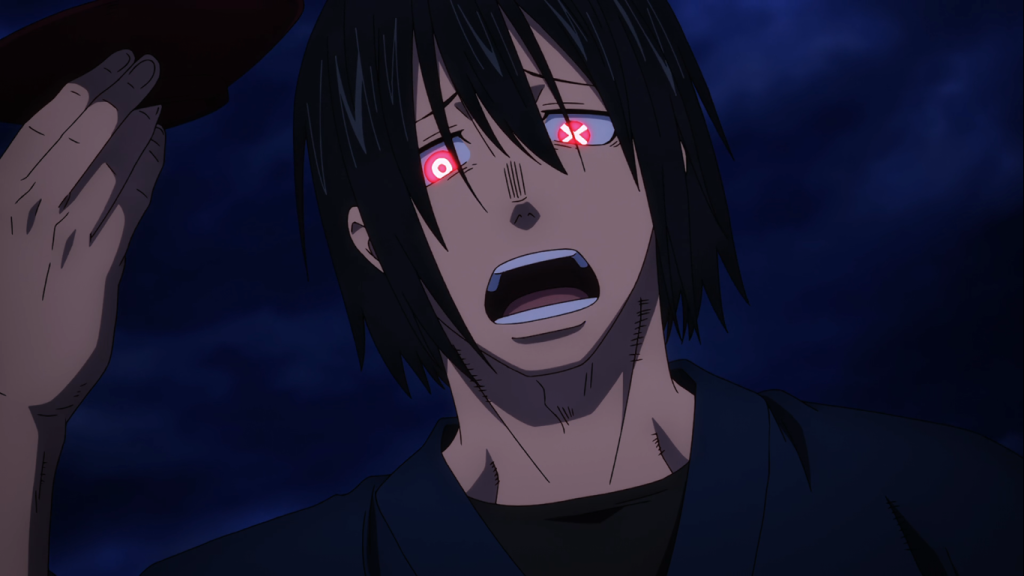 Benimaru from Fire Force. [Credit: David Production]
Despite reaching cosmic scales, Fire Force maintains internal consistency through its “Adolla Burst” mechanics. Progression is tied to the character’s relationship with heat and kinetic energy. Shinra’s later abilities are framed as extensions of Adolla’s connection to perception, heat, and reality, allowing the escalation to remain rooted in concepts the series established much earlier. It’s chaotic, flashy, and beautifully logical.
5 JoJo Proved Smart Abilities Beat Bigger Power Levels
 Jotaro Kujo from JoJo’s Bizarre Adventure series. [Credit: David Production]
After Part 2, JoJo’s Bizarre Adventure abandoned traditional strength scaling for “Stands.” Combat became a series of puzzles where victory depends on understanding a Stand’s specific, often bizarre, rule set (e.g., Darby’s gambling or Kira’s bombs). Since most Stands have a fixed range and power, the “creep” is horizontal rather than vertical. This prevents the “cast invalidation” seen in One Piece, where characters without specific Haki types simply cannot participate in high-level conflicts.
6 Witch Hat Atelier Makes Magic Feel Truly Earned
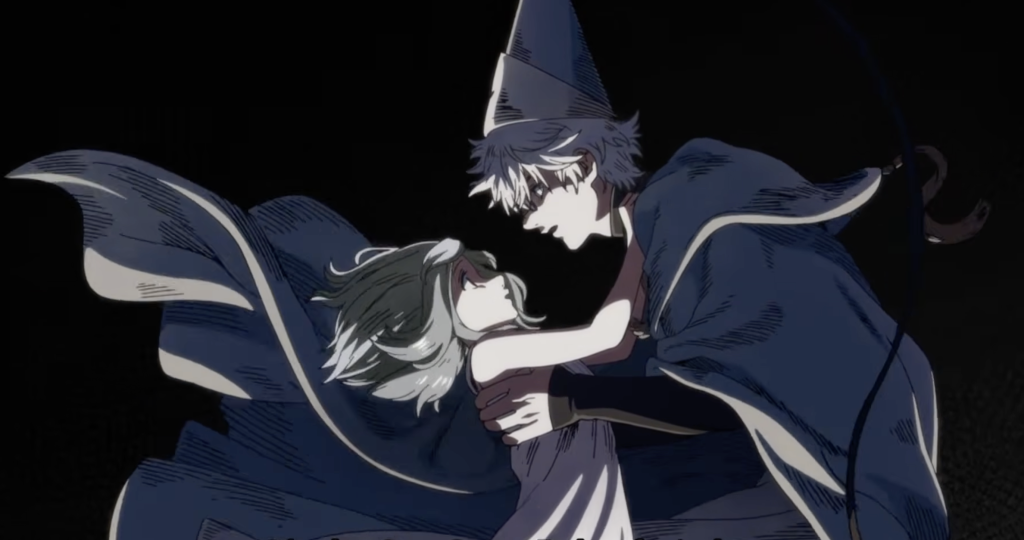 Coco and Qifrey in Witch Hat Atelier. [Credit: BUG FILMS]
In Witch Hat Atelier, magic is drawn, not channeled through innate talent. Scaling is determined by a character’s knowledge of geometry and rune combinations. Because magic is a craft, the “power” of a spell is limited by the artist’s precision and ink supply. This creates a system where growth is purely intellectual. A novice can outsmart a master by combining basic symbols in creative ways, ensuring that the escalation of the plot never outpaces the logical boundaries of the established magical language.
7 Jujutsu Kaisen Makes Every Power Boost Come at a Price
Jujutsu Kaisen utilizes “Binding Vows” to keep combat grounded. Characters can increase their effectiveness through Binding Vows, often trading information, restrictions, or future risks for greater power. This creates an awesome psychological game where gaining power requires giving up your tactical advantage. Even the strongest, Gojo, is defined by the specific, complex mechanics of “Infinity” rather than just a high energy output. Victory always requires exploiting specific rules, not just shouting louder.
8 Fullmetal Alchemist Set the Standard for Balanced Powerscaling
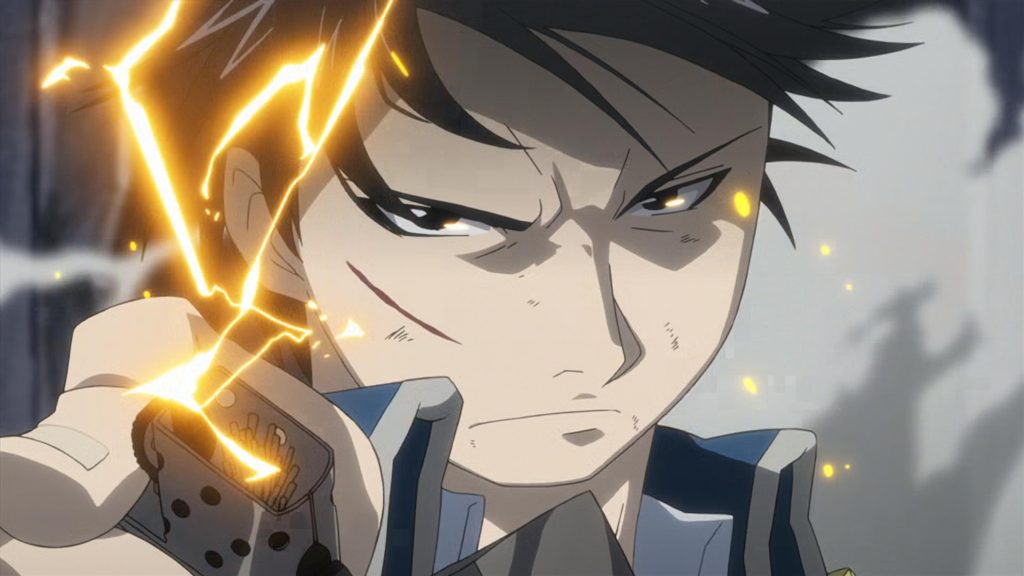 Roy Mustang from Fullmetal Alchemist: Brotherhood. [Credit: Bones]
The law of Equivalent Exchange acts as a hard ceiling on power in the Fullmetal Alchemist universe. Alchemy is a science, not a superpower. You cannot create something from nothing. This physical law prevents “uncontrolled power creep” because every offensive move has a literal cost in matter. Even the God-like power of a Philosopher’s Stone is revealed to have a finite, horrific cost in human souls. That’s how the story keeps the stakes incredibly high without ever needing to inflate the heroes’ power levels.
9 World Trigger Proves Strategy Beats Raw Power
 Yuma Kuga from World Trigger. [Credit: Toei Animation]
World Trigger treats sci-fi battles like a highly competitive tactical video game. Everyone draws from an energy source called Trion, but having a massive pool of it doesn’t make you invincible. The show focuses heavily on teamwork, terrain, and clever traps. The main character, Osamu, stays physically weak throughout the series. Instead of getting a cheap, magical power-up, he wins by being a brilliant coordinator, proving you don’t need to destroy planets to be relevant.
10 Hunter x Hunter Created Shonen’s Smartest Power System
 Killua from Hunter x Hunter. [Credit: Madhouse]
Instead of a simple “who has the bigger energy blast” contest, Hunter x Hunter uses Nen, a system governed by strict personal contracts. If you want a massive boost, you have to accept a massive risk. For example, Kurapika gains world-class power, but it only works against one specific group of villains. And if he breaks his own rule, he dies. This “risk-reward” design means a weaker character can totally outsmart a powerhouse, keeping every fight tense and unpredictable.
Here’s a summary table for the abovementioned anime:
| Gachiakuta | Kei Urana | Bones Film | July 6, 2025 | 8.0/10 | Crunchyroll |
| Demon Slayer | Koyoharu Gotouge | ufotable | April 6, 2019 | 8.6/10 | Crunchyroll, Netflix |
| YuYu Hakusho | Yoshihiro Togashi | Studio Pierrot | October 10, 1992 | 8.5/10 | Crunchyroll, Netflix |
| Fire Force | Atsushi Ohkubo | David Production | July 6, 2019 | 7.6/10 | Crunchyroll |
| JoJo’s Bizarre Adventure | Hirohiko Araki | David Production | October 6, 2012 | 8.6/10 | Crunchyroll, Netflix |
| Witch Hat Atelier | Kamome Shirahama | BUG FILMS | April 6, 2026 | 8.8/10 | Crunchyroll |
| Jujutsu Kaisen | Gege Akutami | MAPPA | October 3, 2020 | 8.5/10 | Crunchyroll, Netflix |
| Fullmetal Alchemist: Brotherhood | Hiromu Arakawa | Bones | April 5, 2009 | 9.1/10 | Crunchyroll, Netflix |
| World Trigger | Daisuke Ashihara | Toei Animation | October 5, 2014 | 7.4/10 | Crunchyroll |
| Hunter x Hunter (2011) | Yoshihiro Togashi | Madhouse | October 2, 2011 | 9.0/10 | Crunchyroll, Netflix |
Which anime do you think has the smartest powerscaling system ever created? Share your ranking in the comments below!























 Bengali (BD) ·
  English (US) ·