.png)
 1 hour ago
9
1 hour ago
9
Article content
“That’s not just violent crime, but that’s actually a proxy to another foreign government that’s interfering and operating on foreign soil,” Huish said.
Article content

Article content
Canada’s political establishment has only begun to respond, with Conservative Leader Pierre Poilievre announcing in early June that he would “find and deport all visiting criminals, gangsters and extortionists, including members of the Bishnoi gang,” if his party ever won power.
Article content
With Canada letting record-high numbers of Indian nationals into the country starting in the early 2020s, the Bishnoi group has tapped into Canada’s massive pool of largely undocumented temporary workers and foreign students to build an army of enforcers. The gang even sent a letter to the RCMP boasting about how its international network of foot soldiers now totals more than 1,000. (Warring, for his part, came to Canada in 2013 on a temporary work permit as an electrician.)
Article content
As its foothold in the country has grown, the Bishnoi gang has become the key conduit for what has become a rapid spread of Indian transnational violence in Canada. Amid a relentless string of the group’s shootings, arsons, murders and extortions of Sikh and other South Asian diaspora members, Canada is left to manage a security threat of its own creation, bred from a permissive immigration system that has yet to be meaningfully corrected. Canadian authorities, meanwhile, are struggling to subdue repeated violent outbursts.
Article content
Article content
The Bishnoi group’s activities often appear to target people aligned with India’s pro-Khalistan movement, under which Sikh separatists have for decades sought to establish an autonomous state called Khalistan in the country’s northern Punjabi region.
Article content
The separatist movement began in earnest in the 1940s, when the British drew India and Pakistan’s modern-day borders. India’s minority Sikh population has continued to clash with the majority Hindu population ever since, with tensions boiling over in 1984 when the Indian military raided the Golden Temple, the Sikh’s holiest place of worship.
Article content
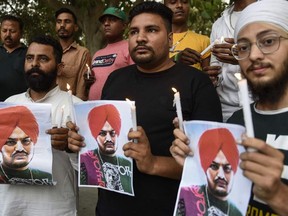
The next year, Canadian-based Sikhs sympathetic to the separatist cause allegedly carried out the bombing of Air India Flight 182, killing 329 people, seemingly in response to the raid. Canadian investigators failed to prosecute all but one suspect in connection with the bombing, but later alleged that Sikh radicals were behind the attack.
Article content
Article content
The pro-Khalistan movement in India has ebbed since the 80s, but a massive migration of Sikhs to Canada, the U.S., U.K. and other nations has caused India’s repression efforts to spill over into the Western world. Relatively greater protections around free speech in Canada and other Western nations has encouraged more diaspora Sikhs to voice their opinions on the otherwise taboo subject of separatism, which has shifted the ire of India’s government overseas. Canada, now home to more than 800,000 Sikhs, has become the prime battleground for pro-Khalistan repression.
Article content
Article content
While the Bishnoi gang has been connected to high-profile contract killings, much of its activity has taken the form of extortion — often targeting South Asian and Sikh communities. The Financial Transactions and Reports Analysis Centre of Canada (FINTRAC), Canada’s financial watchdog, published a report in April detailing how the Bishnoi gang regularly targets small business owners in industries like construction and hospitality, demanding money and threatening those who refuse to pay.
Article content
Extortion often happens over WhatsApp or other encrypted chat platforms, where criminals demand payment in the form of e-transfers, cash or cryptocurrency, FINTRAC said. The gang has recruited an army of “money mules,” often aged 17 to 28 years old, the watchdog said, who typically own Indian passports and identify as international students when they first set up their online accounts.
Article content
Those who don’t pay are threatened by Bishnoi members who shoot up their homes or set their vehicles aflame.
Article content
“Extortion targeting South Asian communities in Canada has evolved from sporadic threats into a sustained campaign of coercion that blends intimidation, opportunistic violence, and trans provincial coordination, with notable concentrations in British Columbia, Alberta, Manitoba, and Ontario,” FINTRAC reported.























 Bengali (BD) ·
  English (US) ·