.png)
 2 hours ago
7
Long before manga became a global billion-dollar juggernaut, a single punch thrown on newsprint proved that comics could break a nation’s heart. Tetsuya Chiba, the legendary illustrator whose kinetic lines gave life to Ashita no Joe, did not merely draw sports stories; he captured the bruising, desperate ambition of post-war Japan.
On October 22, 2026, Chiba passed away at the age of 87. He passed away at 6:00 PM at a hospital in Tokyo, leaving behind a profound cultural legacy that extends far beyond the margins of shonen history.
ちばてつや先生が10月22日に逝去されました。 ちば先生には週刊少年マガジンにおいて『あしたのジョー』『おれは鉄兵』 『あした天気になあれ』などの名作をご執筆いただきました。 ちばてつや先生のご冥福を心よりお祈り申し上げます。 https://t.co/A7uZiBimhj
The news was released publicly five days later, on October 27, following a private family funeral where his wife, Sachiko, served as the chief mourner.
Tetsuya Chiba’s Cause of Death: What We Know So Far
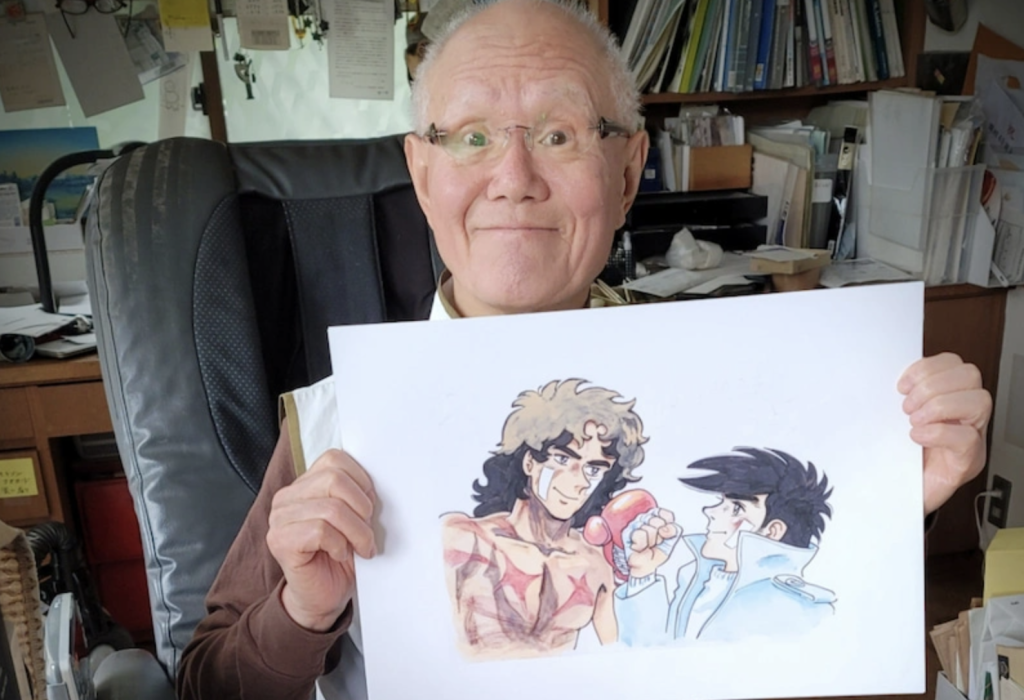 Tetsuya Chiba holding his illustration. [Credit: Ameblo JP website]
Tetsuya Chiba died on October 22, 2026, at the age of 87 (via Japan News). His death was announced by his publishers on October 27, confirming that he died the previous Thursday. Born on January 11, 1939, Chiba spent much of his life shaping Japanese manga through stories that explored both athletic determination and ordinary people’s struggles.
The officially confirmed cause of death was myelodysplastic syndrome (MDS), a rare group of blood disorders in which the bone marrow fails to produce enough healthy blood cells. While MDS can lead to severe anemia, bone marrow failure, or acute leukemia, publishers and family representatives have not disclosed specific clinical complications beyond the underlying diagnosis.
Chiba had experienced health challenges in recent years. In 2021, he publicly discussed being hospitalized after doctors identified abnormalities involving his heart valves, coronary arteries, and throat. He subsequently underwent heart surgery in January 2022. More recently, his autobiographical manga, Hinemosu Notari Nikki, went on hiatus in September 2026 because of concerns about his health. At the time, Chiba suggested that the summer heat might have contributed to feeling unwell.
Key Milestones of Tetsuya Chiba’s Legacy:
- 1968–1973: Serialized Ashita no Joe (over 20 million copies sold)
- 1970: Real-world funeral held by fans for fictional rival Toru Rikiishi
- 2012: Appointed President of the Japan Cartoonists Association
- 2014: Received the Person of Cultural Merit award from the Japanese government
How Ashita no Joe Creator Left an Indelible Mark on Manga
Chiba’s legacy is inseparable from Ashita no Joe, the boxing manga created with writer Asao Takamori, the pen name of Ikki Kajiwara. The series began in Weekly Shonen Magazine in 1968 and ran until 1973, following Joe Yabuki, a troubled young drifter whose encounter with boxing trainer Danpei Tange sets him on a difficult path toward professional competition. Kodansha’s official catalogue credits Takamori with the original story and Chiba with the artwork.
Prior to Chiba’s involvement, sports manga predominantly featured ideal heroes who succeeded through pure virtue. Chiba shattered that template. He brought a gritty realism, expressive anatomical weight, and psychological depth to every panel. Joe was not a polished hero who won every fight through determination alone. He was impulsive, rebellious, vulnerable, and frequently forced to confront the consequences of his own choices. Chiba’s expressive artwork gave those contradictions physical weight.
The series also arrived during a period of rapid change in postwar Japan. Joe’s struggle against poverty and social disadvantage resonated with readers who recognised the frustration of trying to carve out a future with limited opportunities. His rivalry with Toru Rikiishi became one of the work’s defining storylines, and Rikiishi’s death prompted an extraordinary real-world response, including a memorial funeral organised by fans (via Hiragana Times).
Ashita no Joe expanded beyond manga into television anime, films, and stage productions, cementing its place in Japanese popular culture. The 2018 series Megalo Box, created to mark the original manga’s 50th anniversary, offered a modern tribute to its influence.
Chiba’s other notable works included Ore wa Teppei, a youth manga centred on kendo, and Notari Matsutaro, which explored the world of sumo wrestling.
What is your favorite memory or panel from Ashita no Joe? Share your reflections in the comments below.
















 Bengali (BD) ·
 English (US) ·