.png)
 1 hour ago
8
1 hour ago
8
Article content
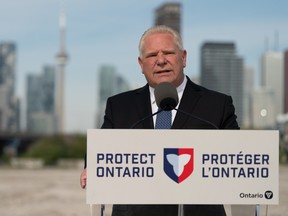
Ontario Premier Doug Ford has altered the scope and nature of local democracy in the province in what amounts to a major change in the traditional relationship between the provincial government and its cities and school boards.

THIS CONTENT IS RESERVED FOR SUBSCRIBERS
Enjoy the latest local, national and international news.
- Exclusive articles by Conrad Black, Barbara Kay and others. Plus, special edition NP Platformed and First Reading newsletters and virtual events.
- Unlimited online access to National Post.
- National Post ePaper, an electronic replica of the print edition to view on any device, share and comment on.
- Daily puzzles including the New York Times Crossword.
- Support local journalism.
SUBSCRIBE FOR MORE ARTICLES
Enjoy the latest local, national and international news.
- Exclusive articles by Conrad Black, Barbara Kay and others. Plus, special edition NP Platformed and First Reading newsletters and virtual events.
- Unlimited online access to National Post.
- National Post ePaper, an electronic replica of the print edition to view on any device, share and comment on.
- Daily puzzles including the New York Times Crossword.
- Support local journalism.
REGISTER / SIGN IN TO UNLOCK MORE ARTICLES
Create an account or sign in to continue with your reading experience.
- Access articles from across Canada with one account.
- Share your thoughts and join the conversation in the comments.
- Enjoy additional articles per month.
- Get email updates from your favourite authors.
THIS ARTICLE IS FREE TO READ REGISTER TO UNLOCK.
Create an account or sign in to continue with your reading experience.
- Access articles from across Canada with one account
- Share your thoughts and join the conversation in the comments
- Enjoy additional articles per month
- Get email updates from your favourite authors
Sign In or Create an Account
or
Article content
While the provincial government has always been ultimately responsible for school boards and municipalities, Ontario has long operated on the principle that people would have a meaningful measure of control over what was happening in their own communities.
Article content
Article content
Article content
Under Ford, that local control has lessened, and in some cases disappeared altogether. The changes have been incremental and spread over time, but the cumulative effect is notable.
Article content
By signing up you consent to receive the above newsletter from Postmedia Network Inc.
Article content
In its latest move, the Ford government will appoint the chairs of eight regional municipalities in southern Ontario. These are positions that were formerly elected, although in three cases, people had been appointed to the jobs for the 2022–26 term only.
Article content
These unelected regional chairs will have the same “strong mayor” powers that Ford gave elected mayors across the province a couple of years ago. This will give the new chairs significant authority over the elected people on regional councils.
Article content
The appointed chairs will be able to propose budgets, veto changes that regional councillors want to make, appoint or fire many city officials, and veto council decisions if those decisions would slow down action on a provincial priority such as infrastructure or housing construction.
Article content
Housing and Municipal Affairs Minister Rob Flack has said the move is necessary to have “effective government” and it would be “getting politicians out of the way.”
Article content
Article content
Lindsay Jones, executive director of the Association of Municipalities of Ontario, has called the strong chair powers “fundamentally undemocratic” because they allow unelected people to overrule elected councillors.
Article content
Article content
The strong mayor system is a concentration of power in one person. Ontario is unique in Canada for having them, although many large American cities do.
Article content
Ford has certainly gone all in on the concept. He began by giving strong mayor powers to Toronto and Ottawa with the goal of speeding up housing approvals. Then he expanded that control to largish cities and ultimately to every municipality in the province, even tiny townships.
Article content
The enhanced powers for mayors changed the traditional balance on councils, where mayors had to build consensus to win a majority vote. Councillors have not lost all control. Mayoral vetoes can still be overturned by a two-thirds majority council vote.
Article content
When it comes to housing, the strong mayor system isn’t producing much of a result. The Canada Mortgage and Housing Corp. predicts that housing starts in the province will decline in 2026 for the fifth year in a row. It’s interesting to note that the city of Ottawa had one of the strongest housing-start performances in the province last year, although Mayor Mark Sutcliffe does not use his strong mayor powers.


























/https%3A%2F%2Fsportsmole-media-prod.s3.gra.io.cloud.ovh.net%2Fuploads%2F2026%2F05%2Fimago1077546153-2-6a0b8bbf76f8f531157643.jpg)
 Bengali (BD) ·
  English (US) ·