.png)
 2 weeks ago
16
2 weeks ago
16
Spoiler Alert !!!
This article discusses the ending of Netflix’s Rafa documentary!
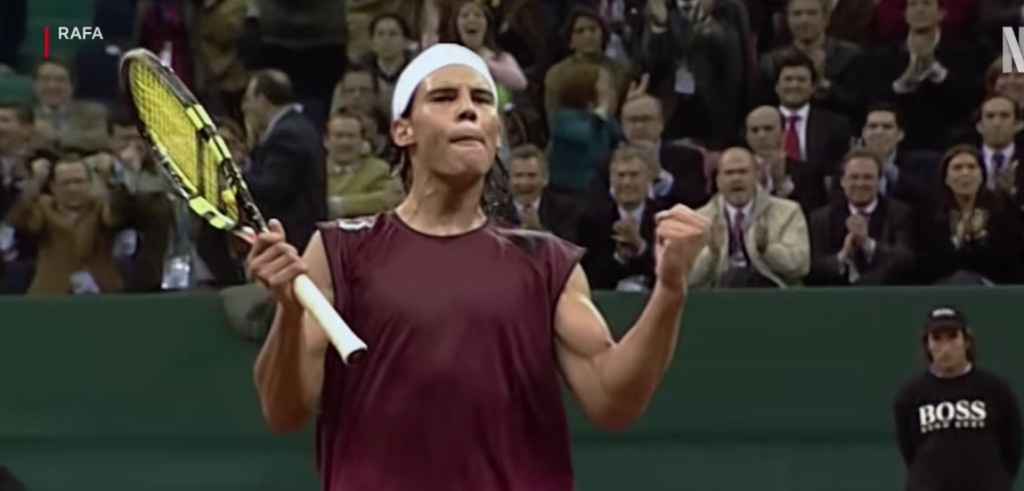
Netflix’s Rafa does not open the museum doors and ask us to clap politely at Rafael Nadal’s trophies, but it lets us watch a great athlete slowly negotiate with a body that has stopped signing permission slips. Across four episodes, the documentary revisits the Mallorcan boy who became tennis’ clay-court monarch, the sleeveless young storm who once walked behind Roger Federer at Wimbledon looking like tennis had accidentally invited a warrior from another century.
The earlier episodes trace the rivalry with Federer, the later challenge of Novak Djokovic, Uncle Toni’s iron-fisted influence, and Nadal’s almost stubborn romance with suffering. But the final stretch turns inward. After hip surgery, painful comebacks, scans, massages, and medical warnings, Nadal reaches the question every ageing champion dreads: when does fighting become self-harm?
Rafa Netflix Documentary: From Wild Prodigy To Wounded Legend
 Rafa | Credit: Netflix
Rafa follows Rafael Nadal from his childhood in Mallorca to a career that made him one of tennis’ most decorated figures. The documentary understands his early appeal clearly. Nadal was never just another polished prodigy. He arrived with sweat, noise, muscle, rituals, and a left-handed game that felt designed to exhaust both the opponent and the viewer.
One of the most effective moments comes from the 2007 Wimbledon walkout with Roger Federer. Federer appears crisp and composed, while Nadal trails behind in a vest and baggy shorts, all restless energy and untamed confidence. That contrast tells us why their rivalry became so irresistible. Federer made tennis look like a private language. Nadal made it look like a street fight with rules.
The series moves through his 2005 French Open breakthrough, his rise as the king of clay, and the rivalries that shaped the sport’s golden age. It also gives time to Nadal’s family, his wife Maria Francisca Perello, his coaches, his doctors, and his longtime team. These voices help fill the frame, although they do not always unlock the man at the centre.
That is one of the documentary’s frustrations. Nadal is present, honest in patches, and willing to be filmed during painful moments, but he still feels guarded. He gives us access, yet not always revelation. We see the champion’s habits, sacrifices, and stubbornness, but the deeper engine behind that almost punishing willpower remains partly hidden.
Still, the small human details work beautifully. His quirks, his snacks, the teasing from his team, and the moments with his son, lovingly called Rafalet, soften the heavy tone. They remind us that beneath the legend is a man who still has family jokes, domestic rhythms, and ordinary comforts waiting beyond the court.
Rafa Documentary: The Cost of Nadal’s Greatness Becomes the Real Story
 Rafa Nadal | Credit: Netflix
The strongest idea in Rafa comes from Andre Agassi’s old warning about young Rafael Nadal:
He’s writing checks I hope his body can cash for a long time.
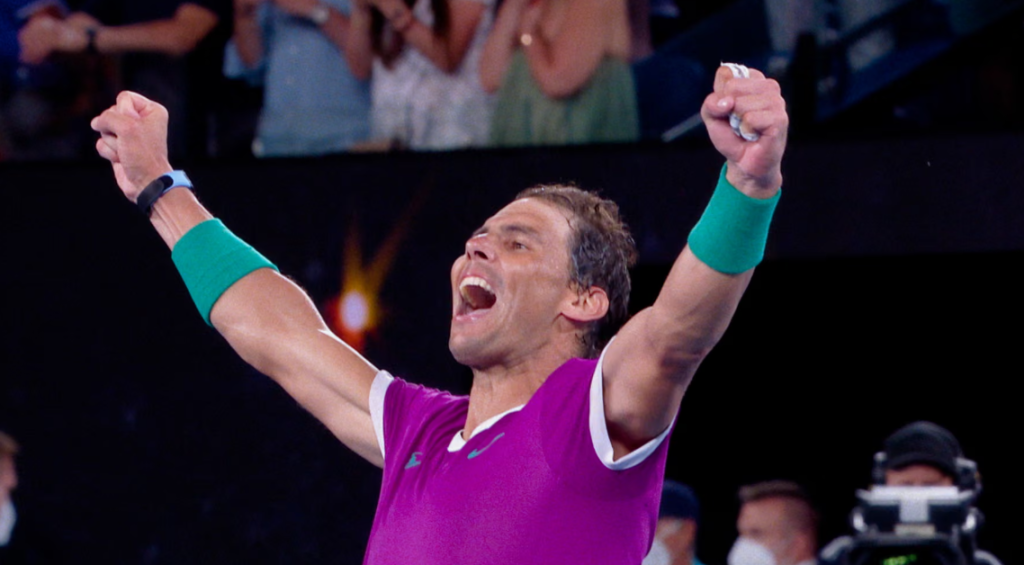
That line becomes the documentary’s quiet shadow. Nadal’s career was not merely successful. It was physically expensive. His game was built on refusing the easy point, chasing one more ball, and making opponents suffer until they blinked. The problem is that his own body suffered too.
The documentary details Müller-Weiss syndrome, knee trouble, hip surgery, and the long-term toll of pain management. Nadal’s honesty about anti-inflammatories is especially striking. He says:
If I hadn’t explored all that, I probably would have ten fewer Grand Slams. I’m not saying one or two, I’m saying ten or twelve. This is the reality.
It strips away the pretty myth and shows the bill. Nadal’s 22 Grand Slams were not built only on talent and grit. They were built on medical compromise, stubborn risk, and a relationship with pain that became almost professional. Carlos Moyá becomes one of the documentary’s most important silent figures. He supports Nadal, but his expressions often carry concern. When Nadal pushes for another comeback in 2024, Moyá’s face seems to ask the question the film keeps circling: is this courage, addiction, or both?
Uncle Toni’s presence adds another difficult layer. His philosophy helped shape Nadal’s endurance, discipline, and refusal to fold, but the series also makes us wonder what happens when a child is taught that suffering is not merely part of greatness but its entrance fee. Nadal himself says of Toni:
I felt a bit shocked. He was my uncle, and the influence he had on me was greater than anyone else I’ve ever had. I was afraid to think about how I would react without Toni. I lived the final years of my career with a sense of freedom and less tension than when Toni was around.
Still, Rafa is at its best when it sits inside that contradiction. Toni helped create greatness, but distance from Toni gave Nadal some peace. That is a thorny truth, and the documentary could have dug into it even more.
At nearly four hours, Rafa sometimes turns repetition into endurance training. The injury scenes, while important, begin to circle the same emotional drain. A tighter edit would have made the impact sharper.
Rafael Nadal Documentary Rafa Ending Explained
 Rafa Nadal | Credit: Netflix
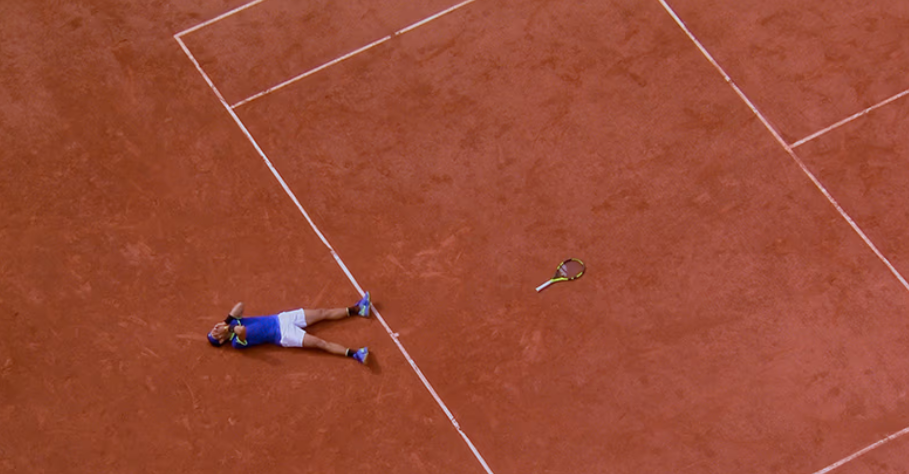
The ending of Rafa centres on Nadal privately telling his family that he has decided to retire. He says, “Tell absolutely no one.” That line is crucial because it turns retirement from a public announcement into a private wound. Nadal has spent most of his life performing under pressure, with fans, cameras, rivals, and history watching every point. But this decision belongs first to his family. Before the world turns it into headlines, tribute videos, and legacy debates, Nadal keeps it inside the room.
His final decision says that his tennis legacy is not only about domination. It is also about knowing when the body has won the argument. Nadal does not retire because the hunger is gone. If anything, Rafa proves the hunger is still there. He retires because desire cannot rebuild a hip, quiet a degenerative foot condition, or erase twenty years of physical debt.
That is why the ending feels so bittersweet. Nadal’s greatest opponent was not Federer or Djokovic in the end. It was time, and time does not lose many long rallies. The documentary also suggests that modern sports retirement is no longer a clean disappearance. Through Rafa, viewers are allowed to witness the private goodbye after the fact. That creates a strange second farewell. Nadal leaves tennis, but the documentary keeps him near us for one more conversation.
Rafael Nadal’s final decision says his legacy is bigger than numbers. Yes, 22 Grand Slams and 14 French Opens will remain carved into tennis history, but Rafa shows the cost behind the count. He was not simply a winner. He was a man who kept asking his body for one more miracle until the body finally refused.
What did you think of Netflix’s Rafa? Comment below and follow FandomWire for more reviews, breakdowns, and ending explanations.
Rafa is available to stream on Netflix.

















 Bengali (BD) ·
  English (US) ·