.png)
 7 hours ago
12
7 hours ago
12
Article content
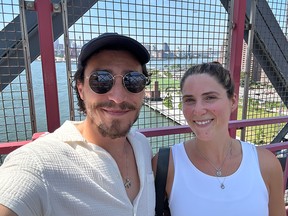
Grainy videos hide more than they reveal. They smooth out the texture and contours of life in a single moment. We often look back on these relics as beautiful, simpler times.

THIS CONTENT IS RESERVED FOR SUBSCRIBERS
Enjoy the latest local, national and international news.
- Exclusive articles by Conrad Black, Barbara Kay and others. Plus, special edition NP Platformed and First Reading newsletters and virtual events.
- Unlimited online access to National Post.
- National Post ePaper, an electronic replica of the print edition to view on any device, share and comment on.
- Daily puzzles including the New York Times Crossword.
- Support local journalism.
SUBSCRIBE FOR MORE ARTICLES
Enjoy the latest local, national and international news.
- Exclusive articles by Conrad Black, Barbara Kay and others. Plus, special edition NP Platformed and First Reading newsletters and virtual events.
- Unlimited online access to National Post.
- National Post ePaper, an electronic replica of the print edition to view on any device, share and comment on.
- Daily puzzles including the New York Times Crossword.
- Support local journalism.
REGISTER / SIGN IN TO UNLOCK MORE ARTICLES
Create an account or sign in to continue with your reading experience.
- Access articles from across Canada with one account.
- Share your thoughts and join the conversation in the comments.
- Enjoy additional articles per month.
- Get email updates from your favourite authors.
THIS ARTICLE IS FREE TO READ REGISTER TO UNLOCK.
Create an account or sign in to continue with your reading experience.
- Access articles from across Canada with one account
- Share your thoughts and join the conversation in the comments
- Enjoy additional articles per month
- Get email updates from your favourite authors
Sign In or Create an Account
or
Article content
But it’s hard to grasp what life felt like for the protagonists in the frame. The anxiety and excitement. The stack of bills collecting on the counter or the sick grandparents out of view. The optimism or dread of whether a child’s life will be more promising than a parent’s.
Article content
Article content
Article content
Last year, my father digitized the entire catalogue of our home videos that had piled up in basement boxes over the decades. My dad, being that dad, seemed to have a camcorder melded to his right hand throughout my entire childhood, his eye permanently fixed to the scope.
Article content
By signing up you consent to receive the above newsletter from Postmedia Network Inc.
Article content
He captured the beauty of life in Toronto three decades ago. School recitals and Bar Mitzvahs. Cousins’ birthdays and baseball tournaments. The sun shined brighter in those years and, for some reason, the smell of sunscreen hangs in the air of memories. The Jays were champions and Vince Carter put us on the map.
Article content
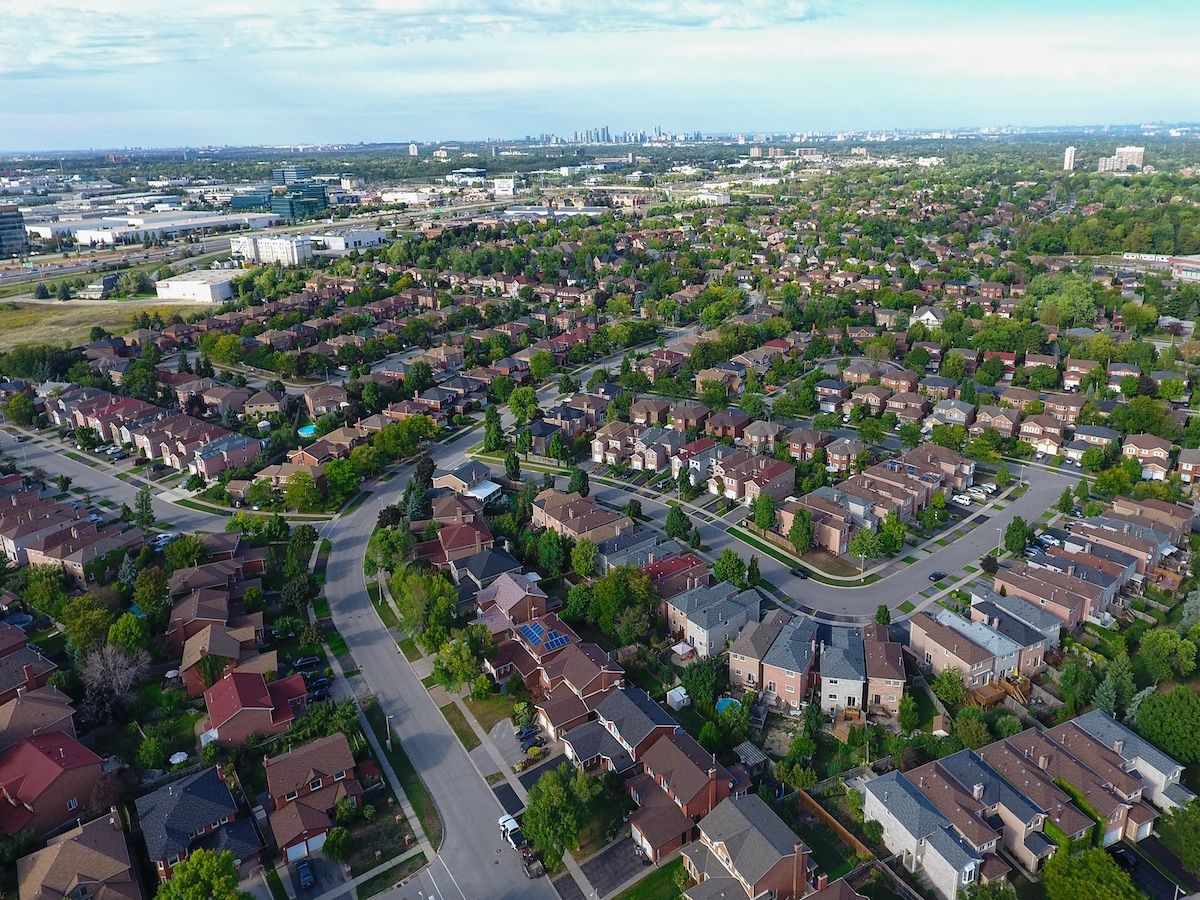
My corner of the suburbs was still green then, with looping roads cutting through farmers’ fields and grain silos standing guard, artifacts attesting to an older way of life that once was but was no more. On summer evenings, my mom took the train home from her corporate job downtown, winding through the Don Valley. We’d pick her up at the Richmond Hill kiss-n’-ride, drive to Wonderland in a dozen minutes and walk around the spindly rollercoasters, the park wafting with the smell of cinnamon donuts.
Article content
Article content
They were good years for the Blaffs. My parents were in their 30s, had a house, three children, two cars and vacationed twice a year. They lived within their means. By the time my mom turned 40, they decided it was best to grow up with a parent home full-time, so my dad became the rare stay-at-home nineties father, dropping us off at school (frequently as the morning bell was pealing) and making lunches (often of the microwavable variety). My mom had done well for herself as a communications specialist, but we weren’t rich. We were part of a solid Canadian middle class that I saw everywhere around me.
Article content
Article content
My dad’s sister had a similar setup four doors down. In the wintertime, my dad and uncle shovelled a walking path between our houses in the new subdivision so that my cousins and I could tramp through the snow to see one another. We carpooled together and played baseball in our backyard, dreaming, one day, of playing for the Jays or my dad’s hometown New York Mets. My uncle’s house was home plate; my neighbour’s shed was second; and if you put one on the deck or roof beyond that, it was a home run.
Advertisement 1
Advertisement 2
Article content
It didn’t feel strange to be the house with the menorah in the window. If anything, to be a Jew in Toronto was a blessing. There were vibrant conservative and reform congregations filled with kids my age. Terrorism and antisemitism were things that happened over there — in the Middle East or Europe — some far-off places beyond the cognition of a child. North American shores were safe. We didn’t worry about wearing kippahs or walking to shul or saying we had family in Israel or believed in the Jewish state’s right to exist.
Article content
But now I see how peculiar all that was. Those damn cassettes and these damn memories. Seeing with fresh eyes those old frames soured my day. As the scenes unspooled, I realized the Canada I saw then was better, far better, than the one I currently inhabit today.
Article content
And that’s the reason why I’m planning on moving to America.
Article content
***
Article content
There’ve always been forces pulling me south: most not of my choosing. We joke that although my dad emigrated over four decades ago, he never psychologically left America. Despite spending the majority of his life in Canada, he still only carries an American passport. Every time he crosses the border from Ontario to New York, he takes a deep, over-acted inhale: “The smell of freedom,” he jokes. Under his rule, while we lived in Canada, inside my house was culturally American. We watched the Mets and Knicks; we listened to Paul Simon and James Taylor; and when we traveled, it was always to America.
Article content
Article content
Of all my siblings, my father’s long-running campaign had the deepest impact on me. I felt most pulled to America and became a Civil War buff after my grandfather passed along his love of American history. I was so fervent that my dad looked into getting me citizenship when I was a teenager, but his reading of the law suggested I was ineligible.
Article content
And with that, thoughts of building a life south of the border faded to the background. I went to grad school in Toronto, got a well-paying corporate job in a glassy tower and started seeing a University of Guelph zoologist who later became my wife. Under my own recognizance, I grew to love Canada.
Article content
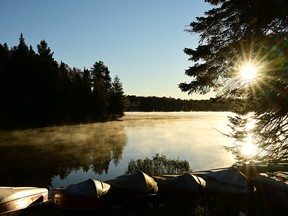
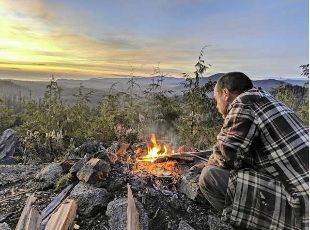
My wife and I lived a Canadian iteration of a Johnny Cash song traveling across this country: Riding Mountain, Moose Jaw, Drumheller, Radium Hot Springs, Kluane. Seeing Canada made me love it and camping revealed the country’s beauty even more. After baby steps in Killarney and Tobermory, we matured to Jasper and Grasslands. Most Canada Days you can find me in Algonquin, reading in a hammock strung up alongside Pog Lake, with a fire and friends.
Article content
Article content
Every direction brought more memories. Family trips to visit an uncle in Halifax brought the Maritimes, road tripping to the sounds of Stan Rogers. I spent the days after October 7 interviewing Israeli survivors on Vancouver Island, taking day trips to Tofino and Ucluelet to wash my mind of the gore streaming on social media. And last summer, we went to the Yukon and saw the Canadian North. I picked up my first Pierre Berton book on the Klondike Gold Rush in Whitehorse.
Article content
Article content
Being a Canadian slowly seeped into my bones, an antivenom fending off my dad’s earlier attempts at forced inoculation. I felt it most after travelling overseas. Returning through Pearson airport, lining up with other Canadians in passport control, I felt the quiet nationalistic pride of my country folk. After clearing the border, I’d often hustle to Timmies for a black coffee and some timbits to reacclimate.
Article content
Joining the National Post two years ago solidified that future. Lured by the prospect of reporting on Canada, I decided to stop working in the States. Shortly before moving jobs, I spoke with a Canadian expat in Washington who recommended I speak with his immigration lawyer to see if my options were truly as closed as my dad believed. I took a chance, dropped a few thousand on a retainer and waited for my paperwork to snake through the labyrinth that is America’s immigration system.
Article content
***
Article content
I wanted to keep my options open, but I wasn’t racing to leave Canada. I have a massive family sprinkled throughout Toronto and satellites in Nova Scotia and British Columbia. Aunts, uncles, first cousins, grandparents and extended family. As my life became entwined with my wife’s, I took on a new set of guardians, a brother- and sister-in-law, two nephews, a niece and a Moroccan safta.
Article content
The thought of saying goodbye to Shabbat dinners and Sunday brunches felt disrespectful to the family reunification my ancestors worked so tirelessly to build. My grandfather moved his family from New York — my dad and his two sisters in tow — to reunite with his own sister and my grandmother’s siblings for this very purpose. He and my grandmother recently confided that a driving force behind their relocation was their fear of America and its tradition of casting off children across the country for school and work.
Article content
They wanted the Blaffs to be rooted, inseparable. And they succeeded. My great-grandparents escaped the Holocaust and fled Europe’s dark clouds not only for a better life, but for a together life. Growing up, birthdays and Passovers and high holidays were celebrated with dozens of relatives with seemingly tenuous family ties. Into the melting pot of pre-pubescent consciousness blurred figures like Hamu and Branca and Irving and convoluted stories of how both sides of my paternal grandparents’ families were, themselves, related.
Article content
Article content
My forebears’ decisions to come to North America saved us. The branches of the Blaff and David trees that remained in Europe were lost to history; black-and-white photos now the only proof of their short and bitter existence. Mobility and movement might be the most defining Jewish traits but my parents embraced becoming the first truly non-nomadic generation in recent memory. There were antisemites when they were growing up, but my parents were at the cusp of a Golden Age for American and Canadian Jews, which saw them climb social ladders, win Nobel Prizes and build businesses that bettered their communities.
Article content
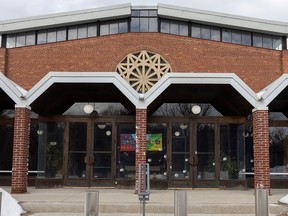
That was my inheritance attending Jewish day school in Richmond Hill. I never felt different or threatened. To be Jewish and Canadian was neither incompatible nor controversial. I never hid my Judaism. Marching for Israel as a child was a breezy community affair with water breaks and strollers. A few oddballs lined up to protest the Jewish state’s right to exist but it never felt combustible. There wasn’t a need to hide the location of Jewish community events, erect barricades or employ round-the-clock security. Apart from the time my aunt pulled us out of school on the morning of September 11, when I first heard the name Osama Bin Laden inside her purple Ford Winstar, I felt insulated from the history of our ancestors.
Article content
Article content
The tragic Jewish past was just that. It was two-dimensional: confined to textbooks about the Holocaust and the Inquisition and Anne Frank. We didn’t live in any recognizably Jewish era of oppression and fear. Stories of Holocaust survivors felt vaguely comforting to my ears then. Of course, we survived Hitler’s executioners; history was inevitable and pointed in the direction of progress. My generation was the latest chapter of that story; our integration into Canadian life, another nail in the latest attempts to destroy us.
Article content
Article content
But now that all looks quaint. The survivor stories I heard weren’t part of an arc bending inevitably towards Jewish emancipation, but a warning sign. A momentary blip. My cohort and I were actually living in a historical vacuum, in the dying breaths of an age where Jew hatred was temporarily suspended in the afterglow of the Holocaust.
Article content
Reporting on antisemitism for the Post, I often told people, felt like whack-a-mole. One day, I’d cover Jewish union members led by people boasting the October 7 attacks illustrated the “power of resistance” and, the next, university students suing schools for “poisoned” learning environments. I’ve lost track of the number of times I’ve referenced synagogue shootings, Jewish children bullied in schools and empty promises like, “There is no place in our country for hate or antisemitism.”
Article content
However, there was ample room. Since October 7, I have seen antisemitism so many times that I’ve become desensitized to it. At street protests, I saw terror group paraphernalia and hook-nosed cartoons of Jews splashed on billboards. In my ears I heard chants demanding Jews “Go back to Poland!” and public pledges of support for designated terror groups. Discriminating against Jews became mainstream. Anti-Zionism became a voguish belief as Canada broke antisemitism records year after bleak year.
Article content
***
Article content
I became perversely grateful for the surging housing prices and unaffordability of Toronto. It allowed my wife and I to put off buying a place and building a family, despite our wishes and Safta’s unwavering demands to have children right away. We wouldn’t have to cross the bridge of concerned Jewish parents whom I regularly interviewed racked by anxiety over what future their children had in Canada.
Article content
In the span of my lifetime, we went from a country where the middle class could own a home near a city and have children before the age of 30 to living in 500-square-foot apartments ringing the suburbs. My parents, in their third decade, owned a 2,500-square-foot home with a front and backyard. My cousin, in his mid-30s, lives in a two-bedroom apartment with three children: both he and his wife have what once were middle-class jobs.
Article content
Article content
In the span of three decades since my childhood, Canada became one of the most expensive places on earth, while America remained far more attainable. Driving these differences are a few things: Canadians are bunched up in just a handful of cities and our biggest provinces have the most restrictive building codes.
Article content
Our economy has struggled to keep pace as life’s become more expensive. Despite humble bragging about our superior decorum and international standing compared to America, in the last decade our gross domestic product (GDP) has stagnated as theirs continues to climb. Our economy has languished as America invests more in its workforce and poaches our highest earners, coaxed by deeper labour markets and better tax brackets.
Article content
My parents were at the cusp of a Golden Age for American and Canadian Jews
Article content
Despite the hype of Canada’s immigration website crashing following Trump’s election, the rate of Americans seeking permanent residency in Canada has declined in consecutive years of the latest Trump administration, as have American temporary foreign worker applications. Meanwhile, thousands of Canadians are scanning their own personal horizons and coming to the same conclusion. According to the U.S. Census Bureau, over 125,000 people left Canada for America in 2022, a 70 per cent increase from a decade earlier. The pain is felt most among highest earners: the Bank of Canada found that roughly 40 per cent of the top 1 per cent of Canadians have flocked south, alongside between a third and half of those of the following nine percentiles.
Article content
Article content
As much as we like to condescend about America’s political dysfunction, people vote with their feet. We have hemorrhaged talent and innovation, lulled by the story that America is some dying giant, instead of asking why the Canadian Dream feels more unattainable than ever.
Article content
***
Article content
A third factor that massively dampened affordability and changed how Canada feels is something few wish to acknowledge: mass migration, much of it from countries largely hostile to Jews. Statistics Canada called immigration “the major engine of population growth since 1999,” propelling our country from 30 million during my childhood to eclipse 40 million by 2023. By some measures, Canada welcomed three times as many newcomers, per capita, as the United States has in recent years. Census figures published by Statistics Canada in 2021 found nearly a quarter (23 per cent) of the country are now immigrants or permanent residents, the largest share in history.
Article content
On my street growing up, there were Jews and Italians and Chinese, but my neighbourhood echoed with the sounds of English. Parents knew songs by the Barenaked Ladies, Rush, Neil Young and Tragically Hip. We lived on sweet Canadian streets where houses were decorated with cobwebs and witches during Halloween, knots of kids bumping around in costumes trick-or-treating. Warm Christmas lights of green, white and red guided me home as I walked along plowed snowbanks in the winter. We played hockey on our streets and baseball in our parks.
Article content
But the pace and scale of immigration transformed my community. My neighbourhood has since swapped out the ball diamond for a soccer pitch. The people who now call my old neighbourhood in Richmond Hill home are all wonderful people: we have amazing Persian and Indian and Bangladeshi families, but they largely live in their own bubbles and the cohesion no longer exists.
Article content
Unlike America’s emphasis on cultural assimilation, Canada brands itself a tapestry of different fabrics which elevates the whole. “A mosaic doesn’t dissolve its pieces. Each is stitched to each, all holding all,” Prime Minister Mark Carney explained in mid-June on a trip to Ireland.
Article content
There is much to like about that vision. But in reality, the evolution of Canada’s expectations for immigrants has endangered the Jewish community. The recent taboo against insisting newcomers adhere to certain values has seen Canada import Old World bigotries that were extinct when my mom was born here and my dad immigrated here. Canada’s approach to immigration remains in tension with our core values, an impossible balancing act Carney still struggles to address.
Article content
Article content
“We do not welcome the world’s hatreds,” Carney told Jewish attendees at a Toronto synagogue in early June. “When you come to Canada, you bring your faith, your tradition, your language, your story. You leave behind your animosities.”
Article content
Carney’s speech was murky, a fine misting of pleasantries that obscured what his actual plans were. There was no mention of Zionism or the febrile passion among pockets of Canadians that the Jewish state cease to exist. The central question Carney let sit in the haze that June night was one that Jews across the country want clearly articulated: who is driving this surge of antisemitism and what can be done about it.
Article content

Article content
There are plenty of progressive allies and white nationalists pulling their weight since October 7, but there is one community in this country — and most of the Anglosphere — that punches above its weight in antisemitism: Muslim fundamentalists. Sociologist Robert Brym wrote in a 2024 study that “of all the groups” he polled — including liberal Canadians, Quebecers, racialized Canadians and university students — “Muslims have the highest level of negative attitudes towards Jews.”
Article content
Article content
Many Muslim-Canadians don’t feel that way and have first-hand experience lived under oppressive Islamist regimes. In some cases, Muslim-Canadians have reported potential antisemitic hate crimes to authorities and Iranian-Canadians have become stalwart allied of the Jewish community. The interests of both diasporas have converged in recent years.
Article content
But over a quarter (28 per cent) of Canadian Muslim respondents in Brym’s study agreed that Jews were “largely to blame for the negative consequences of globalization” and over a third (34 per cent) said Jews “talk too much about the Holocaust.” They are also far more likely to believe in conspiracies of Jewish control of banks and media, in line with the views expressed by their co-religionists across Europe.
Article content
While the size of the Canadian Jewish community has inched slowly upward since my birth, Muslim immigration has skyrocketed, growing from less than 100,000 in 1981 to over 1.75 million in 2021. In barely four decades, Canadians Muslims went from representing half a per cent of the country to nearly 5 per cent. Regardless of Carney’s wishes, the views and baggage of many immigrants from Pakistan and Lebanon and Syria and Afghanistan have been planted in Canadian soil.
Article content
Article content
Although white nationalists have been around domestically for decades, often bumping around obscure online forums, I venture that most of the names listed above are immigrants themselves or first-generation seedlings. That partly explains why two-fifths of Canadian Jews now feel less immigration would improve their safety: a figure I believe is conservative.
Article content
For those who plan to build a Jewish future in Canada, it isn’t uncertain or fuzzy. Canadian Jews don’t go to bed at night fearing their children are harassed at schools or discriminated in hospitals at the hands of white supremacists; our politicians remain alltooeager to condemn these fringe actors of little electoral influence. But when condemnations of antisemitism are boltedtogether with Islamophobia, the arrows and vectors of hatred are erased.
Article content
Article content
***
Article content
Canadian Jews have become endangered because Canadian values have become endangered. A national insecurity has descended across the country, triggered by leaders questioning whether there is something worth preserving, whether the next generation should be proud of the heritage being passed down.
Article content
Entrenching the multicultural legacy of his father, Justin Trudeau articulated the miasma of nothingness modern Canadianness ought to embody. “There is no core identity, no mainstream in Canada,’’ he told the New York Times a decade ago. He spoke of generic values “openness, respect, compassion, willingness to work hard, to be there for each other, to search for equality and justice,” which made Canada “the first postnational state.’’
Article content
Article content
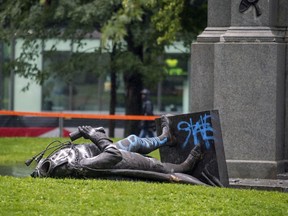
National icons were shuffled off stage during his years in office, boxed up and crated off, never to see the light of day again. Statues of Sir John A. Macdonald, our closest thing to a founding father, were graffitied and destroyed from coast to coast. Egerton Ryerson, the former namesake of Ryerson University (today Toronto Metropolitan), was toppled. Nothing about our history was sacred in the vortex of our swirling postnational moment. The poppy, a rare national symbol honouring Canadian veterans, founditself in the crosshairs Don Cherry was disappeared for saying he didn’t see many Canadian newcomers wearing one and showing solidarity.
Article content
Article content
The threadbare identity weaved under Trudeau’s leadership culminated in 2021, after misreadings of ground-penetrating radar seemingly mistook geologic anomalies for Indigenous mass graves. Trudeau placed a teddy bear in a pastoral Saskatchewan field, beneath which no remains were ever found. Indeed, no bones were located anywhere despite countless alleged burial sites emerging. Trudeau ordered flags lowered for more than five months, the longest period in Canadian history.
Article content
It was a fitting and ultimate act of virtue signaling, deepening self-doubt across the country. Calls mounted to cancel Canada Day celebrations. “Muted” was the word on people’slips as Canadians were informed of our fraught history, of our mistreatment of minorities, that our flag was steeped in white supremacy. That force continues today: in June, a statue of Samuel de Champlain, a French explorer who once was viewed as a figure of “national unity,” was removed in an Ontario town.
Article content
Canadianness in the last decade felt hollow and reactionary; a petty patriotism trumpeted in response to American bullying, not an eternal flame that burns brighter in times of crisis. Out of the depths of our national insecurity, Canada regained its footing courtesy of Trump’s return to the White House in 2024.
Article content
Canadian nationalism under the threat of tariffs became a corporate marketing bonanza rivalling Pride Month. Companies raced and bent over backwards to signal they were on board. Maple Leaf Foods, overnight, became “Proudly Canadian.” So did Crave, the streaming platform whose value proposition rests entirely on its access to American-made HBO.
Article content
Driving through rolling Pennsylvania farmland and upstate New York this July, we saw a sense of pride where flags draped porches and people took off their hats during the national anthem. Americans also toppled statues during the past decade, largelyConfederate military figures and explorer Christopher Columbus, but the deeper self-loathing seems confined to the progressive fringe.
Article content
The level of pride I witnessed from the heart of diverse big cities to rural communities was something unrecognizable in Canada. The nationwide celebrations of 250 years of independence were everywhere: we couldn’t escape the flags, stickers, hats, air shows, bumper stickers, fireworks and pro-America graffiti murals. My wife and I want to be in a place where people are proud of their history, who feel their country is a force for good in the world, no matter how imperfect it looks to our modern eyes.
Article content
Article content
America checks this box more than Canada does at the moment.
Article content
***
Article content
This isn’t to paint a utopian picture of America that has answered the timeless questions of antisemitism and affordability. Although I feel more culturally American in some ways, guns, school shootings, single-payer healthcare and charter schools all strike me as deeply foreign. America is a more polarized place, with millions more in tenuous legal and economic circumstances than Canada. Its Jewish communities may be more militarized than Canadian ones.
Article content
But when I received American citizenship back in March, my wife and I began to think about which country we believe is better for a young Jewish couple looking to build a family. The sober accounting of real-life. We’re placing a bet on where to build our lives, animated by the dreams that our future children will have better lives and more opportunities than we did. A home closer to better jobs, a stronger currency and more affordable housing.
Article content
Our lives in Canada have grown painfully – and all too visibly – worse than our parents’. I can see it in the people around us: a first cousin with a baby on the way living in her parents’ basement; the desperate clawing for family help to secure a down payment; that haggard look of resignation across a generation, future Millennial octogenarians by the time their mortgages are paid off.
Article content
Article content
I met many of these people sitting shiva for my grandfather in June. I lost count of the number of people who came up, offered their condolences and were soon volleying questions about how to get to America. People with established careers and retirees. Old Jews and young Jews. They were fearful of the direction Canada is heading and saw across their own lifetimes the country become unrecognizable; to be a Jew, a rapidly vanishing minority, in a country that couldn’t articulate how to protect them.
Article content
How strange, I thought afterward, these confessions were. If Black or Indigenous Canadians were prodding friends in mourning about tips on how to emigrate because of intolerance, it would be a front-page emergency in every newspaper, not just the Post. But, in my eyes, it was just another chapter in the story of Jewish peoplehood, bouncing like random electrons to the nearest low-energy orbit where we could reside more safely until the next emergency erupts.
Article content
***
Article content
One close family member flew a Canadian flag in front of his house as long as I can remember growing up. Patriotism in Canada, especially in cities and suburbs, I’ve found to be a rare sight. He was the lone house on his street that kept the red-and-white up until the early winds of winter blew in around October. He was Canada-proud and didn’t need a trade war or the Olympics to stir his pride.
Article content
It felt perpetual. Timeless. Every April, he would unfurl a new, crisp flag above his garage. Months in the Toronto sun and rain and wind slowly eroded these flags, and every year was an occasion to take down the old weathered one and replace it with a fresh one.
Article content
But the spring after October 7, he didn’t replace it with one right out of the box; he hoisted up the old tattered one. He felt Canadian Jews had been let down by the government, scapegoated and left to fend for themselves as antisemitism became tolerated and ignored. “It’s symbolic to me of Canada right now,” he confided to his wife when she asked him at the time why his tradition had suddenly changed.
Article content
As the scenes unspooled, I realized the Canada I saw then was better, far better, than the one I currently inhabit today
Article content
It was a silent protest, an act of grieving for a country he feels has been lost, a pride that has disappeared in our lost decade of stagnation and self-doubt. “I put that up hoping that things would change,” he told me recently. “It only got worse and has continued to spiral.”
Article content
Growing up in Toronto in the seventies, he still argues, was the best generation to be alive. There was a social fabric and community. Respect for the Canadian ways of life. Promise that his life would be better than his parents’.
Article content
Article content
None of this applies to his children, he feels. He fears how financially difficult it will be for them to raise families and buy houses. Antisemitism highlighted the incompetence of Canadian leaders: Conservative and Liberal, alike.
Article content
“ I think this is one of the first generations,” he said, “where our kids are not necessarily gonna have a better life than we did.”
Article content
The first time we spoke after I got citizenship, I was floored when he half-joked, “So, where are we moving to?” He now talks about moving in with us on our “shtetl” that we want to build in upstate New York. He recently confided that if it weren’t for his children building families in Toronto, who are not dual citizens, he would move to America.
Article content
I feel that same sense of bewildering malaise looking back in the rear-view, a sense of loss at what Canada was and what it’s become today. I’m not happy to be leaving. Until a few years back, the thought of living anywhere but Canada was unthinkable. The plan was to continue camping trips with friends every summer, seders with cousins every April and family trips with young ones to introduce them to this amazing country.
Article content
Article content
We still have those plans, but now they’ll be done from a distance, short visits instead of the life-building we once envisioned. It’s difficult saying goodbye to our orbit of love in Toronto, to confront the inevitable withering that comes from distance and time. I’m still scared by the prospect of actually leaving.
Article content
Maybe homesickness or life circumstances will bring me back to Canada. Maybe this is all the starry-eyed ramblings of a naïve thirtysomething who’s never paid American taxes or voted in American elections, who hasn’t visited an American hospital or feared for his children in an American school. I certainly don’t understand all the challenges of American life, the same texture and feel missing in those old family videos escapes me here, too.
Article content
But I just don’t see any better alternative at this point.
Article content
Our website is the place for the latest breaking news, exclusive scoops, longreads and provocative commentary. Please bookmark nationalpost.com and sign up for our daily newsletter, Posted, here.
Article content


























 Bengali (BD) ·
  English (US) ·