.png)
 7 hours ago
17
7 hours ago
17
Guillermo del Toro’s Pan’s Labyrinth is a film that means a lot to many cinephiles. As one of the first foreign language films to be a massive success in the United States, breaking records at the box office and earning great critical acclaim, it immediately cemented its place as one of the most iconic films of all time. (FandomWire recently named the film #1 on our list of the best films of the 2000s so far.)
On the occasion of its 20th anniversary, we got to speak with Pan’s Labyrinth actors Doug Jones and Ivana Baquero about the film’s enduring legacy and how the film shaped their careers.
Pan’s Labyrinth Doug Jones and Ivana Baquero Interview
Pan’s Labyrinth is turning 20 years old this year, so why do you think this story is so enduring?
Ivana Baquero: It’s a great question because there’re so many things about it that are still so universal. We’ve spoken about this, but with everything going on in the world right now, and us feeling so helpless about many of the issues around us, this movie really stands the test of time in that it talks about love and empathy through times when we’re feeling helpless and oppressed, and that’s always relevant. And I think now more than ever.
Then there’s so many beautiful layers about the movie and about Ofelia’s journey and creativity and empathy that I think many people still connect with that.
Doug Jones: Yeah, the real monster of our movie was Captain Vidal. He was a human. Even though I played a couple of monsters in the film, they were actually there to help Ofelia on her way. So yes, the staying power of this movie, exactly like Ivana just said — we find ourselves in a world where there’s a lot of bad guys. Can we overcome them? And are we powerless? Or can we make choices and fight back in some way? And I think little Ofelia proved that we can.
I think that’s a beautiful way to look at this film.
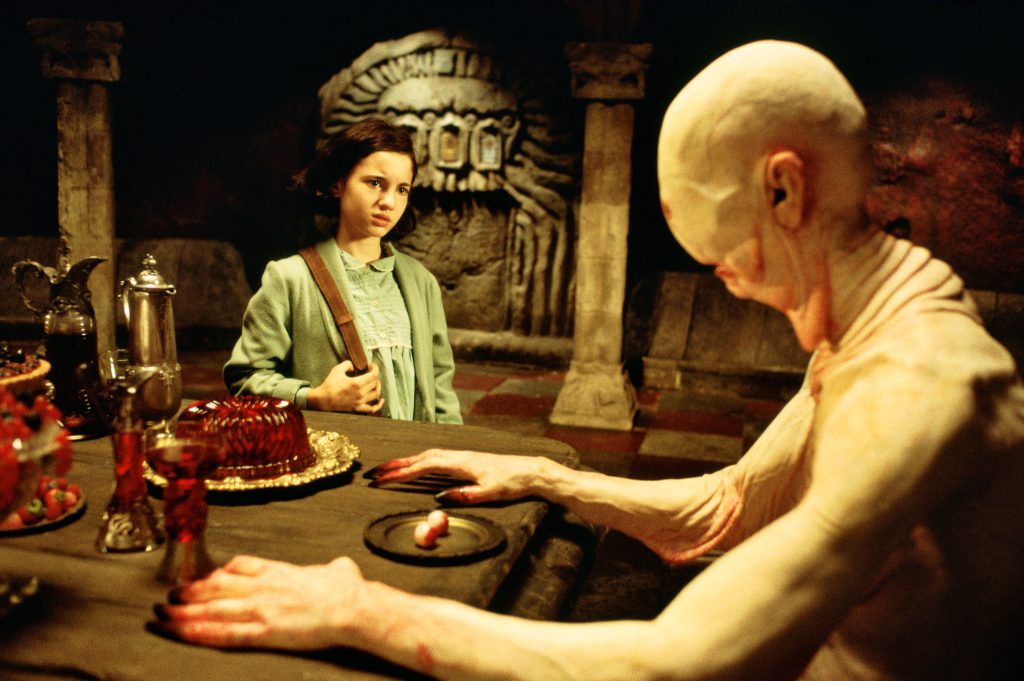
Mr. Jones, your work is by nature meant to blend in, but I think in the years since Pan’s Labyrinth was released, there’s been a real push to recognize physical performance more, whether it’s under heavy prosthetics or performance capture. Why do you think it’s important that these styles of acting are given just as much weight?
Jones: Well, because you’re still playing a character in a film along with every other character in that film. Even if you’re not human, they all help the story be told, and they all have a reason to be there, and they all have a relationship with each other.
For me, this movie took me out of anonymity, really. I had done Hellboy 1 before this, so that put me on the radar for just a minute like, “Who was the blue fish guy?” But then Pan’s Labyrinth was the one that actually [did it].
When the movie was released in the U.S., I was the only American actor that spoke English as a first language that was here to do all the press for it. So that put this face in a lot of media outlets that people had never seen before. It tied a real person to these creatures, and that’s when people realize, “Oh, it does take an actor to do a character, even with heavy makeup on.”
So that was a turning point for me, and this movie really was a page-turner that brought recognition up a notch for me — love it or leave it.
-

Pans Laberynth
-
Pans Laberynth
-


And Ms. Baquero, looking back at the film as an adult because you were a child actress when you made this film, what do you get from it now that you didn’t as a child?
Baquero: There’s so many things, and I find that so fascinating. I can’t stop gushing about how it’s evolved throughout the years. And it goes back to when I was a kid and the way I viewed the movie because I did have to watch the movie many times as we were promoting it when I was 11-12 years old. And then I’ve kept on watching it as I’ve grown up and there’s been multiple anniversaries where I’ve been able to revisit the movie or share it with friends and family, and it’s ever so changing.
Even the ending itself — I shot the movie with a particular idea in mind, and then I rewatched it, and it’s changed the way I see it. And then as I grow up and as I experience things in my life, when I watch the movie, there are things that impact me more. Watching it lately, it’s Captain Vidal, the real monster in the movie, that shakes me the most and stuck with me the most in the last viewing.
I think this re-release is going to give an opportunity for new people and new generations who have not seen the film to discover it for the first time. Is there anything you hope, obviously beyond what we’ve already talked about, that people who have never seen this film will take away from this experience?
Jones: I’ll tell you, I would like to see the American audience, especially, give a foreign language film with subtitles more of a chance. I keep hearing a lot of like, “Is it going to be dubbed in English?” Oh, gosh, no! Don’t take that away! The art, the beauty of the language is something that is part of the experience for me, and I would like for young people, especially, to take a chance on a movie with subtitles and find at the end that it was a great experience.
Because what I seem to hear most when people see this movie for the first time is, number one, “I want to see it again.” I hear that a lot. And number two, “I forgot that it was in Spanish.” Because you’re taking in the whole story all at once and your brain can absorb more than you think it can. It will get the visuals even with the subtitles. So give it a chance.
Baquero: I totally agree with Doug. I think that’s very interesting when the movie came out, it wasn’t that much of a thing for audiences, especially in America, to go watch a seemingly indie European movie with subtitles, and yet it was really well-embraced and had an amazing reception. I feel like now it has an even better chance at that, and I’m sure there are many people that are open-minded about that experience.
And look, it’s a journey that you jump on. It is a very personal one. So I do find it kind of hard to tell people how they should perceive it or what they should feel when watching the movie. But for me, what would be most special is for conversations to happen after the movie and for people to be somehow affected by it. That’s all I can ask for.
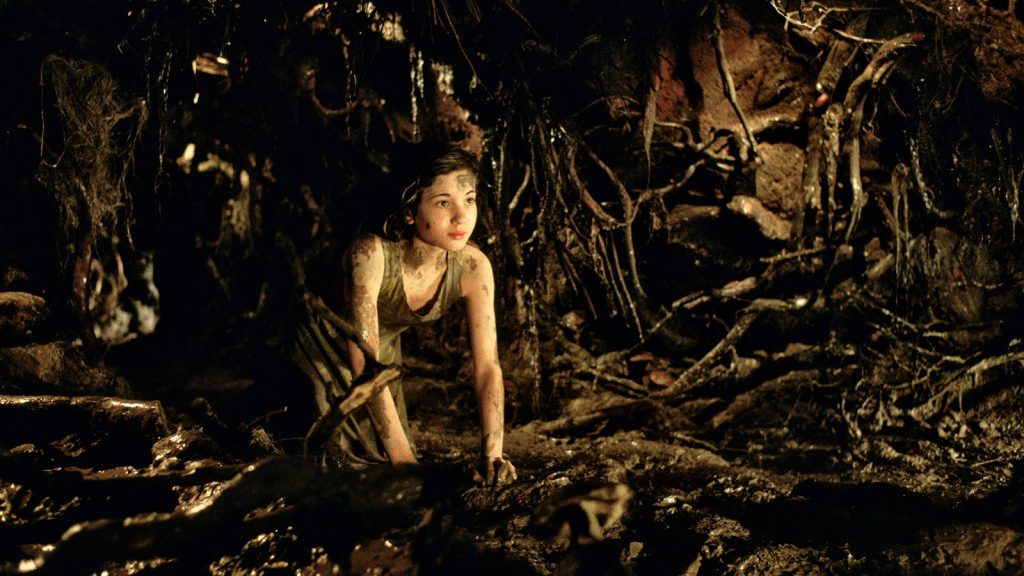
Absolutely. And you were very young and early in your career when you made this film, and Mr. Jones, you said this came at a turning point in your career. So what from the production of this film did you take into the rest of your careers that you’ve had since?
Jones: I took a confidence with me out of this movie. I went into this thinking that I was going to ruin the film because I read the script in English, and then Guillermo del Toro told me it’s going to be in Spanish. “Oh, I don’t speak Spanish,” said Doug. So I was sure that I was going to ruin this movie.
And Guillermo gave me the option. He said, “Well, you can count to ten for all I care, and I’ll dub over it later, but you’re going to play the Fawn.” So he wasn’t letting me out of it. But I knew that if I counted to ten, that little 11-year-old Ivana Baquero would have nothing to respond to besides some weird American guy counting to ten in English, and that would have been disastrous.
So I knew that I had to learn the language of the film, even if they dubbed over me later — which they did, with the right accent, the right nuances in the language. When this movie wrapped and it was my last day on the film, I was like, “Oh my gosh, I actually did it. I delivered all this dialogue in a language I don’t speak.”
I felt that gave me the confidence to go into other movies in other languages. So I did a French movie after that a few years later, that I was like, “Well, I’ve done this before, I can do it again.” And I’ve always had a fear of memorizing dialogue anyway, even in English, so that was just the test of all tests when it came to memorizing. So it’s like, “Okay, maybe I do have a longer career than I thought.”
Baquero: I love how ludicrous we are as actors, where someone tells us to jump off a cliff, we’ll be like, “Yeah, I’m an expert at that. Don’t worry, I will land perfectly.” Doug was absolutely amazing and just a godsend, and we had such a great time.
I think the fact that he was the only English-speaking actor there was something that made us bond even more because I knew English, and we were able to connect in that way. But I’m eternally grateful for him and for his work on the movie and how, in full costume, full prosthetics, he was able to deliver those performances in Spanish, and it made the movie the way it is. It wouldn’t have been as impactful and as perfect and special if he hadn’t put in all that incredible work, so I learned a lot of resilience from Doug.
And I learned how to behave on set. There were a lot of things at stake when we were shooting because it was crunch time a lot of the time and time was limited. So for me, what I took away besides many tools as an actor that Guillermo helped me through and guided me through, is how to behave on a set and be professional on a set. Because I was 11 years old, and it was a game to me, but I learned that it was also a job and I took it really seriously. So it definitely informed the way I learned to walk on a set moving forward.
Pan’s Labyrinth is now in theaters for its 20th anniversary.























 Bengali (BD) ·
  English (US) ·