.png)
 1 week ago
20
Article content
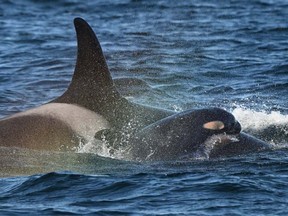
A baby orca has been spotted among the endangered southern resident killer whales, born to a mother who drew international attention in 2018 when she carried a dead newborn for 17 days in what became known as a “tour of grief.”

THIS CONTENT IS RESERVED FOR SUBSCRIBERS ONLY
Subscribe now to read the latest news in your city and across Canada.
- Unlimited online access to articles from across Canada with one account.
- Get exclusive access to the Vancouver Sun ePaper, an electronic replica of the print edition that you can share, download and comment on.
- Enjoy insights and behind-the-scenes analysis from our award-winning journalists.
- Support local journalists and the next generation of journalists.
- Daily puzzles including the New York Times Crossword.
SUBSCRIBE TO UNLOCK MORE ARTICLES
Subscribe now to read the latest news in your city and across Canada.
- Unlimited online access to articles from across Canada with one account.
- Get exclusive access to the Vancouver Sun ePaper, an electronic replica of the print edition that you can share, download and comment on.
- Enjoy insights and behind-the-scenes analysis from our award-winning journalists.
- Support local journalists and the next generation of journalists.
- Daily puzzles including the New York Times Crossword.
REGISTER / SIGN IN TO UNLOCK MORE ARTICLES
Create an account or sign in to continue with your reading experience.
- Access articles from across Canada with one account.
- Share your thoughts and join the conversation in the comments.
- Enjoy additional articles per month.
- Get email updates from your favourite authors.
THIS ARTICLE IS FREE TO READ REGISTER TO UNLOCK.
Create an account or sign in to continue with your reading experience.
- Access articles from across Canada with one account
- Share your thoughts and join the conversation in the comments
- Enjoy additional articles per month
- Get email updates from your favourite authors
Sign In or Create an Account
or
Article content
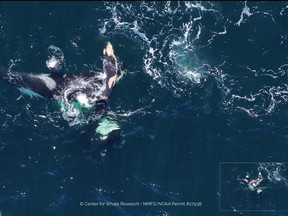
The calf, designated J65, was first spotted by researchers with the Center for Whale Research on Oct. 19, travelling with J35, also known as Tahlequah. The male calf appeared to be less than a week old. Researchers saw the pair again on Oct. 20.
Article content
Article content
Advertisement 1
Article content
Article content
“The team saw no signs of health issues in this calf,” said the centre in a social media post on Wednesday. The calf was “moving well, socializing and nursing from J35.”
Article content
By signing up you consent to receive the above newsletter from Postmedia Network Inc.
Article content
Still, the early months of life are perilous for southern resident orcas. Only half of calves make it through the first year, said the center, which plans to continue monitoring the young orca.
Article content
The new calf is J35’s sixth. Her oldest calf, J47, was born in 2010. She has another son, J57, born in 2020.
Article content
J35 has also experienced significant reproductive loss. After losing a calf in 2018, J35 carried its body on her head for 17 days as she travelled through the Salish Sea in a prolonged display of apparent grief that captured worldwide attention.
Article content
She was spotted again in 2024 carrying the lifeless body of another newborn calf, J31, for 11 days.
Article content
The addition of J65 brings the southern resident population to 77, up from 76 in the latest census data from July. The latest birth comes after another southern resident, J31, was spotted earlier this month carrying a dead calf.
Article content
The population, which relies primarily on Chinook salmon for food, face several threats including dwindling food stocks, pollutants that accumulate in the environment and food chain, and disturbance fro vessel traffic and noise.
Article content
Article content



























 Bengali (BD) ·
 English (US) ·