.png)
 1 hour ago
10
1 hour ago
10
Article content
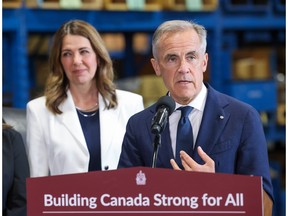
The agreement between Canada and B.C. to fund infrastructure and skills training to support private sector investment is good news for British Columbians. It acknowledges B.C.’s role as the host of major private sector projects in critical minerals and energy development that will strengthen the economy over the next decade.

THIS CONTENT IS RESERVED FOR SUBSCRIBERS ONLY
Subscribe now to read the latest news in your city and across Canada.
- Unlimited online access to articles from across Canada with one account.
- Get exclusive access to the Vancouver Sun ePaper, an electronic replica of the print edition that you can share, download and comment on.
- Enjoy insights and behind-the-scenes analysis from our award-winning journalists.
- Support local journalists and the next generation of journalists.
- Daily puzzles including the New York Times Crossword.
SUBSCRIBE TO UNLOCK MORE ARTICLES
Subscribe now to read the latest news in your city and across Canada.
- Unlimited online access to articles from across Canada with one account.
- Get exclusive access to the Vancouver Sun ePaper, an electronic replica of the print edition that you can share, download and comment on.
- Enjoy insights and behind-the-scenes analysis from our award-winning journalists.
- Support local journalists and the next generation of journalists.
- Daily puzzles including the New York Times Crossword.
REGISTER / SIGN IN TO UNLOCK MORE ARTICLES
Create an account or sign in to continue with your reading experience.
- Access articles from across Canada with one account.
- Share your thoughts and join the conversation in the comments.
- Enjoy additional articles per month.
- Get email updates from your favourite authors.
THIS ARTICLE IS FREE TO READ REGISTER TO UNLOCK.
Create an account or sign in to continue with your reading experience.
- Access articles from across Canada with one account
- Share your thoughts and join the conversation in the comments
- Enjoy additional articles per month
- Get email updates from your favourite authors
Sign In or Create an Account
or
Article content
But the deal between Canada and Alberta to build a new pipeline through B.C. isn’t good news because it will result in taxpayers losing money on a project that private industry will not build because it’s too risky.
Article content
Article content
Article content
Why are Canadian taxpayers being asked to pay over $2,000 per household to finance a multibillion-dollar pipeline for the highly profitable oil industry?
Article content
Article content
Alberta’s answer is that public funds are required because regulatory uncertainty discourages private investment. But the fact that the Carney government has streamlined the approval process and other pipeline companies such as Enbridge have been building new pipelines without any taxpayer support shows this explanation has no merit.
Article content
The real reason that no private company is willing to build Alberta’s pipeline is because it’s a bad investment.
Article content
Oil companies know that world oil markets are weakening. Oil prices have begun to decline with the winding down of the U.S.-Iranian conflict, and the International Energy Agency forecasts a significant global oil surplus in 2027.
Article content
The agency also forecasts that oil demand growth will continue to slow and may decline over the next several decades. This view is shared by private oil companies such as BP that forecast oil demand will decline by at least 11 per cent by 2050 with the increased adoption of electric vehicles.
Article content
Article content
Private investors also know that there is increased competition from other lower cost pipelines. Currently, there are over one million barrels per day of low cost expansions available on the existing Enbridge and Trans Mountain pipelines, plus up to 1.1 million barrels per day on the proposed Keystone XL-Bridger pipeline. These expansions, which include tidewater access to world markets, are more than sufficient to accommodate the most optimistic Canadian oil production forecast without Alberta’s pipeline.
Article content
Article content
This combination of weaker demand for oil and competition from lower cost pipelines means that Alberta’s proposed pipeline will be unable to attract enough oil shipments to cover its costs.
Article content
In addition to losing money if the pipeline is built, Canadian taxpayers will be liable for environmental damages from the pipeline.
Article content
Risk assessments conducted by our research team estimate that the probability of a tanker spill from the Trans Mountain expansion is between 43 and 75 per cent over the operating life of the project even with improved safety measures. The new pipeline would increase the risk even more by tripling tanker traffic in the Salish Sea.


























/https%3A%2F%2Fsportsmole-media-prod.s3.gra.io.cloud.ovh.net%2Fuploads%2F2026%2F07%2Fdaniel-mcgregor-huyer-zuma-press-wire-luciano-gonzalez-anadolu-abacapress-com-estadio-azteca-harry-kane-jude-bellingham-composite-6a49eb8857b70695441164.png)
 Bengali (BD) ·
  English (US) ·