.png)
 1 hour ago
9
1 hour ago
9
Article content
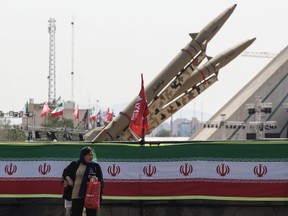
Iran’s decision to escalate the war last week appears counterintuitive. As Omani mediators sought to preserve a diplomatic opening through a renewed truce and continued negotiations over the Strait of Hormuz, Tehran instead launched a direct ballistic missile attack on U.S. bases in Jordan, while expanding pressure across other fronts. The move sharply increased the risk of a broader regional conflict.

THIS CONTENT IS RESERVED FOR SUBSCRIBERS
Enjoy the latest local, national and international news.
- Exclusive articles by Conrad Black, Barbara Kay and others. Plus, special edition NP Platformed and First Reading newsletters and virtual events.
- Unlimited online access to National Post.
- National Post ePaper, an electronic replica of the print edition to view on any device, share and comment on.
- Daily puzzles including the New York Times Crossword.
- Support local journalism.
SUBSCRIBE FOR MORE ARTICLES
Enjoy the latest local, national and international news.
- Exclusive articles by Conrad Black, Barbara Kay and others. Plus, special edition NP Platformed and First Reading newsletters and virtual events.
- Unlimited online access to National Post.
- National Post ePaper, an electronic replica of the print edition to view on any device, share and comment on.
- Daily puzzles including the New York Times Crossword.
- Support local journalism.
REGISTER / SIGN IN TO UNLOCK MORE ARTICLES
Create an account or sign in to continue with your reading experience.
- Access articles from across Canada with one account.
- Share your thoughts and join the conversation in the comments.
- Enjoy additional articles per month.
- Get email updates from your favourite authors.
THIS ARTICLE IS FREE TO READ REGISTER TO UNLOCK.
Create an account or sign in to continue with your reading experience.
- Access articles from across Canada with one account
- Share your thoughts and join the conversation in the comments
- Enjoy additional articles per month
- Get email updates from your favourite authors
Sign In or Create an Account
or
Article content
Article content
Reports soon emerged that Washington was preparing strikes against Iranian energy infrastructure before Saudi Arabia, Qatar and the United Arab Emirates reportedly intervened to preserve the diplomatic track. Why did Tehran choose escalation at the very moment when an off-ramp appeared within reach? The answer lies in the Islamic Republic’s internal balance of power.
Article content
Article content
By signing up, you consent to receive the above newsletter from Postmedia Network Inc.
Article content
Three distinct centres of power currently compete over how Iran should prosecute the war and negotiate its eventual settlement. They differ on methods and acceptable levels of risk. Yet they remain broadly aligned on the strategic objectives they seek to achieve.
Article content
The first, and currently the most influential, is the faction that’s likely led by Ahmad Vahidi, commander-in-chief of the Islamic Revolutionary Guard Corps (IRGC). This camp represents the dominant force in shaping Iran’s wartime decisions. It views military pressure as the prerequisite for any meaningful outcome and insists that, if negotiations occur at all, they must proceed from a position of strength.
Article content
For Vahidi, the Strait of Hormuz is Iran’s principal source of strategic leverage. Maintaining coercive control over the Strait strengthens its hand in future negotiations over its nuclear program. Losing that leverage would weaken Tehran’s bargaining position long after the current war ends.
Article content
Article content
The second faction is represented by President Masoud Pezeshkian, Foreign Minister Abbas Araghchi and Parliamentary Speaker Mohammad Bagher Ghalibaf. This camp’s priority is to contain the economic damage that war and sanctions are inflicting on the regime.
Article content
Article content
They are equally concerned about the domestic front. A population that has repeatedly demonstrated its desire for political change is a strategic challenge no less consequential than the military confrontation abroad. They are prepared to negotiate limited compromises over the administration of the Strait of Hormuz.
Article content
The third faction, centred on the Paydari Front and figures such as Saeed Jalili, rejects negotiations with Washington altogether. Although smaller than the other two camps, it continues to exert ideological pressure against compromise and enjoys influence through key state institutions, such as Islamic Republic of Iran Broadcasting.
Article content
This group’s strategy is to move beyond a defensive posture and seize the initiative. Rather than confining the conflict to Iranian territory, it seeks to widen the theatre across the region and beyond, raising the costs for Iran’s adversaries and restoring deterrence on more favourable terms.





















/https%3A%2F%2Fsportsmole-media-prod.s3.gra.io.cloud.ovh.net%2Fuploads%2F2026%2F04%2Fimago1075785696-69f1c41377d96073966575.jpg)

 Bengali (BD) ·
  English (US) ·