.png)
 4 days ago
16
4 days ago
16
Through the excellent use of over 2,500 hours of archival material, director Avi Belkin has crafted an interesting and gripping documentary with Odyssey. The film initially presents itself as a standard historical recap of the space race and the Apollo 13 mission. However, it slowly unravels into something much more profound. It becomes a sharp critique of our modern societal views on science, tracking how we arrived at this frustrating, anti-intellectual landscape.
Odyssey Tribeca Review
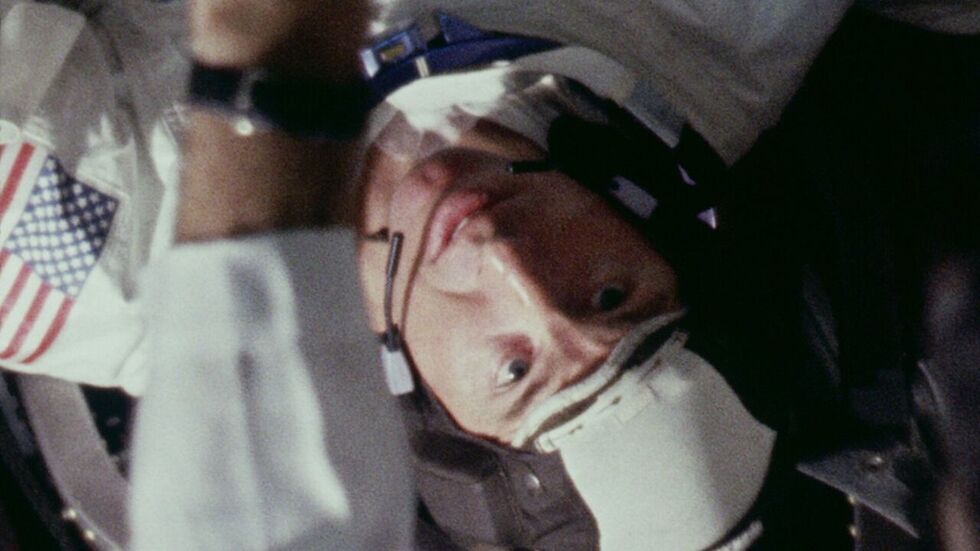 A still from Odyssey, which premiered at the Tribeca Film Festival on June 7, 2026.
The most immediate hurdle of Odyssey is its format. Because it’s told purely through archival footage without a modern narrator, it lacks a traditional central voice. In the early stretches, it can feel like a produced YouTube video essay. It definitely takes getting used to. However, there’s a clear, undeniable passion for the topic here that elevates the material beyond a compilation of old film reels.
For the first half, the narrative reframes a part of American history that feels so heavily simplified nowadays. By focusing on astronaut Jim Lovell, the documentary touches on the complexities and sacrifices of the era. It shows the highs of the Apollo program while contrasting them against a backdrop of waning public support. For the most part, this section is fine, but it leaves you wanting more depth.
The extensive volume of archival media allows Belkin to highlight the mundane reality of how quickly Americans lost interest in space travel. Once the initial novelty of walking on the moon wore off, the public broadcasts and news segments began reflecting a growing national apathy. We see politicians and everyday citizens questioning the bloated budgets and the necessity of sending more men into the dark void. This visual timeline of societal boredom lays the crucial groundwork for the incoming disaster. It illustrates how fast the nation pivoted from cheering on these brave astronauts to viewing them as an unnecessary financial burden, which is a fascinating angle to take.
Then, the film shifts its focus to the gripping rescue mission of Apollo 13, and that’s where it gets good. It turns into this Oppenheimer-like exploration of systemic fallout. The documentary compellingly argues that the failure of Apollo 13 helped usher in a new era of rigid political thinking.
Odyssey explores how the American public, and specifically the political right, began demanding that science shouldn’t be explored unless it has direct, massive economic impacts. This pivot highlights the indirect rise of mega-conservatism in the context of scientific funding. Odyssey showcases how we arrived at this unhinged, modern experiment of political critique.
We now live in a world where Republican politicians will loudly complain on television about millions of dollars being spent on things like transgender mice. It’s a gross, weaponized oversimplification of the scientific process dragged down to the point of absurdity, and it has ruined the scientific community. This anti-science rhetoric has arguably damaged America as a whole, and connecting those modern frustrations back to the fallout of the Apollo 13 mission is a fascinating observation.
The audacity to draw that thematic line makes the film’s final act fascinating. It recontextualizes the space race, stripping away the shiny, patriotic veneer to reveal the rotting foundation of how our government misunderstands the pursuit of knowledge.
Is Odyssey worth watching?
It’s a shame that the documentary doesn’t focus on this phenomenal thesis sooner. Odyssey manages to do something remarkable with that observation, but it takes a while to get there. If the pacing had brought this idea to the forefront earlier, it could have been a masterpiece. Instead, Odyssey remains a solid, quietly challenging historical piece that makes you wait too long for the payoff.
Odyssey premiered at the Tribeca Film Festival, which runs from June 3 – 14, 2026.
Odyssey Tribeca Review: A Gripping Look at the Roots of Anti-Science
Told entirely through archival footage, Odyssey starts as a standard space race documentary before evolving into a brilliant, scathing critique of how the Apollo 13 failure inadvertently sparked America's modern anti-science political movement.




























 Bengali (BD) ·
  English (US) ·