.png)
 1 hour ago
5
1 hour ago
5
Article content
More than half of the current diesel fleet is at or beyond its typical lifespan of 15 years, “leading to more frequent breakdowns and longer maintenance requirements,” while a shortage of licensed mechanics has “compounded the maintenance backlog.”
Article content
Article content
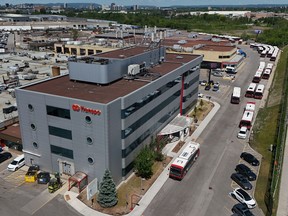
OC Transpo is adding more zero-emission buses to its fleet and expects to have 354 ZEBs by the end of 2027, which will make up about half the total fleet. The 354 electric buses will replace 354 aging diesel buses, but the auditor general warned a replacement ratio of greater than 1:1 may be required “given the range limitations of ZEBs to operate on a single electric charge.”
Article content
Auditors reviewed other comparable transit agencies and found they had adopted higher replacement ratios, ranging from a 5 to 15 per cent contingency fleet “to address range limitations, as well as garage maintenance and storage impacts associated with zero-emission fleets.”
Article content
The audit found OC Transpo has “an ongoing shortage of bus availability” in season of high demand in the spring, fall and winter. Bus availability was “highly variable” between January 2023 and March 2026 and minimum bus availability requirements were not met on 46 per cent of days during that three-year period.
Article content
Article content
“A healthy fleet typically has 80 per cent of the total number of buses owned available for use; that is, for every 10 buses in the fleet, eight are available for service on a given day,” the audit stated. Only 67 per cent of OC Transpo’s conventional bus fleet was available for service during January and February, though that availability was not uniformly distributed across vehicle types.
Article content
The availability of double-decker buses was at 53 per cent and electric buses were at a “particularly low” 40 per cent availability ratio.
Article content
OC Transpo management recently told the transit commission that it had retired 67 of its 77 double-decker buses. Management “expects availability to improve” as more ZEBs are added to the fleet.
Article content
A gap in the availability of bus operators, meanwhile, is not expected to be resolved until January 2027, according to the audit. OC Transpo’s figures showed that 28 per cent of cancelled trips between Jan. 4 and March 1, 2026 were due to a shortage of available bus operators.
Article content
Some of those cancellations could have been attributed to a previous trip being late or an operator requiring a mandated break.
Article content
Article content
“Overall, based on the priorities and targets established, the bus schedule that has been developed cannot be achieved consistently with existing resources,” the audit stated. “Given the shortage of buses and operators, there are often insufficient resources to fully deliver peak bus service as scheduled, leading to cancellations and, ultimately, resulting in OC Transpo not meeting service expectations.”
Article content
New Ways to Bus was “an opportunity to reset the bus network,” the audit stated. “However, specific foundational pieces were missing; specifically, the establishment of a clear order of priorities given that the network would not be able to address all needs, as well as updated service standards to articulate specific expectations for service levels going forward.”
Article content
The upcoming east extension of the LRT Line 1 presents another opportunity, the audit states, for OC Transpo “to establish clear priorities, both short-term and longer term, develop and consolidate realistic service standards and consistently measure performance against those standards.”
Article content





























/https%3A%2F%2Fsportsmole-media-prod.s3.gra.io.cloud.ovh.net%2Fuploads%2F2026%2F06%2Frio-ngumoha-email-sportmole-6a27b73e9a471352625861.png)
 Bengali (BD) ·
  English (US) ·