NASA's Artemis 2 moon launch seen from space | Space photo of the day for April 2, 2026

2 weeks ago 18

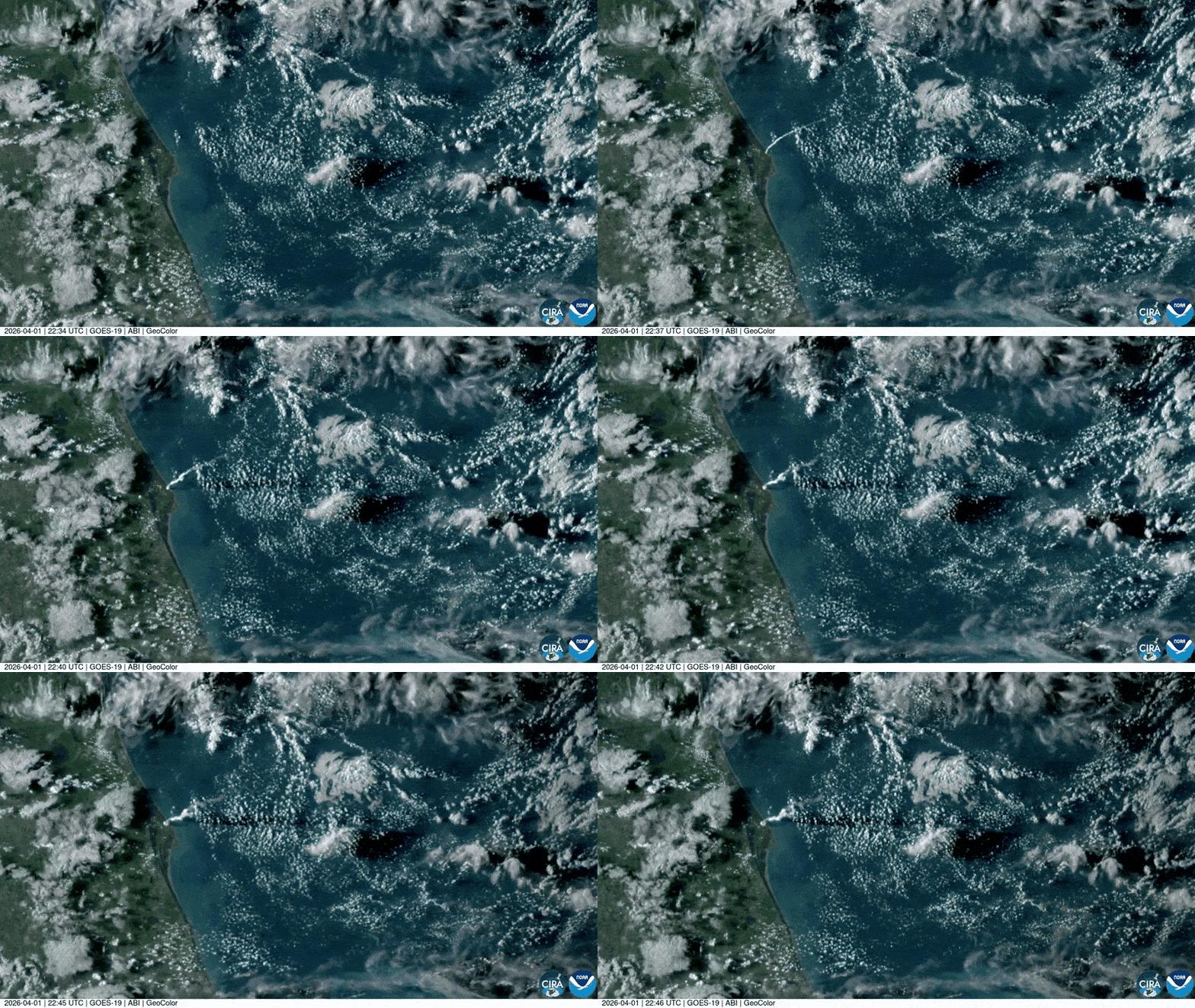
satellite aerial view of the Florida coast and a long white plume stretching along the atmosphere showing Artemis 2 launch.

GOES-19 satellite view of Artemis 2 launching to space on April .1. (Image credit: NOAA/NASA GOES-19)

Humanity is on its way back to the moon as NASA's Space Launch System (SLS) blasts the space agency's Orion space capsule on April 1. The launch was even captured from space!

What is it?

This photo shows NASA's SLS rocket and Orion spacecraft blasting off from the historic Launch Complex 39B at NASA's Kennedy Space Center (KSC) in Florida at 6:35 p.m. EDT (2235 GMT) on Wednesday, April 1.

The launch is represented by a white plume of smoke seen by the GOES-19 weather satellite.

Why is it amazing?

The Artemis 2 mission represents the first time that humans have visited the moon since the Apollo 17 mission back in 1972. Not only this, but during this mission, the four-person crew of Jeremy Hansen, Christina Koch, Reid Wiseman, and Victor Glover will journey farther into space than any other human before them.

Article continues below
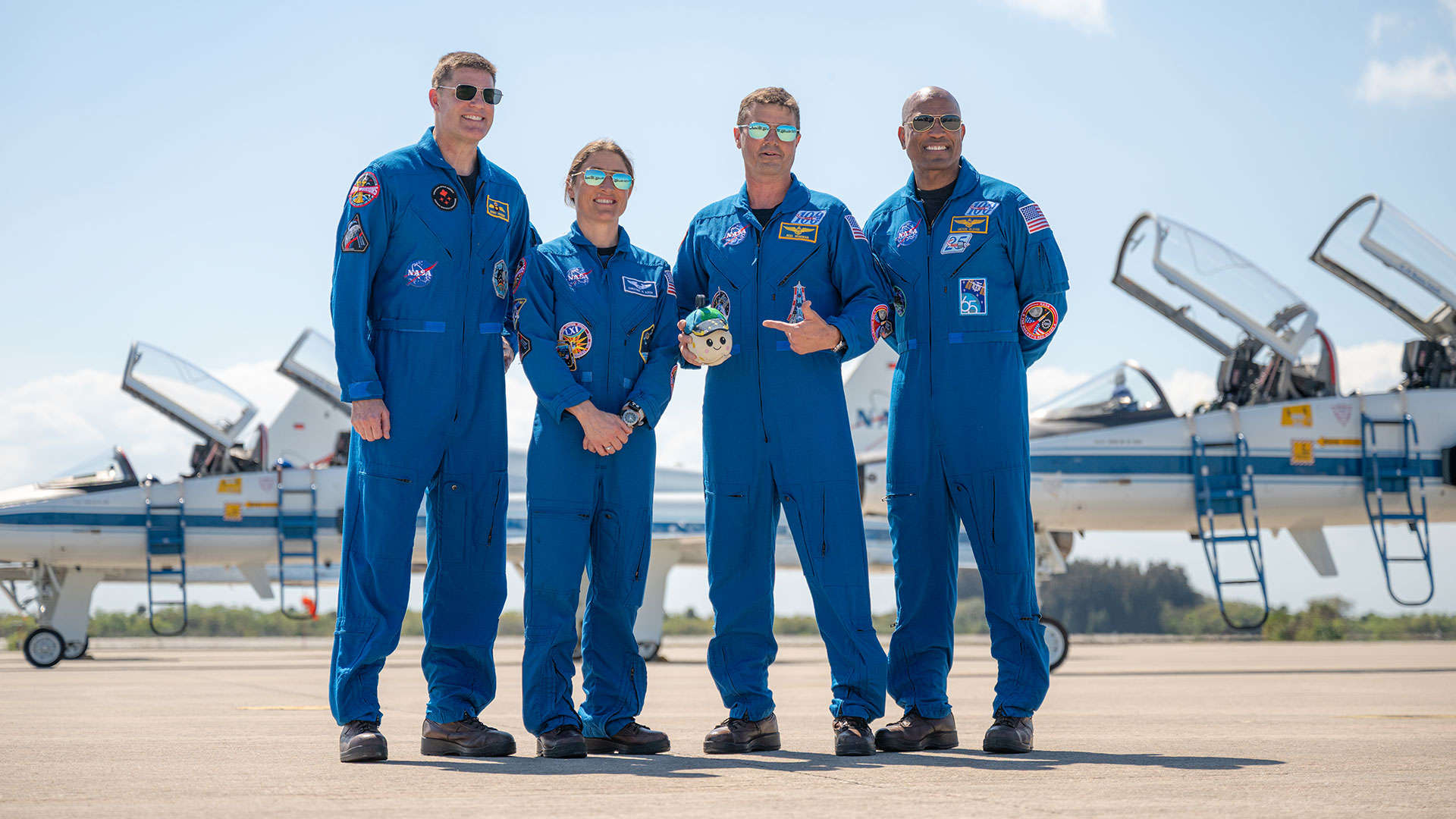
three men and a woman, each wearing a blue flight suit, pose together for a photo holding a small plush doll

From L to R: Artemis 2 astronauts Jeremy Hansen, Christina Koch, Reid Wiseman and Victor Glover. (Image credit: NASA/John Kraus)

The Artemis 2 mission is scheduled to last for around 10 days. Though the crew won't set foot on the lunar surface during this mission, this sets the scene for the future of the Artemis program, particularly Artemis 4 and 5, which will finally return humans to the moon's surface after over half a century.

Follow along with our Artemis 2 mission live updates page for the latest developments.
Breaking space news, the latest updates on rocket launches, skywatching events and more!

Robert Lea is a science journalist in the U.K. whose articles have been published in Physics World, New Scientist, Astronomy Magazine, All About Space, Newsweek and ZME Science. He also writes about science communication for Elsevier and the European Journal of Physics. Rob holds a bachelor of science degree in physics and astronomy from the U.K.’s Open University. Follow him on Twitter @sciencef1rst.

You must confirm your public display name before commenting

Please logout and then login again, you will then be prompted to enter your display name.

*** Disclaimer: This Article is auto-aggregated by a Rss Api Program and has not been created or edited by Bdtype.

(Note: This is an unedited and auto-generated story from Syndicated News Rss Api. News.bdtype.com Staff may not have modified or edited the content body.

Please visit the Source Website that deserves the credit and responsibility for creating this content.)

Watch Live | Source Article