.png)
 1 week ago
14
1 week ago
14
Whether your neighbourhood needs more trees isn't determined by how many trees there are, it's based on who lives there
Get the latest from Brian Lilley straight to your inbox
Published Apr 16, 2026 • 3 minute read
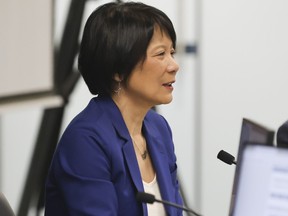
Mayor Olivia Chow and her crew at City Hall have a new pet project – tree equity.
Advertisement 2

THIS CONTENT IS RESERVED FOR SUBSCRIBERS ONLY
Subscribe now to read the latest news in your city and across Canada.
- Unlimited online access to articles from across Canada with one account.
- Get exclusive access to the Toronto Sun ePaper, an electronic replica of the print edition that you can share, download and comment on.
- Enjoy insights and behind-the-scenes analysis from our award-winning journalists.
- Support local journalists and the next generation of journalists.
- Daily puzzles including the New York Times Crossword.
SUBSCRIBE TO UNLOCK MORE ARTICLES
Subscribe now to read the latest news in your city and across Canada.
- Unlimited online access to articles from across Canada with one account.
- Get exclusive access to the Toronto Sun ePaper, an electronic replica of the print edition that you can share, download and comment on.
- Enjoy insights and behind-the-scenes analysis from our award-winning journalists.
- Support local journalists and the next generation of journalists.
- Daily puzzles including the New York Times Crossword.
REGISTER / SIGN IN TO UNLOCK MORE ARTICLES
Create an account or sign in to continue with your reading experience.
- Access articles from across Canada with one account.
- Share your thoughts and join the conversation in the comments.
- Enjoy additional articles per month.
- Get email updates from your favourite authors.
THIS ARTICLE IS FREE TO READ REGISTER TO UNLOCK.
Create an account or sign in to continue with your reading experience.
- Access articles from across Canada with one account
- Share your thoughts and join the conversation in the comments
- Enjoy additional articles per month
- Get email updates from your favourite authors
Article content
You may think this is a program to make sure that all parts of the city have similar tree cover, but you’d be wrong.
Article content
Article content
Tree equity if really just a DEI – diversity, equity and inclusion – project for determining if your neighbourhood deserves more trees.
“Toronto is the first municipality in Canada to utilize a tree equity approach to prioritize canopy growth at the neighbourhood scale,” the city proudly proclaimed in announcing the policy.
Along with their policy, the city has released an interactive website that allows you to see your tree equity score. Bizarrely, there are areas of the city that have more trees but are given a lower tree equity score and are considered a higher priority than neighbourhoods with fewer trees.
For example, the Bay-Cloverhill area of the downtown core between Yonge and Bay Sts. and from College St. north to St. Joseph St. has just 2% tree canopy according to the city but a tree equity score of 86. The north end of Regent Park from Dundas St. E. north to Gerrard St. E. has 13% tree canopy but only a tree equity score of 70 making it a high priority area to plant trees while Bay-Cloverhill with far fewer trees isn’t a priority.
By signing up you consent to receive the above newsletter from Postmedia Network Inc.
Article content
Advertisement 3
Article content

We apologize, but this video has failed to load.
Based on the DEI criteria decided on by city bureaucrats
That’s because the tree equity score isn’t based on how many trees are in your neighbourhood, it’s based on the DEI criteria decided on by city bureaucrats. The city lists the priority index facts that they consider on the website, which include, “People in poverty, People of color, Children and seniors, Unemployment, Linguistic isolation, Health burden index, Heat disparity.”
“The priority index is made up of equally-weighted climate, health and socioeconomic characteristics that are integrated into Tree Equity Score,” the website states.
City Councillor Brad Bradford, who has already declared he will run against Mayor Chow in October’s election, is critical of the policy. While he says he’s supportive of planting more trees across the city, he doesn’t understand why we need a policy – especially one that decides who gets trees based on socioeconomic and demographic factors.
“If this is the priority, if this is the focus, if this is where the bureaucrats are spending all their time, it’s not so surprising that home invasions are up, transit service and reliability is down, and state of good repair in the city has arguably never been worse,” Bradford said.
Advertisement 4
Article content
“For me, when I think about where we need trees, I would just sort of look, where do we not have a lot of trees? Can we plant some more trees there?”
We apologize, but this video has failed to load.
No common sense at Olivia Chow’s City Hall
That would be a simple and common sense approach, but at Olivia Chow’s City Hall following a common sense approach would be just too easy. Even something as simple as where to plant trees has to be put through a highly political and partisan DEI lens.
If you don’t think this makes things more complex and more expensive, think again.
Having a policy like this requires a team of staff to measure all of these factors, to design the plans, to compile and analyze results. We are undoubtedly wasting a lot of money on this policy, which is purely driven by identity politics.
Read More
-

WARMINGTON: Only in Toronto could 'free' World Cup fan fest now come with cost
-

Was Olivia Chow's paid shovelling idea a city hall snow job?
-

LILLEY: Attack ads on Olivia Chow start seven months before voting day



We know that suburban areas of the city like Rexdale or Morning Side Heights – both with just 6% tree canopy cover – don’t have enough trees. We know that areas in the core like Bay-Cloverhill with only 2% canopy or the Entertainment District with just 1% canopy growth don’t have enough trees.
We don’t need to create plans to plant more trees based on race, unemployment levels or any other fact, we just need to plant more trees.
Stop with the politics, plant the trees.
Article content




















 Bengali (BD) ·
  English (US) ·