.png)
 1 day ago
40
1 day ago
40
Spoiler Alert !!!
This article contains major spoilers for Life, Larry and the Pursuit of Unhappiness Episode 6!
After Life, Larry and the Pursuit of Unhappiness Episode 5 turned Abraham Lincoln’s final theatre trip into a vicious chain of yellow-scarf grudges, Mary Todd Lincoln’s rage, and Lawrence Butterfield’s talent for being the wrong man in every room, Episode 6 widens the target. The HBO limited sketch series from Larry David and Jeff Schaffer, produced with Higher Ground, was announced as a seven-episode American-history satire premiering June 26 at 9 p.m. on HBO and HBO Max, with weekly episodes continuing toward the August 7 finale.
Life, Larry and the Pursuit of Unhappiness episode 6 moves from Paul Revere’s false alarm to Davy Crockett’s exposed baldness, then to Susan B. Anthony’s dinner being hijacked by a man allergic to basic respect. Yet the closing act gets the biggest sting because Neil Armstrong and Edwin ‘Buzz’ Aldrin reach the moon, and the first human step becomes a social turf war over gifts, credit, moon rocks, and one immortal sentence.
Paul Revere’s Warning Starts a Domestic Fire
 Credit: HBO
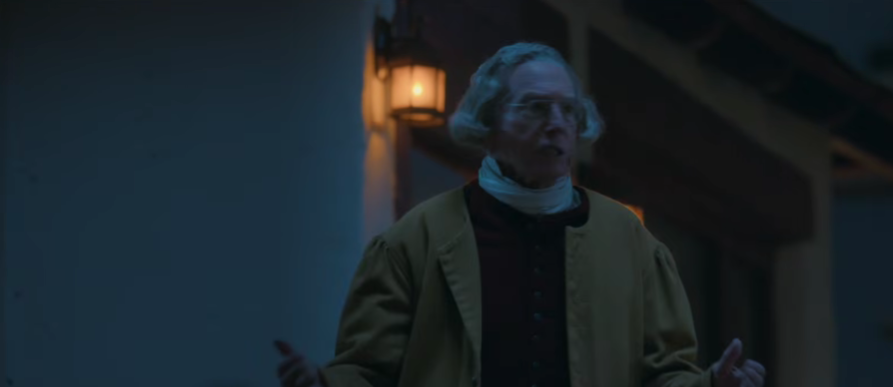
Samuel L. Jackson opens Episode 6 with April 18, 1775, when Paul Revere rides through Massachusetts to warn colonists about the British advance. In the sketch, the warning sends David’s character and his wife Elspeth into packing mode, but the emergency quickly becomes a marital audit.
They argue about Ipswich, her Puritan sister, eggs, carrots, quills, a dead mother’s portrait, bitter butter, a pigeon, and whether barrel-making deserves the reverence David’s character demands. Then Revere returns and admits the British are not coming after all. David’s character is furious because Revere should have said the British “might” be coming. That tiny wording difference cracks the whole joke open: in David’s America, even revolution needs a disclaimer.
The Alamo Loses Its Mythic Hairline
 Credit: HBO
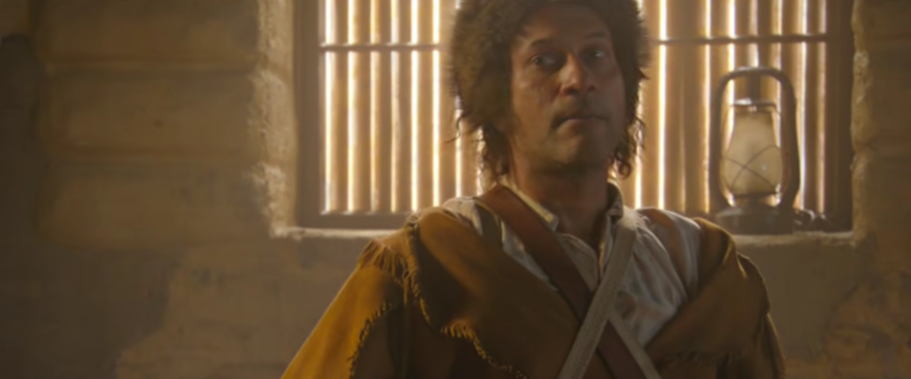
The second act moves to the Battle of the Alamo, where Jackson explains that around 200 Texan defenders faced a much larger Mexican army under General Santa Anna. The sketch begins with military planning, but David’s character drags the room toward defecation spots and Davy Crockett’s coonskin cap.
Crockett’s cap becomes a public-relations shield. David’s character keeps asking what is underneath it, and Crockett grows defensive because the cap is part of the legend. When Crockett finally loses it during the fight, his bald head becomes enemy intelligence. Santa Anna hears that Crockett has no hair, mocks him as a clown and failure, and orders the attack with fresh confidence. The joke is savage because the Alamo’s heroic aura gets punctured by vanity, branding, and one exposed scalp.
Susan B. Anthony’s Dinner Becomes a Bad-Faith Debate
 Credit: HBO
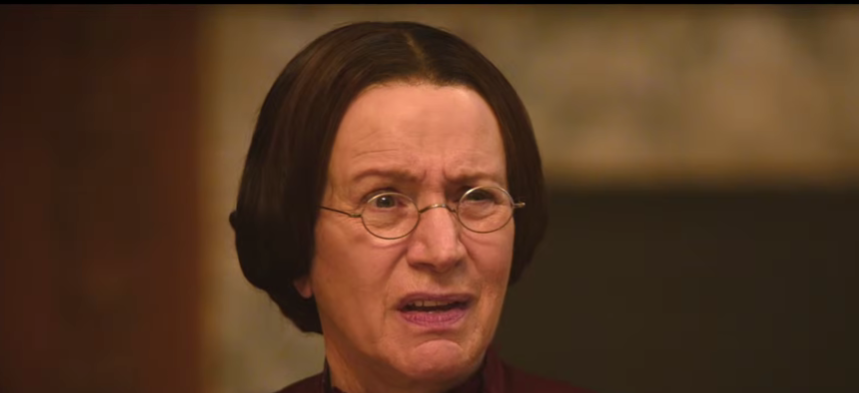
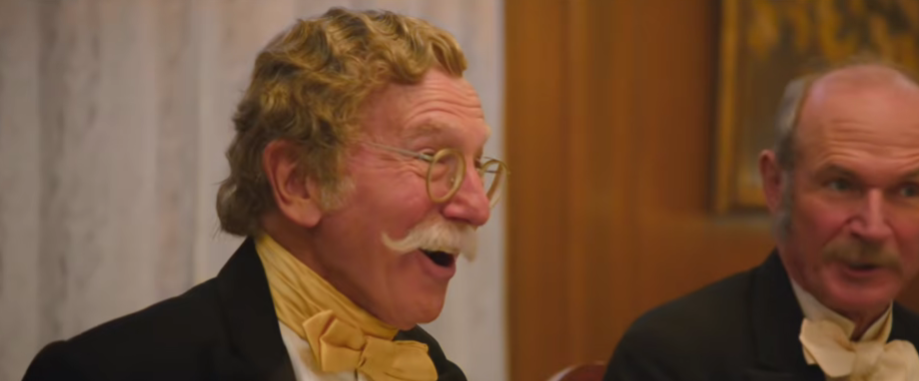
The third act shifts to Susan B. Anthony and the women’s suffrage movement, which led to the 19th Amendment in 1920. Jackson frames Anthony as someone who fought for women to vote, own property, and access education, but the dinner sketch puts her beside a guest who treats equality like an inconvenience.
Florence, refuses to thank Anthony properly, keeps calling her “Susie,” questions forks, eats before dinner, sneaks alcohol into her dry household, and then offers a gross theory that only certain women should vote. When Anthony orders him out, he asks for a vote, then rejects the women’s raised hands because he does not recognize their votes. Anthony’s house becomes a miniature republic, and Florence behaves like the fellow who accepts democracy only while winning.
First Step on the Moon Becomes a Lunar Ego Beef
 Credit: HBO
The final sketch turns to July 20, 1969, when Armstrong and Aldrin became the first men to walk on the moon. NASA records Apollo 11 as the mission that put humans on another world, with Armstrong taking the first step and Aldrin joining him on the lunar surface. Jackson gives the voyage a suitably grand frame, noting the four-day journey, the tiny computer, and the constant communication with Houston.
Inside the lunar module, grandeur gets bullied by etiquette. Armstrong has bought putters for the launch team, while Aldrin has bought nothing and instantly feels cheap. Armstrong treats the gift as common courtesy, while Aldrin resents that nobody warned him about this unwritten rule. The moon rocks become another dispute because Aldrin wants to bring them back in a laundry bag, maybe even profit from them, while Armstrong treats that idea as anti-science nonsense. For a short stretch, both men remember they are about to touch the moon. Then Armstrong says he has prepared a first-step line, and Aldrin realizes he was never getting the first footprint.
Why Armstrong’s Giant Leap Becomes Aldrin’s Worst Day
 Credit: HBO
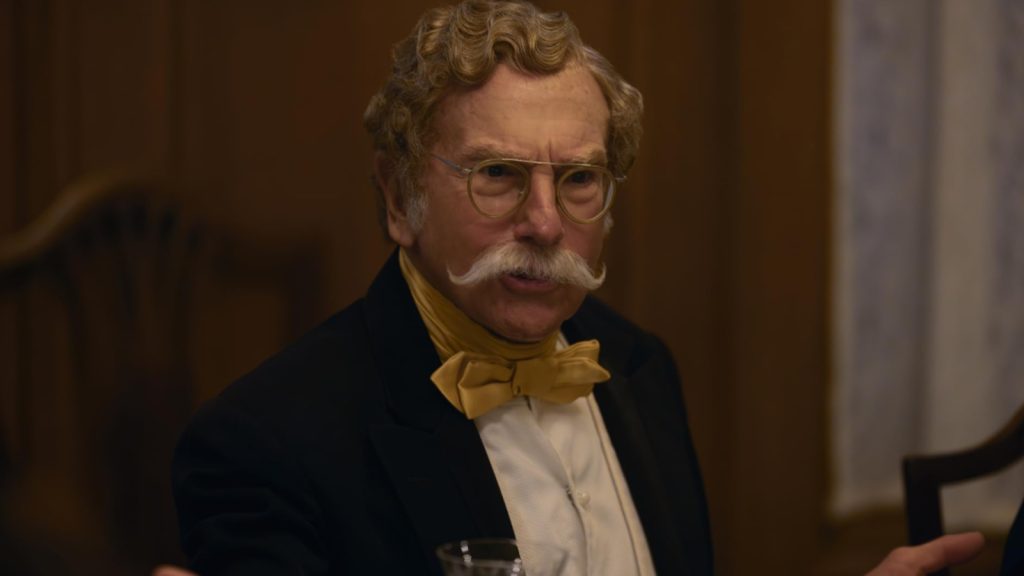
The ending explains Life, Larry and the Pursuit of Unhappiness Episode 6’s larger joke: public glory often depends on private hierarchy. Armstrong has the first step, the polished line, the launch-team goodwill, and the official place in history. Aldrin has resentment, a terrible “Gouda” moon-rock joke, and a suspicion that Armstrong’s gift-giving was a power move.
When Armstrong says, “That’s one small step for a man, one giant leap for mankind,” Aldrin is already angry because he believes he could have delivered a better line. His alternatives are awful, including one that borrows from “Fly Me to the Moon,” which makes Armstrong accuse him of stealing from Sinatra. The argument then turns nastier as Armstrong mocks the name “Buzz,” calls him Edwin, and questions his stories about childhood fame, school acting, and Rocky Marciano’s daughter.
By the time the Eagle reaches the surface, the moon has become a workplace promotion fight with better lighting. Armstrong exits first and claims the sentence that history will keep. Aldrin lunges after him, and the two astronauts fight on the moon while the American flag goes up. That ending is funny because Aldrin still reaches an achievement almost no human being will ever touch, yet he loses the authorship of the achievement. Second place on the moon should be enough for anyone, but Episode 6 argues that ego does not become noble just because it has left Earth.
I think Episode 6 has one of the sharper endings of the season because it treats history as a room full of insecure people rather than a parade of statues. Revere wants involvement, Crockett wants image, Florence wants control, and Aldrin wants the sentence, the step, and the applause. Follow FandomWire for more ending explainers, and TV recaps with enough bite to keep history from sounding like homework.
Life, Larry and the Pursuit of Unhappiness airs on HBO Max.
























/https%3A%2F%2Fsportsmole-media-prod.s3.gra.io.cloud.ovh.net%2Fuploads%2F2026%2F07%2Fwc26-stencil-generic-1-player-email-6a5efced3be22784676779.jpg)
/https%3A%2F%2Fsportsmole-media-prod.s3.gra.io.cloud.ovh.net%2Fuploads%2F2026%2F04%2Fimago1075785696-69f1c41377d96073966575.jpg)
 Bengali (BD) ·
  English (US) ·