.png)
 1 week ago
22
1 week ago
22
To attract and retain top talent in all sectors, tax rates must decrease.
Published Jul 02, 2026 • Last updated 11 minutes ago • 3 minute read

See more Toronto Sun on Google — save as a Preferred Source
Advertisement 2

THIS CONTENT IS RESERVED FOR SUBSCRIBERS ONLY
Subscribe now to read the latest news in your city and across Canada.
- Unlimited online access to articles from across Canada with one account.
- Get exclusive access to the Toronto Sun ePaper, an electronic replica of the print edition that you can share, download and comment on.
- Enjoy insights and behind-the-scenes analysis from our award-winning journalists.
- Support local journalists and the next generation of journalists.
- Daily puzzles including the New York Times Crossword.
SUBSCRIBE TO UNLOCK MORE ARTICLES
Subscribe now to read the latest news in your city and across Canada.
- Unlimited online access to articles from across Canada with one account.
- Get exclusive access to the Toronto Sun ePaper, an electronic replica of the print edition that you can share, download and comment on.
- Enjoy insights and behind-the-scenes analysis from our award-winning journalists.
- Support local journalists and the next generation of journalists.
- Daily puzzles including the New York Times Crossword.
REGISTER / SIGN IN TO UNLOCK MORE ARTICLES
Create an account or sign in to continue with your reading experience.
- Access articles from across Canada with one account.
- Share your thoughts and join the conversation in the comments.
- Enjoy additional articles per month.
- Get email updates from your favourite authors.
THIS ARTICLE IS FREE TO READ REGISTER TO UNLOCK.
Create an account or sign in to continue with your reading experience.
- Access articles from across Canada with one account
- Share your thoughts and join the conversation in the comments
- Enjoy additional articles per month
- Get email updates from your favourite authors
Article content
A Canadian-based National Hockey League team hasn’t won the Stanley Cup since 1993. And, with the Carolina Hurricanes capturing hockey’s top prize in mid-June, Canadian fans will have to wait yet another year to see if Lord Stanley’s cup will finally return north of the 49th parallel.
Article content
Recommended Videos
Article content
This drought for Canadian teams is unprecedented in the history of hockey. Never have Canadian teams — numbering seven of 32 NHL squads — failed to win hockey’s top prize for 10 years, let alone over 30.
What could explain this? Bad luck is certainly a factor. But so too is a difficulty attracting top talent, which actually has a lot to do with taxes.
As a recent study makes clear, taxes certainly play a role in where star players choose to sign, as their take-home pay is impacted by the top marginal tax rate where they choose to play.
Consider the example of a hockey player who earns a $750,000 salary, which is quite low when one considers that star players in hockey can earn well above $10 million a year. If a player signs with a team in the state of Texas, Florida, Tennessee, Washington, or Nevada, that player doesn’t have to pay any state income tax whatsoever, leading to a tax rate of 31.27%. Compare that with the highest-tax jurisdiction in the sport of hockey, Quebec, where a player must pay 48.57% of their income in taxes. That reduces that player’s take-home pay by some $130,000.
By signing up you consent to receive the above newsletter from Postmedia Network Inc.
Article content
Advertisement 3
Article content
And, again, that’s just considering a salary of $750,000, which is at the lowest end of the spectrum in the sport of hockey. When a player signs a $10-million contract, for example, the tax implications become much more profound, upwards of $1 million.
This story about top talent being attracted to lower-tax jurisdictions has much bigger implications than tipping the scales in terms of where free agents sign and how likely it is that a team will win a Stanley Cup. Doctors, professors, inventors and other high-income professionals are similarly attracted to lower-tax jurisdictions so they can take home more pay.
This is a broader concern for Canada’s economy. If the country is to be competitive and attract top talent in all sectors, tax rates for those at the top, and for everyone for that matter, must come down.
High taxes have consequences. It’s natural for people to want to keep more of what they earn. And folks with higher incomes are even more likely to want to take advantage of lower-tax jurisdictions.
Advertisement 4
Article content
Canada has experienced a “brain drain” as a result of high taxes. Far too often, one hears stories of doctors educated in Canada choosing to move south of the border to practice, both because they can earn more and also because they will be taxed less. If Canada wants to reverse this trend across all sectors, including in sports, marginal tax rates must be addressed.
Some of this damaging public policy has been more recent. For example, former prime minister Justin Trudeau introduced a new tax bracket for those earning more than $200,000, which raised the top federal income tax rate from 29% to 33%. That was a significant increase that impacted doctors, athletes, professors, and other high-income professionals. And it also means that Canada’s top marginal tax rate is higher than the top federal tax rate in the United States, a country in which many states don’t have any state income tax at all.
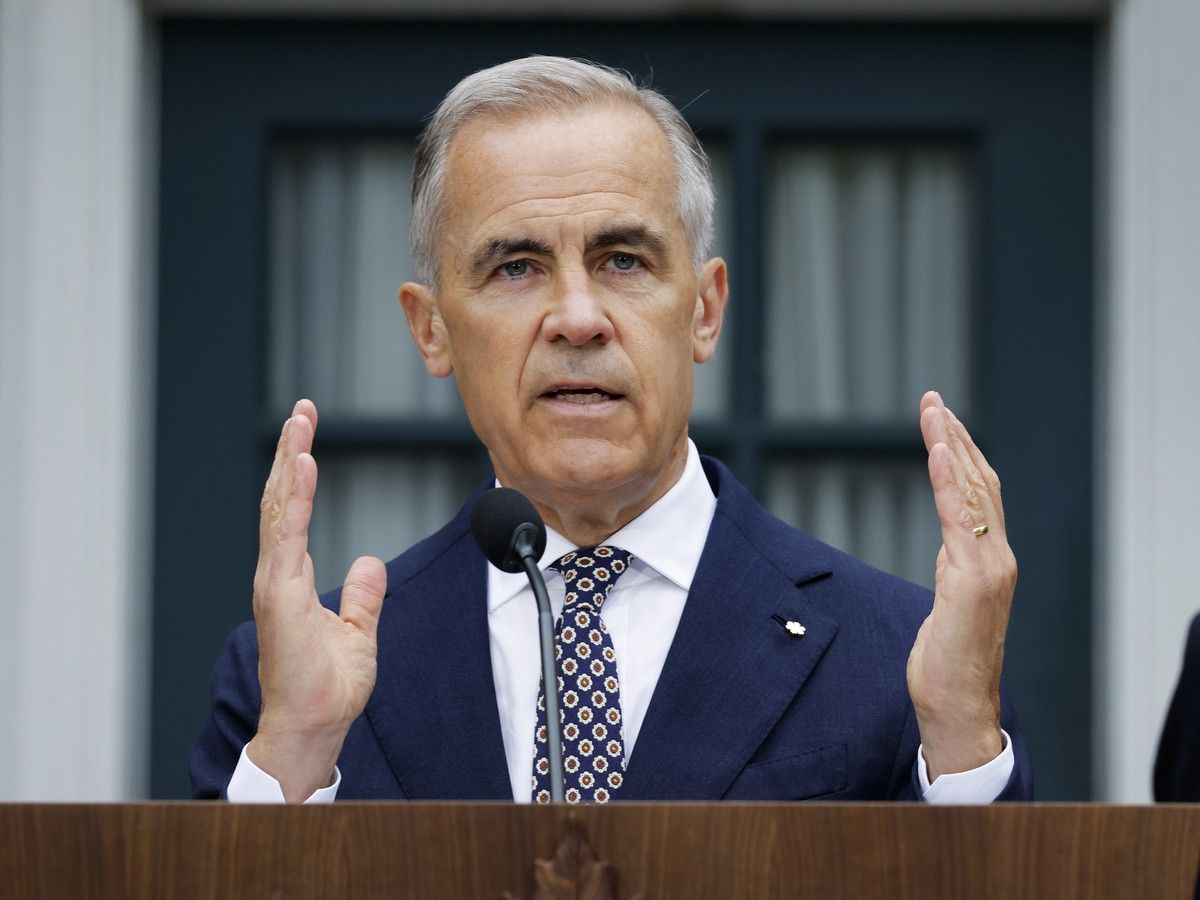
To start to reverse Canada’s “brain drain” and “athlete drain,” the government of Prime Minister Mark Carney ought to start by reversing the Trudeau government’s introduction of the new top marginal income tax bracket. Taxing the rich may be politically popular, but it has damaging impacts on the broader economy and encourages those with the highest incomes, who already pay the most taxes, to move elsewhere.
If Canada wants to attract and keep top talent — be it in sports, medicine or academia — the nation’s taxation policies must be addressed. Until then, the odds of Canadian sports teams signing top talent and the odds of keeping new doctors in the country, for that matter, will continue to lag.
Read More
-

JAY GOLDBERG: Politicians should be embracing AI data centres
-

JAY GOLDBERG: Canada's economic engine running on empty


Article content




























/https%3A%2F%2Fsportsmole-media-prod.s3.gra.io.cloud.ovh.net%2Fuploads%2F2026%2F07%2Fdaniel-mcgregor-huyer-zuma-press-wire-luciano-gonzalez-anadolu-abacapress-com-estadio-azteca-harry-kane-jude-bellingham-composite-6a49eb8857b70695441164.png)
 Bengali (BD) ·
  English (US) ·