.png)
 1 hour ago
10
1 hour ago
10
Article content
OTTAWA — Not only do federally appointed judges and the Carney government disagree on whether judges should get a raise, they don’t even agree on who should hear the court challenge on the issue.

THIS CONTENT IS RESERVED FOR SUBSCRIBERS
Enjoy the latest local, national and international news.
- Exclusive articles by Conrad Black, Barbara Kay and others. Plus, special edition NP Platformed and First Reading newsletters and virtual events.
- Unlimited online access to National Post.
- National Post ePaper, an electronic replica of the print edition to view on any device, share and comment on.
- Daily puzzles including the New York Times Crossword.
- Support local journalism.
SUBSCRIBE FOR MORE ARTICLES
Enjoy the latest local, national and international news.
- Exclusive articles by Conrad Black, Barbara Kay and others. Plus, special edition NP Platformed and First Reading newsletters and virtual events.
- Unlimited online access to National Post.
- National Post ePaper, an electronic replica of the print edition to view on any device, share and comment on.
- Daily puzzles including the New York Times Crossword.
- Support local journalism.
REGISTER / SIGN IN TO UNLOCK MORE ARTICLES
Create an account or sign in to continue with your reading experience.
- Access articles from across Canada with one account.
- Share your thoughts and join the conversation in the comments.
- Enjoy additional articles per month.
- Get email updates from your favourite authors.
THIS ARTICLE IS FREE TO READ REGISTER TO UNLOCK.
Create an account or sign in to continue with your reading experience.
- Access articles from across Canada with one account
- Share your thoughts and join the conversation in the comments
- Enjoy additional articles per month
- Get email updates from your favourite authors
Sign In or Create an Account
or
Article content
The various procedural disagreements in the first few months of the lawsuit between the association representing judges and the Liberal government who appoints and pays them show just how contentious the unprecedented case is.
Article content
Article content
Article content
At issue in the lawsuit: did the government properly justify its decision to outright reject an independent commission’s recommendation to give judges a $28,000 to $36,000 raise on top of their nearly $400,000 salary as of April 1, 2024?
Article content
Article content
Judges say no and are asking the court to send the government back to do its homework again. The government says it did its due diligence in explaining that it would be uncouth to offer such a raise at a time of economic uncertainty.
Article content
It’s the first time a group representing judges is taking the government to court over the compensation regime that was put in place in 1999.
Article content
Last year, the commission tasked with reviewing judicial compensation said that a salary of nearly $400,000 in 2024 was “inadequate” and didn’t make the job attractive to top applicants. It recommended the government increase judges’ salaries by $28,000 for most and $36,000 for the chief justice of the Supreme Court.
Article content
Just under 1,200 judges sitting at all levels of court across the country and on the Supreme Court of Canada would be in line for the raises.
Article content
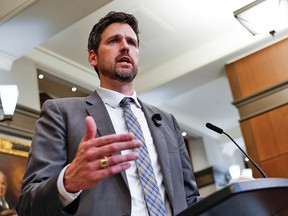
The Canadian Superior Courts Judges Association (CSCJA) — which represents over 1,400 sitting and retired judges — sued when the government rejected the recommendation. In December the association asked Justice Minister Sean Fraser to immediately refer the case to the Supreme Court in order to shorten the process.
Article content
Article content
But in a statement to National Post, Fraser’s spokesperson, Jeremy Bellefeuille, confirmed that the minister was going to let the process play out at the trial court.
Article content
Article content
“We’re proceeding with the (judicial review) in Federal (Court), and there is no record of us asking the Supreme Court of Canada to hear the matter,” Bellefeuille said.
Article content
A spokesperson for the CSCJA said the association respects the minister’s decision. “We thought that such a reference may be less time consuming and less costly,” Stephanie Lockhart said in an email to National Post.
Article content
Then in March, the parties battled over who should even hear the Federal Court case.
Article content
In a March 24 letter to the court, Elizabeth Richards — the government’s chief general counsel — suggested the court appoint a deputy judge who had retired before the hotly debated raise would kick in (April 2024) so as to avoid any “public perception of bias.”
Article content
A deputy judge is a current or former justice from another court who is exceptionally appointed to hear a case at a different tribunal.
Article content
“To the extent possible, this will minimize the potential appearance of conflict or address any reasonable public perception of bias that would arise from a current judge of the Federal Court — who has a pecuniary interest in the review of the Government’s Response to the Judicial Compensation and Benefits Commission’s Report on judicial salaries — adjudicating this case,” Richards wrote to the court.


























 Bengali (BD) ·
  English (US) ·