.png)
 1 hour ago
9
1 hour ago
9
Article content
MUSEO is currently available through QR codes beside 10 objects in the Canadian History Hall, which contains more than 1,500 artifacts. The museum said more objects will be connected to the chatbot over the next year.
Article content
The museum would not disclose how much the project cost.
Article content
After reading through the criticism online, I wanted to see what the experience was actually like for myself.
Article content
So on a busy holiday Monday, I headed to the Canadian Museum of History to try MUSEO and find out whether it added something meaningful to a visit or simply put another screen between visitors and the museum around them.
Article content
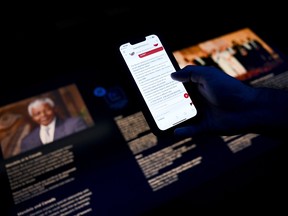
Gallery 3, which covers modern Canada from 1914 to the present, has always been my favourite part of the museum.
Article content
Article content
When I was a kid from Toronto visiting Ottawa with my parents, I loved walking through the different periods and seeing how much the country had changed.
Article content
The gallery moves through defining moments in Canada’s history, from the First and Second World Wars and the launch of CBC Radio to the October Crisis, proposed designs for the Canadian flag, Terry Fox’s Marathon of Hope and the Idle No More movement.
Article content
Article content
It does not present Canada as perfect. It shows moments of progress alongside the country’s failures and the work that remains.
Article content
Walking through the dimly lit gallery under blue lights, surrounded by old political posters and newspapers, it is difficult not to feel some sense of pride, reflection or both.
Article content
MUSEO’s QR codes appear in the later sections of the gallery. They are small and can be easy to miss.
Article content
On a busy afternoon filled with families, children and visitors who appeared to still be in town following the Ironman Canada-Ottawa race, I was the only person I saw scanning one.
Article content
Each code is linked to a specific artifact. Once scanned, it opens a web page where visitors can type or speak a question in English or French.
Article content
I tried MUSEO to learn more about several artifacts, including the Gay Sweater, made from hair donated by members of the LGBTQ+ community, one of Rick Hansen’s gloves from his Man In Motion World Tour and Oh! Canada, a 1974 board game created to promote bilingualism.
Article content
The chatbot cannot answer questions about every object in the gallery. To move to another artifact, visitors must find and scan another QR code.
Article content
Article content
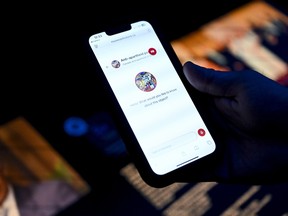
When I asked the chatbot questions, MUSEO responded within seconds.
Article content
Article content
The answers were generally a few sentences long and offered more detail than what could fit on the signage beside an artifact. At the end of each response, the chatbot suggested related questions or asked whether I wanted to learn more.
Article content
But the QR codes were small, and it was not always immediately obvious which object they belonged to. That made the tool feel more hidden than inviting.
Article content
There is a clear benefit to making more of the museum’s research available. Museum labels have limited space and some visitors will want more detail than a short description can give.
Article content
MUSEO delivers that information quickly, and the museum’s decision to limit it to approved material addresses some of the accuracy concerns associated with general-purpose AI tools.
Article content
But using it also meant taking out my phone in a space where I would normally prefer to put it away.
Article content
Museums are one of the few places where I can ignore texts, stop scrolling and simply be present. I like wandering through galleries at my own pace, reading plaques, looking closely at artifacts and, when the opportunity arises, talking with the people who know them best.


























/https%3A%2F%2Fsportsmole-media-prod.s3.gra.io.cloud.ovh.net%2Fuploads%2F2026%2F07%2Fwc26-stencil-generic-1-player-email-6a5efced3be22784676779.jpg)
/https%3A%2F%2Fsportsmole-media-prod.s3.gra.io.cloud.ovh.net%2Fuploads%2F2026%2F04%2Fimago1075785696-69f1c41377d96073966575.jpg)
 Bengali (BD) ·
  English (US) ·