.png)
 1 hour ago
7
1 hour ago
7
The PM has called climate change an 'existential threat' in his previous role as the UN special envoy on climate action and finance
Published Oct 03, 2026 • Last updated 23 minutes ago • 4 minute read
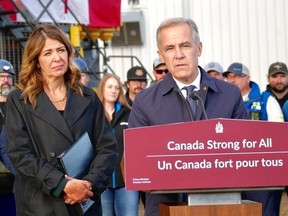
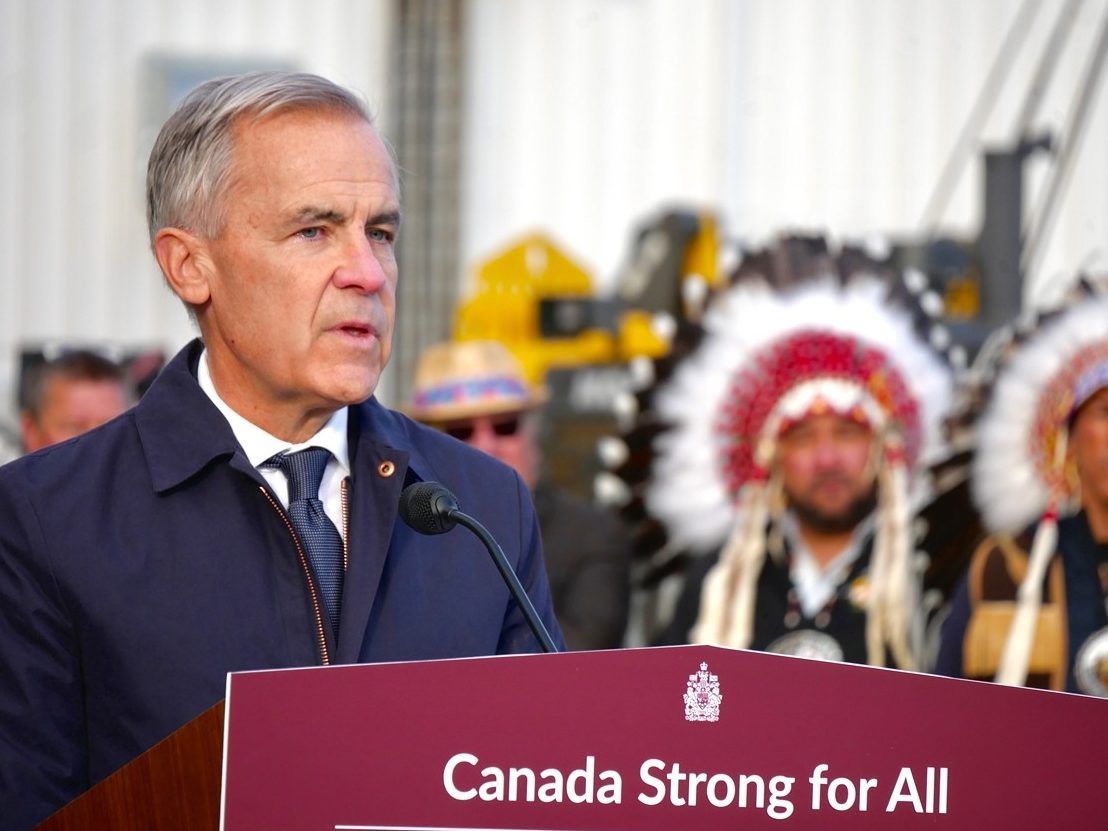
How does Prime Minister Mark Carney’s support for the new Pacific Link Pipeline fit in with a decade of warnings from the Liberal government under Justin Trudeau that fossil fuels pose an “existential threat” to humanity?
Advertisement 2

THIS CONTENT IS RESERVED FOR SUBSCRIBERS ONLY
Subscribe now to read the latest news in your city and across Canada.
- Unlimited online access to articles from across Canada with one account.
- Get exclusive access to the Toronto Sun ePaper, an electronic replica of the print edition that you can share, download and comment on.
- Enjoy insights and behind-the-scenes analysis from our award-winning journalists.
- Support local journalists and the next generation of journalists.
- Daily puzzles including the New York Times Crossword.
SUBSCRIBE TO UNLOCK MORE ARTICLES
Subscribe now to read the latest news in your city and across Canada.
- Unlimited online access to articles from across Canada with one account.
- Get exclusive access to the Toronto Sun ePaper, an electronic replica of the print edition that you can share, download and comment on.
- Enjoy insights and behind-the-scenes analysis from our award-winning journalists.
- Support local journalists and the next generation of journalists.
- Daily puzzles including the New York Times Crossword.
REGISTER / SIGN IN TO UNLOCK MORE ARTICLES
Create an account or sign in to continue with your reading experience.
- Access articles from across Canada with one account.
- Share your thoughts and join the conversation in the comments.
- Enjoy additional articles per month.
- Get email updates from your favourite authors.
THIS ARTICLE IS FREE TO READ REGISTER TO UNLOCK.
Create an account or sign in to continue with your reading experience.
- Access articles from across Canada with one account
- Share your thoughts and join the conversation in the comments
- Enjoy additional articles per month
- Get email updates from your favourite authors
Article content
The answer, of course, is that it does not.
Article content
Article content
Especially so, given that global energy-related fossil fuel emissions reached an all-time high last year amid perpetual warnings from the United Nations and other climate bodies that we are now on the verge of locking in catastrophic global warming above 1.5-degrees Celsius by 2100.
What it really means is that even the Liberals are now acknowledging that climate change (or more accurately human-induced climate change versus natural climate change) is not a threat to human existence, but one of many challenges Canadians face.
They include an ongoing affordability crisis, low economic productivity, high housing costs, beleaguered health care, opioid use, two ongoing wars impacting Canadian foreign policy and continuing economic uncertainty at home because of the unresolved trade war with U.S. President Donald Trump.
Read More
-

LILLEY: New pipeline is great, the government owning it is not
-

GOLDSTEIN: Carney's pivot on climate change the right move, but is it real?
-

GOLDSTEIN: OECD downgrades Canada’s economic growth as Carney moves away from U.S.


By signing up you consent to receive the above newsletter from Postmedia Network Inc.
Article content
Advertisement 3
Article content
Climate change not a primary concern for Canadians
It’s not that Canadians don’t care about climate change – although polls suggest it is no longer their primary concern – but they want realistic ways of addressing it that won’t bankrupt them
Bjorn Lomborg, the Danish political scientist and president of the Copenhagen Consensus Center, who wrote The Skeptical Environmentalist in 1998, elaborates on these views in a series of papers debunking climate alarmism, published by Canada’s fiscally conservative Fraser Institute last week.
“Climate change is undeniably one issue among many,” Lomborg writes but, “at some point, the climate policy conversation went off the rails, and climate change stopped being treated like other issues.
“First, it is often wrongly suggested that global warming is an existential challenge, risking the end of mankind. Indeed, former prime minister Trudeau famously said, ‘Climate change is not only an existential environmental threat, but one of the defining security challenges of our time’… And current Prime Minister Mark Carney declared climate change ‘an existential threat’…
Advertisement 4
Article content
“If the world is about to end, the implication is that any spending is justified. After all, if a world-obliterating meteor is hurtling towards us, we don’t ask about the costs of avoiding it.
“Second, it is often – and somewhat contradictorily – claimed that the green transition will make energy cheaper, societies safer, and everyone richer. In this rainbows-and-unicorns scenario, there are no trade-offs, and we can afford climate policy and everything else. Carney has also claimed that the goal of net zero (emissions by 2050) is ‘the greatest commercial opportunity of our time’…”
“Both these claims are repeated ad nauseam by Canadian politicians and campaigners and willingly spread by media outlets hooked on selling climate catastrophes and green utopias. Both turn out to be phenomenally untrue.”
Lomborg goes on to elaborate in a series of papers about how all forms of energy have advantages and disadvantages and that there are always trade-offs in terms of benefits and consequences to society.
Advertisement 5
Article content
Prematurely abandoning fossil fuels, he warns, will lead to human catastrophes that are seldom, if ever, addressed by those ideologically committed to keeping the world’s remaining fossil fuel resources in the ground.

We apologize, but this video has failed to load.
PM called climate change ‘existential threat’ in previous role with UN
Carney did call climate change an “existential threat” in his previous role as the UN special envoy on climate action and finance, and as co-chair of the Glasgow Financial Alliance for Net Zero, where he was the leading global corporate spokesman for higher carbon taxes.
But in his 2021 book, Value(s): Building a Better World for All, he did not call for ending the use of fossil fuels.
Rather, he argued that oil and natural gas extraction and marketing was acceptable as long as it was done in the context of increasingly stringent and enforceable emission standards and realistic carbon pricing, consistent with achieving the overall goal of net zero emissions by 2050.
Advertisement 6
Article content
Carney would argue that including a $20-billion carbon capture and storage facility known as the Pathways Project as part of the 1250-km Pacific Link Pipeline from Bruderheim Alberta to the Roberts Bank Terminal in Delta in southern B.C., for export to global markets, fulfills that commitment.
But the Pathways project, even if it works as advertised, will only capture a fraction of the increased emissions created by the new pipeline – about six million tonnes compared to 20 million tonnes initially and 16 million tonnes annually by 2045, assuming the pipeline’s capacity isn’t expanded by then.
Article content























/https%3A%2F%2Fsportsmole-media-prod.s3.gra.io.cloud.ovh.net%2Fuploads%2F2026%2F09%2Fmikel-arteta-21-6ab9a6087b35f019707296.jpg)
 Bengali (BD) ·
  English (US) ·