.png)
 2 hours ago
8
2 hours ago
8
Fraser Institute study found the cost of combined debt to every Canadian will be between $1,845 and $3,348 depending on which province they live in.
Get the latest from Lorrie Goldstein straight to your inbox
Published Jun 18, 2026 • Last updated 19 minutes ago • 3 minute read
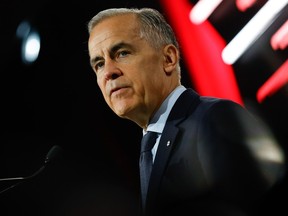
When it comes to a choice between raising taxes and hiking deficits, governments increasingly opt for raising the debt.
Advertisement 2

THIS CONTENT IS RESERVED FOR SUBSCRIBERS ONLY
Subscribe now to read the latest news in your city and across Canada.
- Unlimited online access to articles from across Canada with one account.
- Get exclusive access to the Toronto Sun ePaper, an electronic replica of the print edition that you can share, download and comment on.
- Enjoy insights and behind-the-scenes analysis from our award-winning journalists.
- Support local journalists and the next generation of journalists.
- Daily puzzles including the New York Times Crossword.
SUBSCRIBE TO UNLOCK MORE ARTICLES
Subscribe now to read the latest news in your city and across Canada.
- Unlimited online access to articles from across Canada with one account.
- Get exclusive access to the Toronto Sun ePaper, an electronic replica of the print edition that you can share, download and comment on.
- Enjoy insights and behind-the-scenes analysis from our award-winning journalists.
- Support local journalists and the next generation of journalists.
- Daily puzzles including the New York Times Crossword.
REGISTER / SIGN IN TO UNLOCK MORE ARTICLES
Create an account or sign in to continue with your reading experience.
- Access articles from across Canada with one account.
- Share your thoughts and join the conversation in the comments.
- Enjoy additional articles per month.
- Get email updates from your favourite authors.
THIS ARTICLE IS FREE TO READ REGISTER TO UNLOCK.
Create an account or sign in to continue with your reading experience.
- Access articles from across Canada with one account
- Share your thoughts and join the conversation in the comments
- Enjoy additional articles per month
- Get email updates from your favourite authors
Article content
The problem is, it’s a false choice for taxpayers because higher deficits are simply deferred taxes, which must eventually be paid.
Article content
Article content
It doesn’t matter what governments call deficits — Prime Minister Mark Carney’s distinction between operating and capital deficits is an accounting measure, but it doesn’t change the fact that all debt has to be paid back.
His promise to eliminate the federal operating deficit in three years is an accounting trick.
Carney announced he is separating the operational costs of the government from capital spending and has promised to balance the operating deficit by 2028-29.
But then interim parliamentary budget officer Jason Jacques warned last November that the federal government misclassified $94 billion worth of operating expenses in its November budget as revenue-generating capital investments, contrary to standard accounting practices.
If that $94 billion was properly classified as government operating expenses, Jacques said, Carney will fail to achieve his promise to balance the government’s operating budget by 2028-29.
By signing up you consent to receive the above newsletter from Postmedia Network Inc.
Article content
Advertisement 3
Article content
Deficits for next five years $22.6 billion higher than PM predicted 51 days ago
Current PBO Annette Ryan reported earlier this month that Carney’s deficits for the next five years will, in total, be $22.6 billion higher than he predicted in his spring economic statement 51 days ago.
The cumulative deficits over that time, the PBO projects, will be $318.1 billion compared to the government’s estimate of $295.5 billion reflecting, among other issues, “lower revenues, particularly personal income tax” — demonstrating that higher deficits are simply deferred taxes.
A new study by the fiscally conservative Fraser Institute explains in succinct terms what this means for taxpayers.
Looking only at the annual interest payments on the combined public debt of Canada’s federal and provincial governments for the year 2025-26 alone, which totalled $94.4 billion, the study found the cost to every Canadian will be between $1,845 and $3,348 depending on which province they live in.
Advertisement 4
Article content
Spending that $94.4 billion won’t lower the size of the public debt by a penny, it only services the interest on the public debt for that one year.
Residents of Newfoundland and Labrador face the highest cost of $3,348 per person, followed in descending order by $2,816 in Manitoba; $2,436 in Quebec; $2,282 in Ontario; $2,185 in B.C.; $2,141 in New Brunswick; $2,138 in Nova Scotia; $2,133 in Saskatchewan; $2,078 in P.E.I. and $1,845 in Alberta.
Money to pay down interest doesn’t go to lowering taxes
Money that goes to pay interest on debt doesn’t go to lowering taxes (which puts the rare occasions where governments do lower taxes in perspective) nor does it go to providing services for Canadians.
For example, the $54 billion the federal government (meaning federal taxpayers) paid in 2025-26 simply servicing the interest of the federal debt could otherwise have paid for almost all of the $54.7 billion it transferred to the provinces for healthcare.
Advertisement 5
Article content
The $16 billion Ontario taxpayers paid servicing the interest on that province’s debt (excluding federal debt payments) in 2025-26, could have more than paid for the $14 billion it spent on post-secondary education.
The $2.9 billion Alberta taxpayers paid servicing the interest on that province’s debt (excluding federal debt payments) in 2025-26, could have more than paid for the $1.6 billion it spent on child and family services.
As Jake Fuss of the Fraser Institute noted: “Interest must be paid on government debt and the more money governments spend on interest payments, the less money is available for the programs and services that matter to Canadians.”
RECOMMENDED VIDEO

We apologize, but this video has failed to load.
Article content



























/https%3A%2F%2Fsportsmole-media-prod.s3.gra.io.cloud.ovh.net%2Fuploads%2F2026%2F06%2Frio-ngumoha-email-sportmole-6a27b73e9a471352625861.png)
 Bengali (BD) ·
  English (US) ·