.png)
 1 hour ago
10
1 hour ago
10
Article content
OTTAWA — Westerners might be experiencing a sense of déjà vu as Ontario’s premier is once again suggesting an embargo on oil exports to the U.S. to retaliate against tariffs.

THIS CONTENT IS RESERVED FOR SUBSCRIBERS
Enjoy the latest local, national and international news.
- Exclusive articles by Conrad Black, Barbara Kay and others. Plus, special edition NP Platformed and First Reading newsletters and virtual events.
- Unlimited online access to National Post.
- National Post ePaper, an electronic replica of the print edition to view on any device, share and comment on.
- Daily puzzles including the New York Times Crossword.
- Support local journalism.
SUBSCRIBE FOR MORE ARTICLES
Enjoy the latest local, national and international news.
- Exclusive articles by Conrad Black, Barbara Kay and others. Plus, special edition NP Platformed and First Reading newsletters and virtual events.
- Unlimited online access to National Post.
- National Post ePaper, an electronic replica of the print edition to view on any device, share and comment on.
- Daily puzzles including the New York Times Crossword.
- Support local journalism.
REGISTER / SIGN IN TO UNLOCK MORE ARTICLES
Create an account or sign in to continue with your reading experience.
- Access articles from across Canada with one account.
- Share your thoughts and join the conversation in the comments.
- Enjoy additional articles per month.
- Get email updates from your favourite authors.
THIS ARTICLE IS FREE TO READ REGISTER TO UNLOCK.
Create an account or sign in to continue with your reading experience.
- Access articles from across Canada with one account
- Share your thoughts and join the conversation in the comments
- Enjoy additional articles per month
- Get email updates from your favourite authors
Sign In or Create an Account
or
Article content
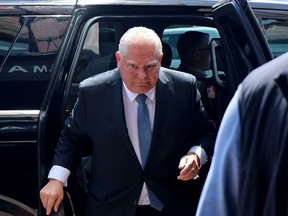
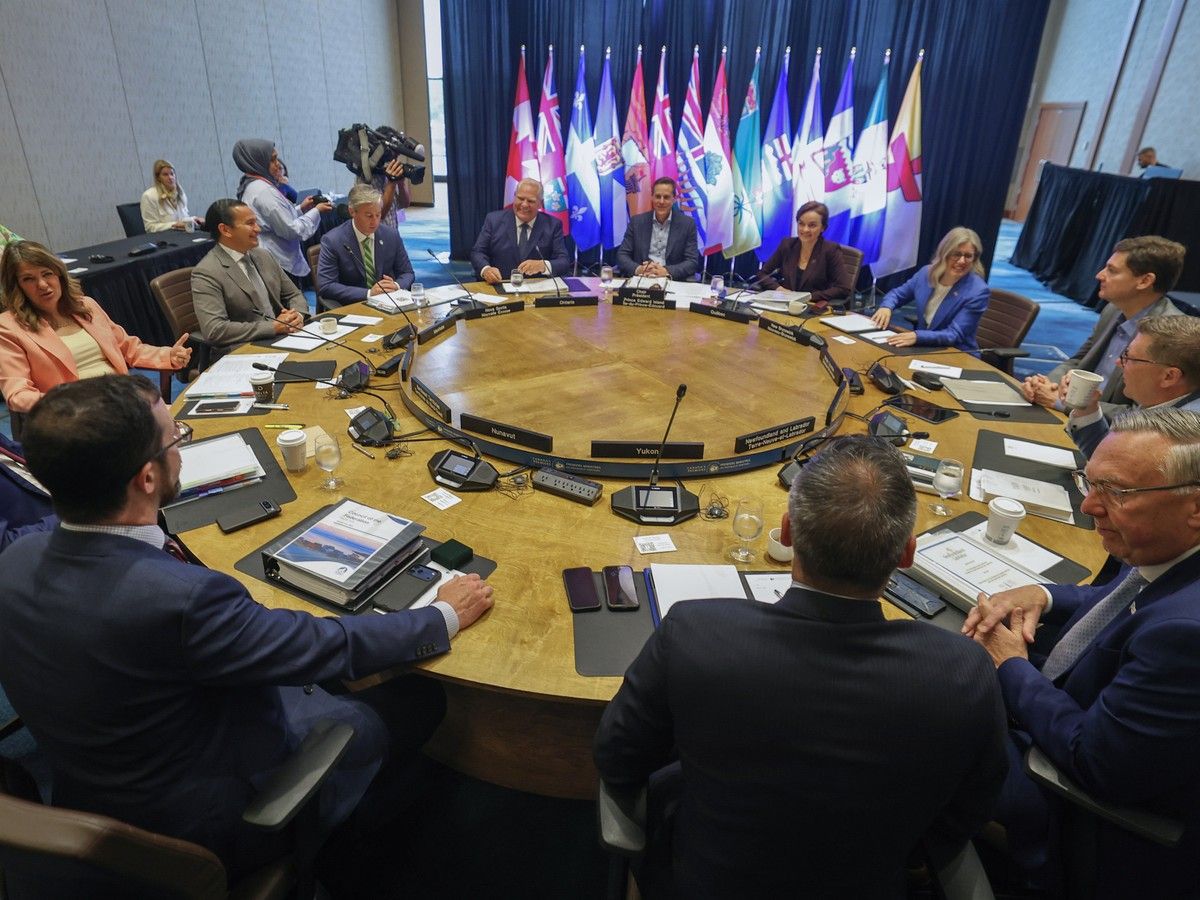
Ontario Premier Doug Ford told reporters at the first ministers’ meeting in Charlottetown on Tuesday that Canada should leverage its most valuable resources to hit back at the U.S. after the White House announced plans for new tariffs this week.
Article content
Article content
Article content
“No matter if it’s the electricity — and I’m not speaking for the other provinces, I’m going to be very clear — the potash, the oil … they need to feel the pain,” said Ford. The Ontario premier had last year suggested restrictions on oil and potash exports in response to President Donald Trump’s first round of tariffs, but met immediate resistance from Alberta Premier Danielle Smith and Saskatchewan Premier Scott Moe.
Article content
By signing up you consent to receive the above newsletter from Postmedia Network Inc.
Article content
The new 50 per cent tariff is expected to hit Ontario, Quebec and British Columbia the hardest, while leaving Alberta and Saskatchewan relatively unscathed.
Article content
When the then Trudeau Liberal government briefly floated the idea of putting an export tax on oil exports to the U.S., Smith refused to sign a joint federal-provincial statement voicing solidarity against the Trump administration’s tariffs.
Article content
Smith repeated again on Tuesday that she did not support Ford using western resources as a weapon.
Article content
“That’s not going to happen,” Smith told reporters in Charlottetown.
Article content
Earlier this month, she and Ford announced a proposal for a west-to-east Northern Shield pipeline from Alberta’s oil sands to refineries in Sarnia, Ont. to circumvent the U.S. route that western oil currently takes to reach Ontario.
Article content
Article content
Alberta and Saskatchewan produce nearly all of roughly 4.3-million barrels of oil Canada sends to the U.S. per day. Saskatchewan is the country’s sole producer of potash, a critical mineral used to create fertilizer, and supplies 85 per cent of the potash used on American farms.
Article content
Crude oil is Canada’s top export to the U.S. and potash is its top mineral export.
Article content
One early estimate of the impact of the latest Section 338 tariffs, calculated by University of Calgary economist Trevor Tombe, forecasts that the new tariffs will negatively impact 13.7 per cent of B.C. exports, 10.8 per cent of Quebec exports and nine per cent of Ontario exports.
Article content
Tombe calculates that just one per cent of Alberta exports and 1.2 per cent of Saskatchewan exports will be impacted.
Article content
But some analysts say there are much better ways to leverage Canada’s oil and potash than with blockades.
Article content
Jack Mintz, an economist and chair of public policy at the University of Calgary, said that the two commodities will be an indispensable source of revenue as Canada deals with the broader dislocation of its trade relationship with the U.S.





















/https%3A%2F%2Fsportsmole-media-prod.s3.gra.io.cloud.ovh.net%2Fuploads%2F2026%2F03%2Ficonsport-361551-0102-1-69b560866f7b6508942731.jpg)
 Bengali (BD) ·
  English (US) ·