.png)
 2 hours ago
7
2 hours ago
7
Westeros isn’t just a land of politics and dragons, but also home to some of the strangest and most unsettling diseases ever known to man. From flesh that hardens like stone to fevers that leave victims on the verge of death, these illnesses from Game of Thrones are extremely difficult to survive.
Some of these even eerily feel grounded in reality, while others are exclusively made for George R.R. Martin’s A Song of Ice and Fire. Here’s a ranking of every unique disease in Game of Thrones, ordered by how unusual and conceptually distinctive they are in Westeros:
10 Winter Fever Is Known As The Worst Epidemic in Westeros
 Winterfell in Game of Thrones / Credits: HBO
Winter Fever was a major epidemic that struck Westeros during the long winter after the Dance of the Dragons. It first appeared on the Three Sisters, killing half the population of Sisterton and sparking violence against Ibbenese sailors who were wrongly blamed for bringing the disease. It later reached King’s Landing, where it spread rapidly.
The symptoms included a red flush and worsening fever, followed by violent shivering, delirium, and heavy sweating as it progressed. It ranks low on the list because, while it can be fatal, it closely resembles seasonal illnesses found in the real world. Its only notable distinction is that it occurred during one of Westeros’ long winters, giving it historical context rather than true uniqueness.
9 Bloody Flux Is The Bane of Every Army In Westeros
 The Lannister army in Game of Thrones / Credits: HBO
Bloody Flux is a highly contagious and often deadly intestinal disease similar to dysentery. It is characterized by fever and bloody diarrhea. In Meereen, the outbreak is called “pale mare.” The disease can kill up to three out of four people in an affected population. Treatment is extremely limited, with prevention through quarantine and isolation of the sick being the primary method of control.
Although this illness is not exclusive to Westeros, it being widely regarded as the bane of armies and soldiers since the Dawn Age and capable of decimating entire fighting forces if left unchecked, gives it a certain sense of uniqueness.
8 Spring Carried Death on the Wings of the Great Spring Sickness
 Ashford Meadow in A Knight of the Seven Kingdoms / Credits: HBO
The Great Spring Sickness killed thousands across the Seven Kingdoms, hitting major cities the hardest, such as Lannisport, Oldtown, and King’s Landing. The disease struck with terrifying speed, sometimes killing a healthy person within a single day. Dorne and the Vale of Arryn avoided the disease by sealing off their roads and ports to outsiders.
Some of the most important figures in Westeros died during this outbreak, such as King Daeron II Targaryen, Prince Valarr, Prince Matarys, and the High Septon. Dunk and Egg were unaffected since they were in Dorne during this time.
The disease is more notable for its historical significance, which is rearranging the succession of the Iron Throne, more than being a unique illness, and that’s why we’re placing it at the lower tier of the list.
7 Red Death Makes One Bleed From Every Body Orifice
 Emilia Clarke in Game of Thrones / Credits: HBO
The Red Death first emerged in the slave pens of Gogossos, decades after the Doom of Valyria. It quickly spread to the Isle of Tears and then across the Basilisk Isles. The disease was extraordinarily lethal, killing nine out of every ten people it infected. Victims suffered horrific symptoms, including severe bleeding from every orifice.
This could be a variation of some hemorrhagic or plague-like diseases that we know, but its dramatic name gives it that extra sense of dread and horror. As compared to the previous diseases, this feels more like something that could only exist in Westeros and its surrounding continents—less medical condition, more nightmare given form.
6 Yellowgum Is The Slow Corruption of Teeth and Mouth Area
 Kristian Nairn in Game of Thrones / Credits: HBO
Yellowgum is a disease believed to spread through foul miasmas near contaminated water sources. It causes the flesh around the teeth to decay, leading to tooth loss, mouth bleeding, and severe pain. Many victims ultimately die from dehydration and malnutrition because they are unable to eat or drink.
What makes this distinct is its focus on the gum or mouth area, and given the poor hygiene of some places in the known world, it would likely be especially common in more remote, unexplored regions. At the same time, it could also resemble real-world conditions involving severe gum decay.
5 Green Fever Signals Death Caused By Green-Tinged Fever
 A still from Game of Thrones / Credits: HBO
Moving on to more unique diseases, Green Fever is marked by an extreme rise in body temperature and severe illness, and is believed to be spread by stinging insects in the Basilisk Isles and Sothoryos.
The condition gets its name from the greenish coloration that appears in the eyes of survivors. It is unclear how or why this occurs, adding to both its mystery and its sense of urgency that is only found in the world of A Song of Ice and Fire.
4 Wormbone Silently Destroys the Body From Within
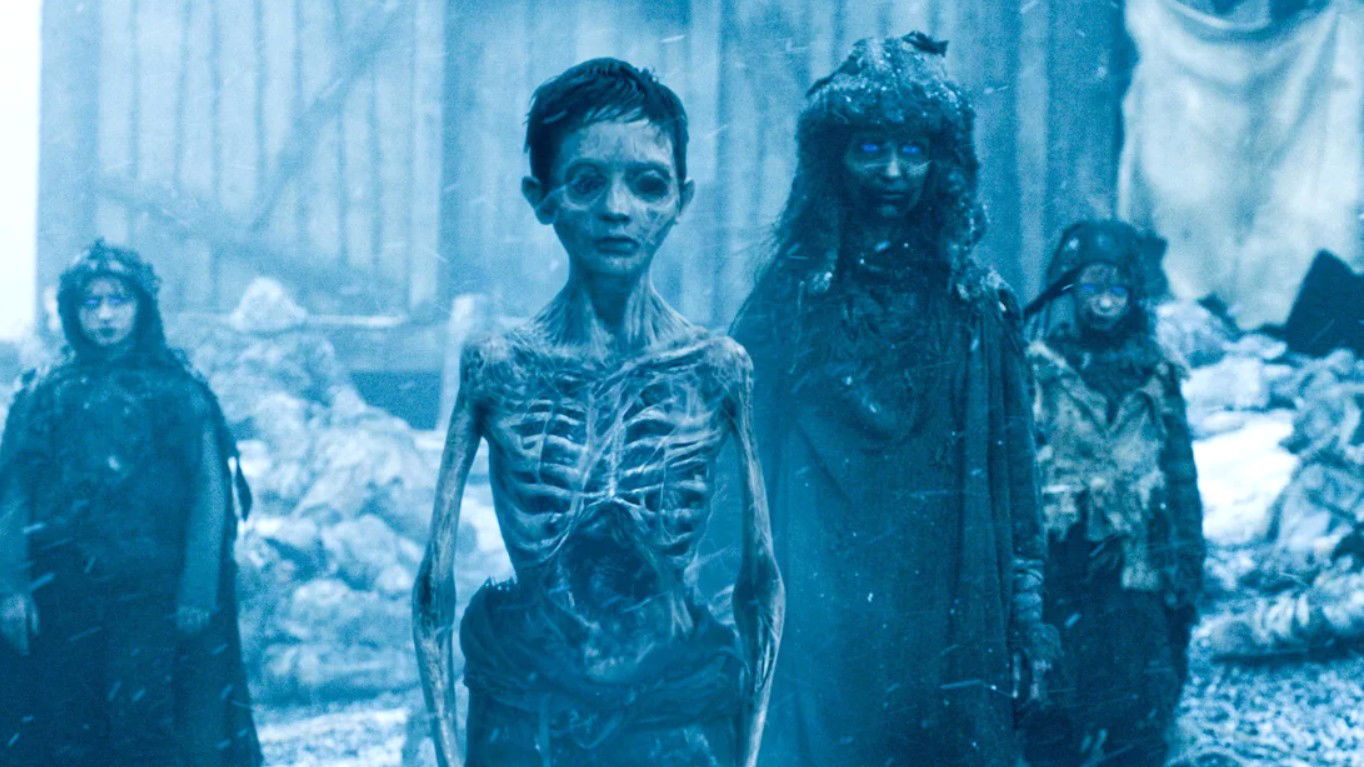 A still from Game of Thrones / Credits: HBO
Wormbone is unique to this world in the sense that those who die from it are often left with pock-marked and eroded skeletal frames. It appears as though the bones have been eaten away by small burrowing flatworms similar to those found in whales and leviathans. This illness weakens the skeletal structure over time, and death occurs when the bones become too fragile to support the body.
It’s hard to imagine how exactly this works, but it only adds to the sense that Wormbone sits somewhere between a natural disease and something far more peculiar, almost as if the body itself is being quietly consumed from the inside.
3 Butterfly Fever Brings Swift Demise Beneath Soft Wings
 A still from Game of Thrones / Credits: HBO
Butterfly fever is a disease native to the island of Naath and is believed to be transmitted by large black-and-white butterflies with wings as big as a man’s hand. The illness begins with a fever as its first symptom, then progresses to painful spasms that make victims appear to dance uncontrollably.
While there are genuinely poisonous butterflies in real life, their effects are nowhere near as extreme as the outcome described in Martin’s world. This description seemingly turns a natural creature into something almost mythic, and this exaggeration is exactly what makes this disease so memorable. It takes something delicate and beautiful and twists it into a source of grim death.
2 Dancing Plague Kills People From Too Much Body Contractions
 A still from Game of Thrones / Credits: HBO
The name of the disease has a distinctive Game of Thrones tone, so it’s not a surprise that it’s at the top of the rank. Dancing plague is marked by uncontrollable spasms that make victims appear to dance for days until they collapse and die from exhaustion. It is considered more dangerous than shaking sickness due to its faster progression and greater severity.
If other diseases instantly kill one upon infection, this Dancing Plague instead tortures a person over time, and in true Game of Thrones fashion, it turns death into a long, exhausting journey. The slow, physical breakdown is what makes it feel less like an illness and more like the body being forced into its own undoing.
1 Greyscale Turns Human Flesh Into Stone
-

Credits: HBO
-

Credits: HBO
-

Credits: HBO


Perhaps the most familiar disease to fans, Greyscale is a virulent disease that causes the flesh to harden and die, leaving the skin cracked, flaky, and stone-like in appearance and texture. It has no exact real-life equivalent, though many compare it loosely to leprosy.
Greyscale tops the list because of its striking visual horror. Those affected are shunned and avoided out of fear of contagion, but more than that, it is the creeping loss of identity and humanity itself that makes this so utterly heartbreaking. Human flesh turning into stone is also the most supernatural aspect of the disease.
| Disease | Symptoms |
| Winter Fever | Red flush and worsening fever, followed by violent shivering, delirium, and heavy sweating |
| Bloody Flux | Characterized by fever and bloody diarrhea |
| Great Spring Sickness | Widespread plague that killed thousands |
| Red Death | Severe bleeding from every body orifice |
| Yellowgum | Flesh around the teeth decays, leading to tooth loss, mouth bleeding, and severe pain |
| Green Fever | Rise in body temperature and severe illness with greenish coloration that appears in the eyes |
| Wormbone | Pock-marked and eroded skeletal frames |
| Butterfly Fever | Transmitted by large black-and-white butterflies, with fever as its first symptom, then progresses to painful spasms |
| Dancing Plague | Marked by uncontrollable spasms that make victims appear to dance for days |
| Greyscale | Flesh hardens, leaving the skin cracked, flaky, and stone-like |
Here is a quick FAQ guide for you:
What is the plague that changed Game of Thrones history?
The Great Spring Sickness is often called the epidemic that reshaped the Targaryen dynasty and altered the political landscape in Westeros.
Are we getting more Game of Thrones spinoffs?
Which disease in Westeros has no real-world equivalent?
Greyscale is often considered unique and exclusive to the world of Game of Thrones.
Which disease is the most unsettling for you? Let us know in the comments!
Game of Thrones is currently available to watch on HBO Max.





























 Bengali (BD) ·
  English (US) ·