.png)
 1 week ago
21
1 week ago
21
This article discusses heavy themes like addiction, mental health struggles, and death. Discretion is advised.
Spoiler Alert !!!
This article contains major spoilers for the Euphoria season 3 finale.
Rue Bennett spent most of Euphoria Season 3 searching for God. She found Him, or something that looked like Him, in the last few minutes of her life. It was a devastating ending for both the character and the series. The final hallucination sequence in the series finale, titled In God We Trust, is the culmination of a season-long theological argument.
It is one of the most carefully constructed death scenes in recent television. Here is every layer of biblical symbolism packed into Rue’s dying dream. Let’s wipe away our tears and dive in.
But before that, here’s Euphoria in a nutshell:
| Title | Euphoria |
| Network | HBO |
| Years Run | 2019–2026 |
| Main Cast | Zendaya, Hunter Schafer, Sydney Sweeney, Jacob Elordi, Alexa Demie, Maude Apatow, Eric Dane, Colman Domingo |
| Premise | Euphoria follows a group of teenagers as they navigate love, friendship, identity, addiction, and trauma while growing up in an increasingly complicated world. |
| IMDb rating (as of June 1, 2026) | 8.2 |
| Rotten Tomatoes score (as of June 1, 2026) | 78% | 74% |
From Moses to In God We Trust
In Episode 6 earlier this season, titled Stand Still and See, Zendaya‘s tragic character sees a burning tree in the desert. If you didn’t know, it is a direct echo of the burning bush through which God speaks to Moses in the Old Testament.
In that same episode, Rue walks into a church and tells her mother that she has started to believe in God: “I guess I just figured if He exists, then so does redemption. If there’s redemption, then there’s salvation. I kind of need that. It’s just – I don’t really want to be stuck with all the mistakes I’ve made.”
Rue is a character who has spent three seasons defined by self-destruction, so this is not a small statement.
Genesis on the Couch: The Book of Beginnings as a Death Rite
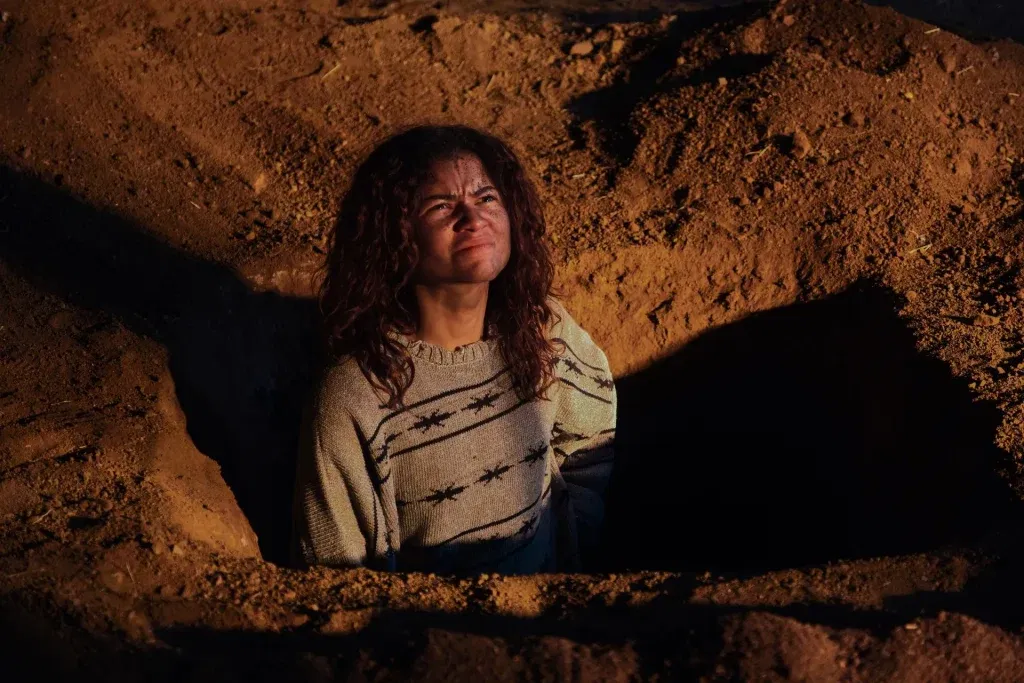 Zendaya’s Rue finds herself in a grave-like pit in a haunting first-look image from Euphoria season 3 | Credits: HBO
Rue puts her Bible audiobook back on and starts, once again, with Genesis. Genesis is, of course, about beginnings. By that, we believe, the show suggests that she is about to be remade, or perhaps returned to something she lost long before the series began.
The Book of Genesis also carries an inherent theme of beginning anew and of the creation of the world out of nothing. By choosing Genesis as the last sound Rue hears in her lifetime, creator Sam Levinson frames death not as an end, but as a rebirth, a soul going back to before the Fall, before her father’s cancer, before the first pill.
There is also something quietly devastating in the detail that Rue is starting Genesis again. She has restarted this audiobook multiple times across the season, but she never gets past the beginning.
The Mother’s Bible and the Theology of the Open Window
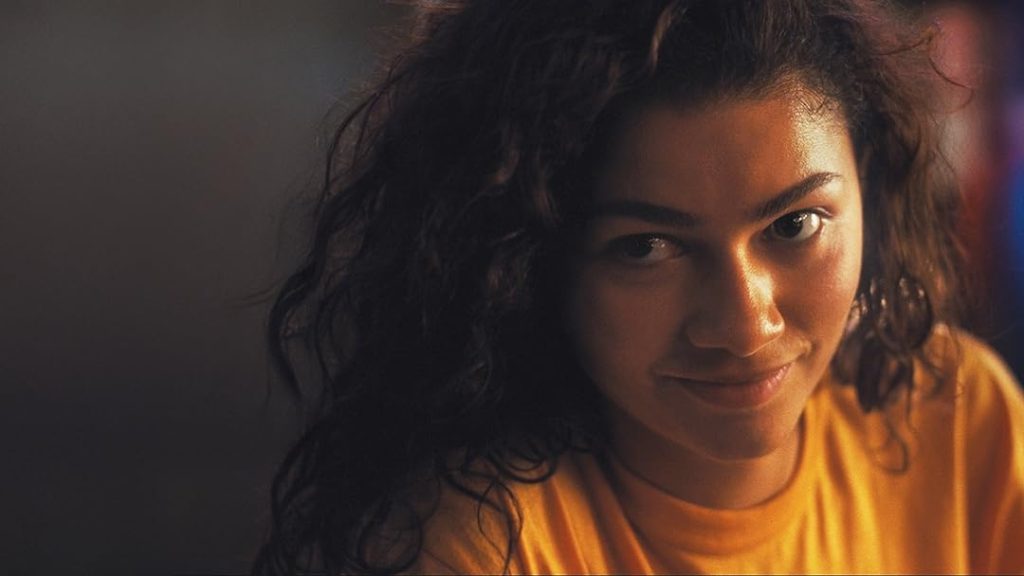 Zendaya as Rue Bennett in Euphoria season 3 | Credits: HBO
The hallucination sequence is rich with biblical symbolism. To begin with, Rue climbs back into her house through an open bedroom window, not through the front door, where she finds her mother sitting at the dining table, reading from the Bible while both crying and smiling.
The open window matters theologically. In Scripture, windows carry specific symbolic weight: it is through a window that Rahab hangs a scarlet cord as a sign of salvation in Joshua. Entering through a window rather than a door suggests someone who does not believe they have the right to come in through the front and yet is welcomed anyway. Rue has never believed she deserved salvation. The window becomes the show’s image of grace extended to someone too broken to use the official entrance.
“May God Bless Us All”
 Zendaya’s Rue shares an emotional moment with Ali Muhammed in Euphoria season 3 | Credits: HBO
The finale’s final line belongs, appropriately enough, to Rue. Ali (Colman Domingo) imagines Rue at the end of the table, and the two share a smile. Perhaps it is Rue finally at peace, or perhaps it is only a vision. “May God bless us all,” Rue says in voiceover. “May God bless us all.” And that is how Euphoria season 3 ends, and the series as well. The words also evoke the formal closing blessing of a religious service.
The HBO series is based on an Israeli series of the same name, and in that version, the Rue-equivalent character, Hofit, is revealed to have been dead the whole time. She is narrating the series from beyond the grave. But Levinson changed that, or so we thought.
What did you make of the biblical imagery and symbolism woven throughout Euphoria Season 3, particularly in the finale? Let us know in the comments!
Euphoria season 3’s eighth and final episode premiered on HBO Max on June 1, 2026.





















 Bengali (BD) ·
  English (US) ·