.png)
 1 hour ago
12
1 hour ago
12
Article content
Lisez la version française ici.

THIS CONTENT IS RESERVED FOR SUBSCRIBERS
Enjoy the latest local, national and international news.
- Exclusive articles by Conrad Black, Barbara Kay and others. Plus, special edition NP Platformed and First Reading newsletters and virtual events.
- Unlimited online access to National Post.
- National Post ePaper, an electronic replica of the print edition to view on any device, share and comment on.
- Daily puzzles including the New York Times Crossword.
- Support local journalism.
SUBSCRIBE FOR MORE ARTICLES
Enjoy the latest local, national and international news.
- Exclusive articles by Conrad Black, Barbara Kay and others. Plus, special edition NP Platformed and First Reading newsletters and virtual events.
- Unlimited online access to National Post.
- National Post ePaper, an electronic replica of the print edition to view on any device, share and comment on.
- Daily puzzles including the New York Times Crossword.
- Support local journalism.
REGISTER / SIGN IN TO UNLOCK MORE ARTICLES
Create an account or sign in to continue with your reading experience.
- Access articles from across Canada with one account.
- Share your thoughts and join the conversation in the comments.
- Enjoy additional articles per month.
- Get email updates from your favourite authors.
THIS ARTICLE IS FREE TO READ REGISTER TO UNLOCK.
Create an account or sign in to continue with your reading experience.
- Access articles from across Canada with one account
- Share your thoughts and join the conversation in the comments
- Enjoy additional articles per month
- Get email updates from your favourite authors
Sign In or Create an Account
or
Article content
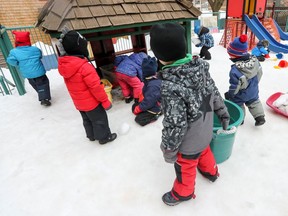
In 1997, Quebec began building its network of centres de la petite enfance, or CPE daycares. The province promised affordable educational child care on broadly accessible terms. This model, unique across North America, drew praise for increasing mothers’ participation in the labour force and improving some outcomes among children from disadvantaged families. In recent years, the federal government’s Canada-Wide Early Learning and Child Care (CWELCC) and New York mayor Zohran Mamdani both openly cited Quebec’s model as a source of inspiration.
Article content
Article content
Article content
However, its reputation has often obscured persistent shortages and inequitable support of parental choices. By directing funding to child-care centres instead of parents, Quebec’s system is neither universal nor equitable — two of its core conceits.
Article content
By signing up, you consent to receive the above newsletter from Postmedia Network Inc.
Article content
Although the Quebec government wrote into law that every child had the “right” to quality child-care services, in nearly three decades the supply of subsidized child-care spots has never matched the demand. By heavily reducing costs through government funding, the policy creates an ever-growing demand: even though new spots are created almost every year, supply has failed to catch up. At the moment, over 30,600 children are still on a government waiting list.
Article content
Without major change, it seems very unlikely that supply will catch up to the demand. The government requires two educators out of three to be certified, and yet the number of certified early childhood educators who graduate in Quebec has steeply declined over the last few years. The system is increasingly failing to meet its own self-imposed quality requirements, and exposing precisely why it cannot be made universal. This permanent shortage means some families will always be left behind.
Article content
Article content
Workforce issues aren’t the only challenge. The landscape of child care in Quebec reveals a three-tiered system with fundamental inequities. About half of children aged 1-4 attend a CPE or subsidized child care centre, publicly funded at a rate of between $60 and $70 per space per day. Around 30 per cent attend a licensed home-based centre or an unsubsidized centre covered by a tax credit, boasting public support of about $35 per space per day. The remaining children are cared for by parents, relatives or other informal caregivers. Their families receive no comparable child-care subsidy.
Article content
Article content
Because the subsidy parents receive for child care depends on the option they choose, securing a subsidized spot feels like winning the lottery: it represents over $8,000 more in government support versus what a parent using an unsubsidized centre gets. As for families who prefer to take care of their children themselves, they receive about $18,000 less per child every year in transfers than a family which has a spot in a CPE — despite the fact they aren’t burdening the system.
Article content
Regardless of which type of space you desire or end up securing, there’s a greater flaw built into the system. Quebec’s “centre-first” child care policy ignores what parents of young children want the most: time with their children. A poll conducted by the Quebec government concluded that 40 per cent of parents would like to work fewer hours in order to spend more time with their families. When polled on work-life balance, parents also reply that what they desire the most is more vacation time and a more flexible schedule.




























/https%3A%2F%2Fsportsmole-media-prod.s3.gra.io.cloud.ovh.net%2Fuploads%2F2026%2F01%2Fdanny-welbeck-5-6956bfa3ea945973722124.jpg)
 Bengali (BD) ·
  English (US) ·