.png)
 1 hour ago
3
1 hour ago
3
‘It becomes a safe container for imagination, independence, self-expression’
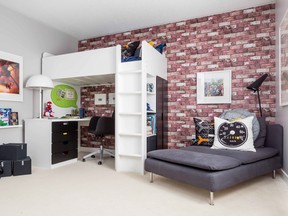
Whether you’re transforming a nursery into a big kid room or looking to update a tween’s outdated space, it’s important to remember that your child’s bedroom is much more than just a place to sleep.
Advertisement 2

THIS CONTENT IS RESERVED FOR SUBSCRIBERS ONLY
Subscribe now to read the latest news in your city and across Canada.
- Unlimited online access to articles from across Canada with one account.
- Get exclusive access to the Toronto Sun ePaper, an electronic replica of the print edition that you can share, download and comment on.
- Enjoy insights and behind-the-scenes analysis from our award-winning journalists.
- Support local journalists and the next generation of journalists.
- Daily puzzles including the New York Times Crossword.
SUBSCRIBE TO UNLOCK MORE ARTICLES
Subscribe now to read the latest news in your city and across Canada.
- Unlimited online access to articles from across Canada with one account.
- Get exclusive access to the Toronto Sun ePaper, an electronic replica of the print edition that you can share, download and comment on.
- Enjoy insights and behind-the-scenes analysis from our award-winning journalists.
- Support local journalists and the next generation of journalists.
- Daily puzzles including the New York Times Crossword.
REGISTER / SIGN IN TO UNLOCK MORE ARTICLES
Create an account or sign in to continue with your reading experience.
- Access articles from across Canada with one account.
- Share your thoughts and join the conversation in the comments.
- Enjoy additional articles per month.
- Get email updates from your favourite authors.
THIS ARTICLE IS FREE TO READ REGISTER TO UNLOCK.
Create an account or sign in to continue with your reading experience.
- Access articles from across Canada with one account
- Share your thoughts and join the conversation in the comments
- Enjoy additional articles per month
- Get email updates from your favourite authors
Article content
“It’s the first environment they get to call their own. It becomes a safe container for imagination, independence and self-expression,” says Cynthia Soda, founder and principal designer of Soda Pop Design Inc. in Stouffville.
Article content
Recommended Videos
Article content
“When thoughtfully designed, it supports emotional regulation, creativity and a sense of identity. In a world that can feel busy and overstimulating, having a space that feels theirs gives children a sense of control and calm. It’s where they learn how environment impacts how they feel, which will stay with them well into adulthood.”
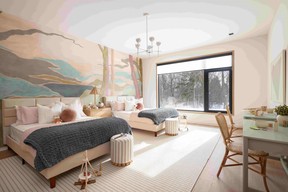
Start with function
So, where should you begin? “Start with function first, personality second,” says Jo Alcorn, founder and principal designer of Alcorn Home Design | Build. “Think about how the space needs to work day-to-day – sleeping, playing, reading, storage – then layer in your child’s interests through elements that are easy to update. A strong foundation – good layout, quality furniture, neutral base – makes everything else more flexible over time.”
By signing up you consent to receive the above newsletter from Postmedia Network Inc.
Article content
Advertisement 3
Article content
Soda suggests you consider how the child lives, not just how the room looks. “Do they love to read, draw or move? Do they need quiet or thrive with stimulation? What’s not working/could work better? From there, prioritize function,” she says. “A well-designed kid’s room quietly works very hard behind the scenes.”
At minimum, she believes a child’s bedroom should support:
- Rest, with comfortable, calm sleeping zones
- Play, with open or flexible floor space
- Creativity/learning, with desks or surfaces for activities’
- Appropriate storage that’s easily accessible and intuitive

Maximize space
A child’s bedroom typically plays numerous roles so maximizing space is crucial. “The key is multi-functional design,” says Alcorn. “Look for pieces that serve more than one purpose: beds with built-in storage, desks that double as craft stations or seating that can tuck away. Use vertical space such as shelving and wall hooks to keep the floor open and create defined zones within the room so it feels organized rather than crowded.”
Advertisement 4
Article content
Hope to ensure the room isn’t outdated within just a couple of years? Soda ran into that challenge when designing her daughter’s bedroom for her tenth birthday. “She chose bold wallcoverings that brought her joy and suited her at the time. As she got older, she yearned for something softer,” she says.
“I don’t think there’s ever a way to fully avoid your child wanting to put their own stamp on their space as they enter their teen years but changing the walls is not a big ask. If we think of the room in layers, consider foundational pieces – bed, larger furniture – to be the more timeless and neutral items. Flexible elements like art, textiles and accessories – or in my daughter’s room example, the bold wallcovering – can evolve with their interests”
Acorn agrees. “Keep the big elements timeless and adaptable: bed, dresser, lighting and wall colour,” she says. “Then let your child’s personality come through in things that are easy to swap out, like bedding, artwork and accessories. Think of the room as evolving in layers rather than being fully redesigned every few years.”
Advertisement 5
Article content

Give your child a say
How can you child play a part in making the room their own? “Children can take on more than we expect,” Soda says. “With a bit of guidance, they can help choose colours, fabrics or artwork within a thoughtfully curated selection; organize their belongings and consider items to keep, donate or let go before transitioning back into the new space.
They can also create DIY elements or style small areas like their bedside tables/shelves. It teaches decision making, confidence and pride in their space. Most importantly, it reinforces that their voice matters.”
Alcorn agrees kids should play a part in making their room their own. “There are lots of ways to involve them in meaningful, hands-on ways: choosing a colour palette or theme, helping hang art or create a gallery wall, organizing their own storage systems and simple DIY projects like painting small furniture or decorating shelves,” she says. “It gives them ownership of the space and builds confidence in decision making and creativity.”
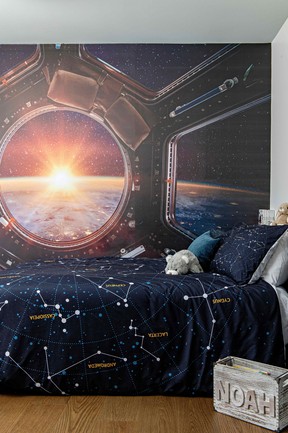
The most successful kids’ rooms aren’t the most expensive or the most styled, Soda notes. “They’re the most attuned. When a space reflects how a child feels, thinks and supports them as they grow, it becomes a quiet source of support in their everyday life. A place they feel safe in.
While it may look like just a bedroom, it’s often where confidence is built, imagination is sparked and a sense of self begins to take shape.”
Article content




























/https%3A%2F%2Fsportsmole-media-prod.s3.gra.io.cloud.ovh.net%2Fuploads%2F2026%2F05%2Fchamp-69fa166311171530187348.jpg)
 Bengali (BD) ·
  English (US) ·