.png)
 54 minutes ago
7
54 minutes ago
7
The greatest threat to supply management is the refusal of Canada’s dairy establishment to acknowledge the system must evolve
Published Aug 14, 2026 • Last updated 11 minutes ago • 4 minute read
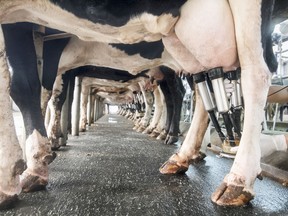
Suddenly, everyone – and their grandmother – seems to be an expert on supply management.
Advertisement 2

THIS CONTENT IS RESERVED FOR SUBSCRIBERS ONLY
Subscribe now to read the latest news in your city and across Canada.
- Unlimited online access to articles from across Canada with one account.
- Get exclusive access to the Toronto Sun ePaper, an electronic replica of the print edition that you can share, download and comment on.
- Enjoy insights and behind-the-scenes analysis from our award-winning journalists.
- Support local journalists and the next generation of journalists.
- Daily puzzles including the New York Times Crossword.
SUBSCRIBE TO UNLOCK MORE ARTICLES
Subscribe now to read the latest news in your city and across Canada.
- Unlimited online access to articles from across Canada with one account.
- Get exclusive access to the Toronto Sun ePaper, an electronic replica of the print edition that you can share, download and comment on.
- Enjoy insights and behind-the-scenes analysis from our award-winning journalists.
- Support local journalists and the next generation of journalists.
- Daily puzzles including the New York Times Crossword.
REGISTER / SIGN IN TO UNLOCK MORE ARTICLES
Create an account or sign in to continue with your reading experience.
- Access articles from across Canada with one account.
- Share your thoughts and join the conversation in the comments.
- Enjoy additional articles per month.
- Get email updates from your favourite authors.
THIS ARTICLE IS FREE TO READ REGISTER TO UNLOCK.
Create an account or sign in to continue with your reading experience.
- Access articles from across Canada with one account
- Share your thoughts and join the conversation in the comments
- Enjoy additional articles per month
- Get email updates from your favourite authors
Article content
That newfound interest is healthy. Canadians are finally examining the benefits, costs and contradictions of a complicated system affecting roughly one-quarter of the country’s agricultural economy.
Article content
Article content
A generation ago, few economists openly criticized supply management. Those who did faced fierce attacks, while the dairy lobby deployed a nationwide marketing budget approaching $200 million annually. Remember the Doug Gilmour milk advertisements? Today, the “Milk” logo appears on Toronto Maple Leafs jerseys through a multimillion-dollar sponsorship.
For years, criticizing supply management was almost politically taboo. Social media has changed that. Consumers can now see milk being dumped, compare Canadian prices with those abroad and question why Ottawa repeatedly compensates a protected industry.
Dairy farmers are not the problem. They operate rationally within rules created by governments and administered by marketing boards. But those rules should not be immune from scrutiny.
By signing up you consent to receive the above newsletter from Postmedia Network Inc.
Article content
Advertisement 3
Article content

Here are 10 myths Canadians should stop believing:
1. Dairy farmers are poor
Dairy farmers can be cash-constrained, but they are generally asset-rich. Once land, buildings, livestock, machinery and quota are included, many operations are worth more than $6 million. The real problem is that these inflated asset values make entering the industry almost impossible without significant family wealth or financing.
2. Supply management is saving the family farm
Canada had more than 90,000 dairy farms when supply management began. Fewer than 10,000 remain, and that number could approach 5,000 by 2030. The system has stabilized revenues for surviving producers, but it has not stopped consolidation. It protects farm income more effectively than it protects family farms.
3. Canadian dairy farmers receive no subsidies
Ottawa has provided billions of dollars in compensation following trade agreements with Europe, Pacific nations and the United States and Mexico. Canadians support dairy through administered prices, tariff protection, import restrictions and public payments. Calling these payments “compensation” does not make them any less of a subsidy. Dairy farmers also receive millions for “research.”
Advertisement 4
Article content
Read More
-

CHARLEBOIS: Is Ottawa about to break its own supply management law?
-

CHARLEBOIS: Chicken prices are soaring. Why isn’t Ottawa acting?
-

CHARLEBOIS: Why cheap Australian beef may be Canadian beef’s best friend


4. Trade agreements make every dairy farmer lose money
Opening part of the Canadian market does not produce an equivalent loss for every farm. Marketing boards can adjust quota as producers retire or leave the industry. Compensation has often been distributed without demonstrating actual farm-level losses. Public money should support genuine adjustment and competitiveness – not simply purchase political peace.
5. Ending supply management would automatically lower prices
There is no guarantee. Processing, packaging, transportation, labour and retail margins also determine grocery prices. Canadian processors nevertheless pay comparatively high prices for industrial milk. Reform could attract investment, improve competition and increase product variety, but anyone promising immediate savings at the dairy aisle is overselling the case.
Advertisement 5
Article content
6. Farmers alone pay for dumped milk
That is true in the U.S., not in Canada. Farmers initially absorb some losses through pooled revenues, but quota, prices and future production are subsequently adjusted. When boards instruct producers to discard milk, it is a system-level failure – not simply one farmer producing too much. If marketing boards control production, they must accept responsibility when their forecasts are wrong.

7. Milk dumping is unavoidable
Temporary surpluses are inevitable; dumping usable milk is not. Canada could create transparent reserves of milk powder and other storable ingredients, redirect suitable surpluses or expand processing capacity. Global demand for dairy protein is growing. Canada should be discussing how to process excess milk, not how to pour it away.
8. Canada has fully respected CUSMA
Before CUSMA, discounted milk Classes 6 and 7 helped Canadian processors displace American protein imports and export surplus ingredients. CUSMA was supposed to end the practice, yet similar pricing continued through Class 4(a). Canada also allocated much of its dairy import access to Canadian processors competing against foreign suppliers. Washington can be unreasonable, but Canada is not blameless.
Advertisement 6
Article content
9. Supply management guarantees food security
Domestic production contributes to food security, but protectionism is not the same as resilience. Dairy farms still depend on imported machinery, feed ingredients, animal-health products and packaging. Canada also lacks processing capacity for some dairy ingredients. A secure industry must be productive, innovative and able to adapt – not merely protected from competition.
10. Reform means abolishing the system overnight
Canada does not have to choose between preserving supply management unchanged and eliminating it tomorrow. A 15-year transition could lower industrial milk costs, help new farmers enter, strengthen processing and address quota values gradually. Farmers invested under government-created rules and deserve predictability, but fairness does not require permanent paralysis.

We apologize, but this video has failed to load.
Supply management has delivered stable farm revenues, predictable production and relatively steady retail prices. Those are genuine advantages.
Advertisement 7
Article content
But it has also produced inflated asset values, high barriers to entry, expensive industrial milk, limited processing investment and recurring trade disputes. Its defenders cannot demand public compensation while claiming the system costs taxpayers nothing. Nor can they claim to be saving family farms while farm numbers collapse.
The greatest threat to supply management is not Donald Trump or American dairy farmers. It is the refusal of Canada’s dairy establishment to acknowledge the system must evolve.
Canada should not let Washington dictate the future of its dairy sector. But neither should American pressure become an excuse to avoid reforms we should already be pursuing ourselves.
– Sylvain Charlebois is director of the Agri-Food Analytics Lab at Dalhousie University, co-host of The Food Professor Podcast
Article content



























 Bengali (BD) ·
  English (US) ·