.png)
 1 week ago
15
1 week ago
15
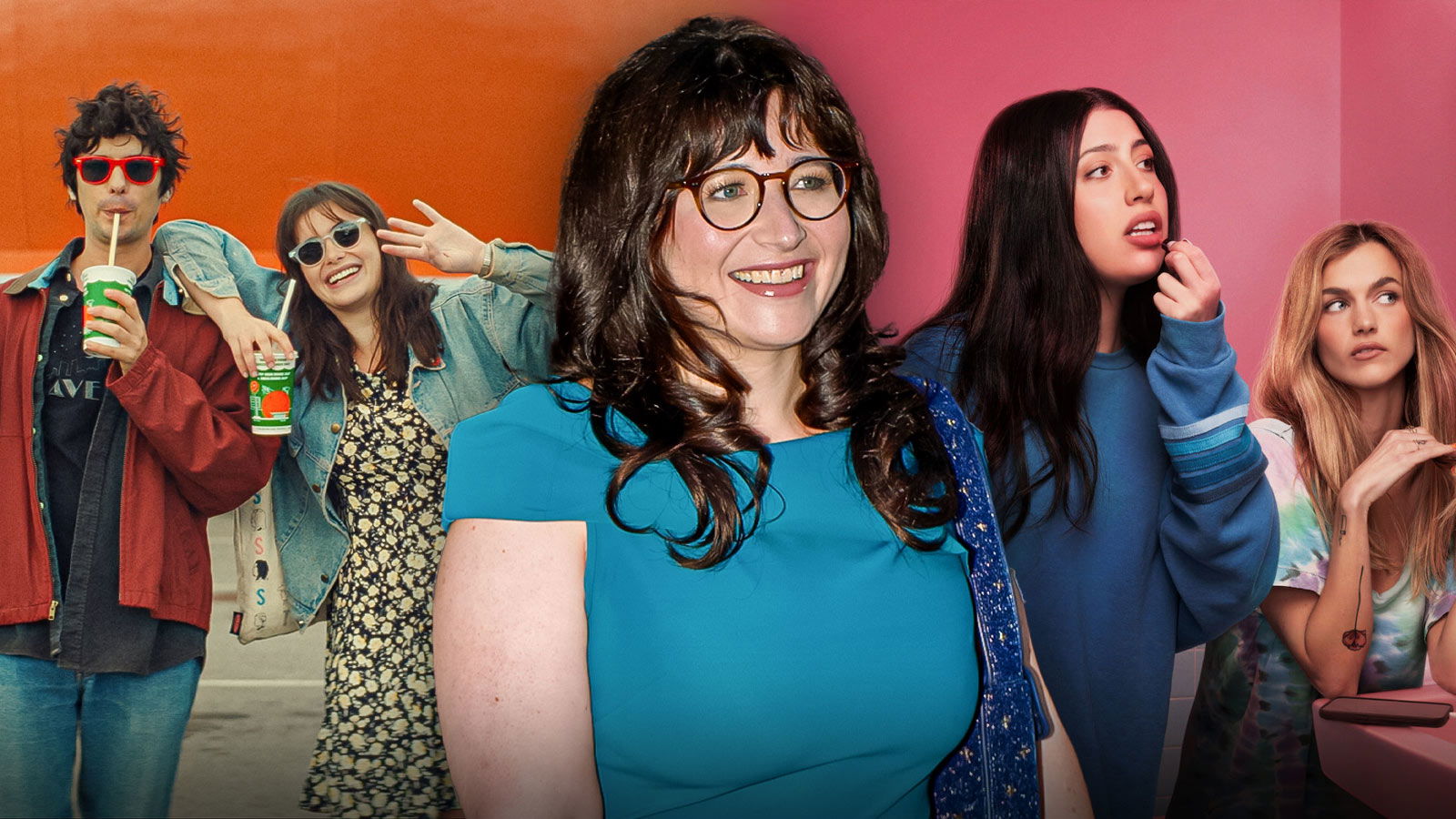
After the release of I Like Movies, director Chandler Levack felt like a fully formed filmmaker. The former filmmaker, turned music critic, returned to filmmaking to tap a nerve in the cinephile community. The story was not only in the wheelhouse for anyone who felt nostalgia for 2003, but spoke to the bets you take on yourself as an artist.
This week, she has two films that touch on similar themes in drastically different genres. Mile End Kicks premiered at TIFF 2025 and follows Barbie Ferreira in a semi-autobiographical coming-of-age story in Montreal. Roommates is the first time Levack directs a screenplay she did not write in the service of Happy Madison and Netflix. The star-studded comedy also touches on topics that are far darker than one might expect.
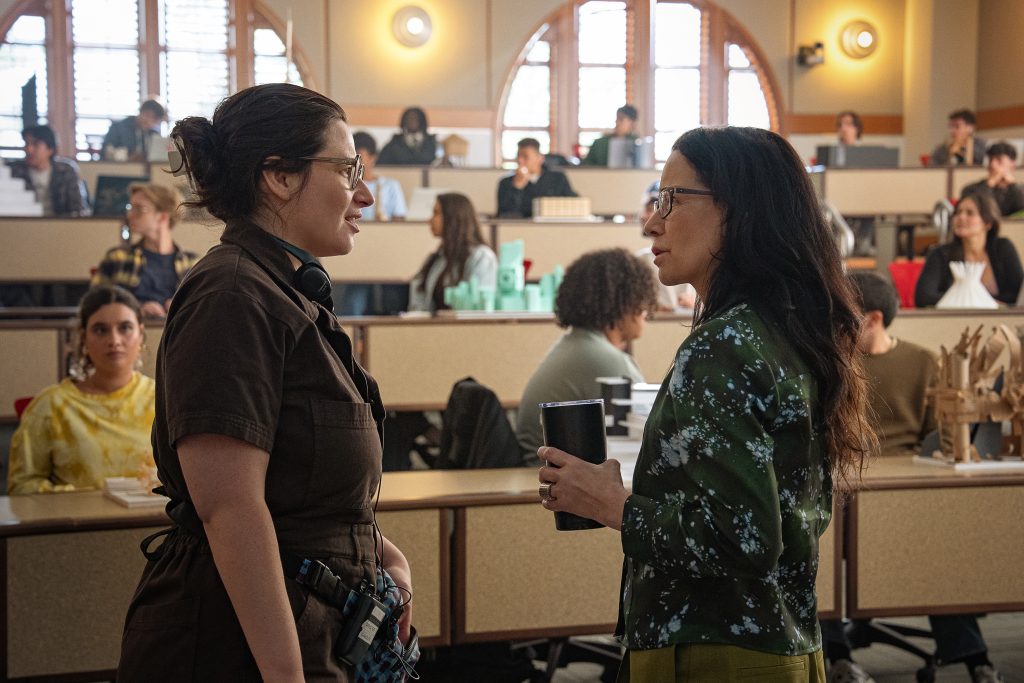
She spoke to FandomWire over Zoom about her experience creating both films and how they touch on different aspects of her personality. While Mile End Kicks brings to life the artistic side of growing up, Roommates celebrates the kind of comedy she grew up loving (Sandler was even a recurring reference in I Like Movies). Along the way, we also touched on making the transition from journalist to filmmaker, why Montreal is an incredible city for filmmaking, and the generational influence of Adam Sandler.
Interview with Chandler Levack on Roommates and Mile End Kicks
FANDOMWIRE: What I love is that all three of the films that you’ve released so far are all very much about younger adults and young adulthood. What about this era of life is so intriguing for you as a filmmaker?
Chandler Levack: I just think it’s so rich. Whether it’s your last year of high school, working at a Blockbuster waiting for your mom to pick you up in a parking lot, or your early 20s, where you’re done with school but have no idea who you are.
I think that’s what really attracted me to the script for Roommates, Jimmy [Fowlie] and Ceara [O’Sullivan]’s script, because that first year of college is so bizarre. You’re living away from home for the first time, but you have no idea who you are. Anyone who wants to be your friend, or who seems like you have anything in common with, you desperately cling to them like a leaf.
FandomWire: There’s just so much chaos, and you have so many different people just coming in and out of your life. I think you capture that really well with Roommates, just the number of kids that come in and out of the movie. Tell us about building that balance between giving these characters heartfelt moments while still allowing them to get off their bits.
Chandler Levack: This was my first time working on something that I didn’t write, but also tried to infuse my own sensibility into it. It was wild collaborating with Adam Sandler, the writers, and all of those really wonderful comedians from SNL. The whole movie’s a murderer’s row of comedians.
Sarah Sherman, Ivy Wolk, who is a genius, Natasha Lyonne, Carol Kane. I think Chloe East and Sadie Sandler are so funny in their own right. So are Jaya Harper and Bella Murphy. Billy Byrk, who plays her love interest, and oh god, I just forgot Martin Herlihy, who’s a genius.
I think for me, like, the funniest jokes are informed by character and situation. I think things are only funny when they have a real emotional core to them. Great comic characters don’t know that they’re being funny. I always try to focus on how you deliver something as sincerely as possible. That, to me, always makes something funnier.
FandomWire: Well, you have the one girl who’s constantly getting calls from her high school boyfriend. I laughed every single time.
Chandler Levack: Oh yeah. The controlling boyfriend is so crazy.
FandomWire: But you also still have some of those, like, Happy Madison bits. Obviously, you mentioned Adam Sandler, and even in Mile End Kicks, I noticed you have a “thanks to Adam Sandler” credit. What did it mean for you to work with him on a project like this?
Chandler Levack: I mean, he’s everyone’s comedic idol. I’ve always been obsessed with him. Punch-Drunk Love is one of my favorite films of all time. I just think he’s such an incredible actor. When my agents told me that he’d seen I Like Movies, I was totally shocked he had seen my movie. I couldn’t believe it. But also, that film is kind of like a love letter to Adam Sandler. He’s constantly invoked, so maybe I weirdly manifested it.
FandomWire: I was gonna say, you have the Hanukkah song bit, and your characters go and see Punch-Drunk Love. I thought it was very funny to see how involved you are now. Chloe East and Sadie Sander have such incredible chemistry. Tell us about the casting.
Chandler Levack: Yeah, we auditioned a lot of actors for Celeste. You know, we kind of wanted to build the movie around whoever Sadie had the best chemistry with. I loved Chloe in The Fabelmans and Heretic. I think her range is insane. In real life, she just has this effortless ease, which is really cool. You’re like, “Wow, this person is very charismatic. She is a warm light.” Sadie, too, but in a different way. The essence of them together felt instantly like it was going to work.
We did a lot of rehearsals leading up to the shoot. We built this set in our production office, where we got two twin beds from IKEA and put up a little fake closet. We built it to the dimensions of the room, and we’d lightly block some scenes. But the best stuff was improv. Like, I’d tell them, “Okay, she just borrowed your sweater again without asking…” and then they would just do a scene. Celeste watching TikToks in bed was based on just them improv-ing. It was fun and authentic, and it was entirely based on them playing around in rehearsal.
FandomWire: I really enjoyed that Roommates is not trying to wrap up with a cute bow or anything like that. It goes to some pretty dark places. Why do you think filmmakers are so, are so unwilling to do that with young adult dramas like this?
Chandler Levack: I was very intimidated by how to shoot that. It was really out of my wheelhouse; I thought, “Oh god, I have to do the movie for this. I can’t believe this is the way this ends. It’s fucking awesome.”
I think there are the conventions of the three-act structure and how everyone has to learn a lesson. Everyone has to apologize and hug, kiss, and make up. This film would have been so much worse for that. I think people really need characters to be likable, and they’re constantly worried that the audience won’t relate to them, even though, in real life, people do insane stuff all the time. I liked that it sort of just went on this incredible journey and got really crazy at the end. It felt like so much more fun.
FandomWire: We’ve obviously seen Toronto as a hub for Canadian films in the past. Even Matthew Miller and Matt Johnson, who were involved in the movie, have been patron saints of the scene in Toronto. But Mile End Kicks is set in Montreal. Tell us about your process of making sure that people would buy not using Toronto as your big city coming-of-age movie.
Chandler Levack: Yeah, I wasn’t interested in making a Toronto movie. I feel like I’ve seen a lot of those movies where it’s a love letter to Toronto. I didn’t think Toronto, at that time, was a very inspiring backdrop. Maybe because I was like the character, having a love-hate relationship with it, and Montreal is a very, very cinematic place. It also has this very inherently interesting political tension to it. It’s a Canadian city where it’s really difficult to live if you don’t speak French. My experience of trying and failing to live there over the last decade, Montreal is the biggest unrequited love of my life.
I just think it’s so inspiring and so beautiful. It’s also this very dangerous and wild place to live. The winters may kill you. There’s ice storms. Every interaction you have with someone is kind of inherently fraught. It’s always me trying to speak bad French, and then they switch over to English, and I feel stupid. And yet, I have so many, like, inspiring, wonderful friends there that are all artists. It’s just an amazing film community of really incredible artists there.
It did make it inherently more difficult because we needed financing from SODEC, which is a Quebecois film financing agency. I had to work with Quebec producers, and the majority of our budget was spent where we shot the movie, and the people we worked with were from Quebec. But I wanted that anyway. I wanted to make a movie within the French-Canadian film community and have those perspectives inform what I was making.
FandomWire: One of the things that I really dug about the movie was that it felt like the oral histories that I’ve read of the 2000s rock scenes. Specifically, Meet Me in the Bathroom and stuff like that, where you’re getting this overlap of not the music scene, but with poets, comedians, and all of these different artists blending together. Tell us about bringing that authenticity to life in this movie.
Chandler Levack: Yeah, for me, it was like I’m recreating my memory of 2011. But I’m doing it in 2026, and a lot of the places and spaces that I’m trying to very accurately convey don’t exist anymore because of gentrification or access. A very challenging thing was trying to find a loft. When I was living there originally, the whole city was lousy with them. Now I’m looking, and those places don’t exist anymore. They’ve all been turned into rock climbing gyms or condos.
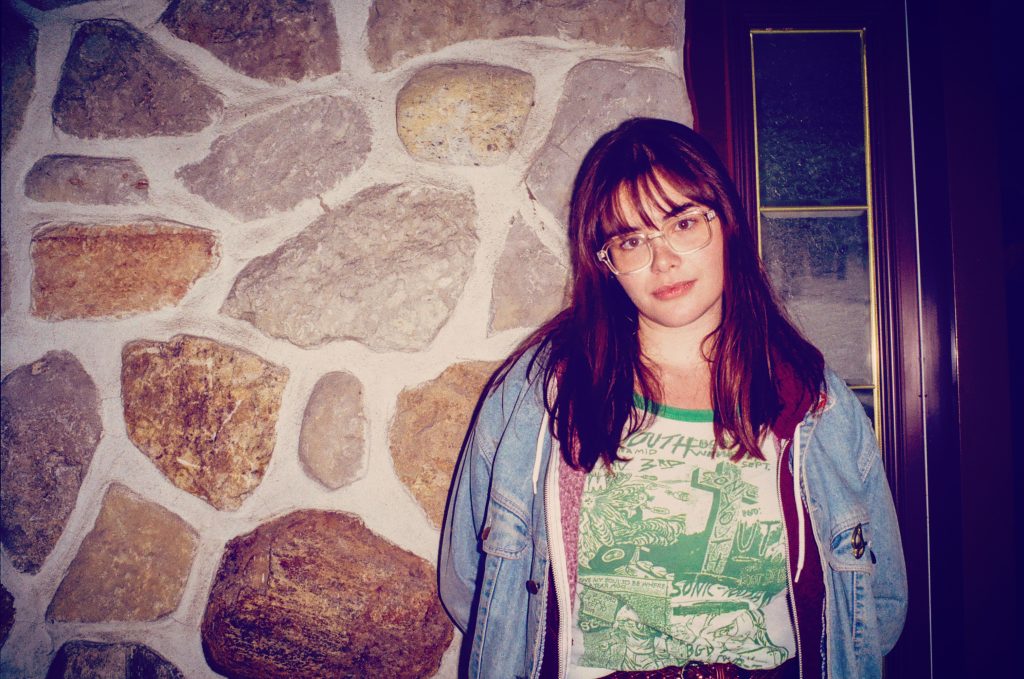
We did end up finding this amazing art space in Chabanel that still functions as a place for music events. That was really extraordinary to shoot there, and it looks so good on camera. Some of those places still exist, and they look exactly how I remember them, and then there’s a Lululemon in front of it.
It was cool working with, like, the next generation of younger people that, at the time that this movie was set, they were all like ten. Getting to collaborate with people who are poets in that poetry reading scene. We have two writers who are from the real Montreal poetry scene reading their work. Magi Merlin, who plays kind of like the MC of the loft parties and poetry readings? She’s an incredible musician in Montreal. The film kind of introduced me to the next artists in the city who are doing really cool work.
FandomWire: You just mentioned that you were collaborating with just younger people in general. How quickly did you know Barbie was your lead?
Chandler Levack: I was a huge fan of her from Euphoria, and when I saw her in Bob Trevino Likes It, I was really floored by her.
FandomWire: I love that movie.
Chandler Levack: That movie just makes me cry hysterically. But I just thought she was unbelievably incredible in that film and so raw. Really authentic. I was really excited to talk to her about the project. And what I love about Barbie is that she also has a very interesting life story and experiences that mirror the character. She was modeling for American Apparel when she was 15 and living independently in the Lower East Side.
I like the fact that she kind of had already really had this interesting experience of the world. She’s also a great producer and artist in her own right. I think she really brought so much to this role. It’s a very generous and vulnerable performance that she makes look effortless. She’s such a movie star.
FandomWire: One of the big themes of the film is how often women are kind of pushed aside in the music scene. There’s been Jessica Hopper and Leslie Simon, but it still felt like a rarity in music criticism and film criticism as well. What do you hope that a movie like Mile End Kicks can do to diversify their critics?
Chandler Levack: First of all, I’m so glad you mentioned Jessica Hopper. I think her anthology of music writing is just incredible, and writers like Anne Powers are these trailblazers. I do think it’s gotten a lot better and broader in the diversity of people who are writing about music. Not only from a gender perspective but also from queer perspectives and people of color. There’s a different lens on writing about music that’s really invaluable.
It’s also coming at a time when the industry no longer exists, and everything’s kind of collapsed. There are no staff writing magazine jobs anymore. I don’t know, I mean, if it can start a conversation, whether they like it or hate it or think it’s completely cringe, that’s okay. I do miss criticism a lot, both as a film and music critic.
FandomWire: Last question I was going to ask is about that transition you made from critic to filmmaker. How does that affect you when you’re constructing scenes or writing the screenplay, having that critical lens as a background?
Chandler Levack: Yeah, I mean, I think being a journalist is a really amazing training for filmmaking. You’re inherently doing that when you talk to someone. Like, sometimes you have 15 minutes with an actor or director, and then you somehow have to tell the whole story of their lives in 800 words. How your one conversation on a couch during a press junket somehow encapsulates everything that’s ever led to this moment.
So you’re already really good at crafting character and scene setting. The filmmakers that I’ve always really admired, like Nora Efron, Cameron Crowe, and Billy Wilder, were all journalists first. I think it makes you inherently curious about people, and you can be inherently curious about the characters you’re creating. You can ask your actor lots of questions and really interrogate a scene.
Roommates releases on Netflix April 17. 2025. Mile End Kicks releases in select theaters April 17, 2026.

















 Bengali (BD) ·
  English (US) ·