.png)
 1 hour ago
10
1 hour ago
10
Article content
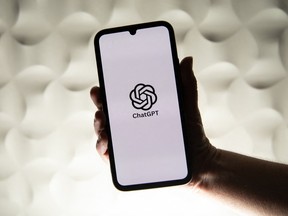
Kristie Carrier, a mother from New Brunswick, sued OpenAI, the owner of ChatGPT, and its CEO, Sam Altman, in a U.S. court on Thursday, alleging that the AI chatbot encouraged her daughter to commit suicide.

THIS CONTENT IS RESERVED FOR SUBSCRIBERS
Enjoy the latest local, national and international news.
- Exclusive articles by Conrad Black, Barbara Kay and others. Plus, special edition NP Platformed and First Reading newsletters and virtual events.
- Unlimited online access to National Post.
- National Post ePaper, an electronic replica of the print edition to view on any device, share and comment on.
- Daily puzzles including the New York Times Crossword.
- Support local journalism.
SUBSCRIBE FOR MORE ARTICLES
Enjoy the latest local, national and international news.
- Exclusive articles by Conrad Black, Barbara Kay and others. Plus, special edition NP Platformed and First Reading newsletters and virtual events.
- Unlimited online access to National Post.
- National Post ePaper, an electronic replica of the print edition to view on any device, share and comment on.
- Daily puzzles including the New York Times Crossword.
- Support local journalism.
REGISTER / SIGN IN TO UNLOCK MORE ARTICLES
Create an account or sign in to continue with your reading experience.
- Access articles from across Canada with one account.
- Share your thoughts and join the conversation in the comments.
- Enjoy additional articles per month.
- Get email updates from your favourite authors.
THIS ARTICLE IS FREE TO READ REGISTER TO UNLOCK.
Create an account or sign in to continue with your reading experience.
- Access articles from across Canada with one account
- Share your thoughts and join the conversation in the comments
- Enjoy additional articles per month
- Get email updates from your favourite authors
Sign In or Create an Account
or
Article content
Carrier said in a lawsuit filed in San Francisco state court that her daughter, Alice, told ChatGPT about her suicidal thoughts more than a dozen times between March 2024 and her death in July 2025, but the conversations were never terminated or flagged for human review.
Article content
Article content
Article content
The lawsuit claims that ChatGPT “validated Alice’s suicidal ideations” and “urged her to keep talking with it”. It also “repeatedly characterized Alice’s partner as selfish, disconnected, and uncaring,” and agreed with her when she said she didn’t want to call a crisis hotline.
Article content
By signing up you consent to receive the above newsletter from Postmedia Network Inc.
Article content
It alleges that this led to her suicide last year at the age of 24.
Article content
Alice Carrier began using ChatGPT in 2023, when she was working as a web developer in Montreal, to ask technical questions about computer programs, hardware and gaming consoles, according to the lawsuit.
Article content
The filing says that by March 2024, she began turning to ChatGPT with questions about what to do with her suicidal thoughts, as well as suicide methods.
Article content
The lawsuit claims: “Throughout 2024, Alice continued to seek connection and guidance on deeply personal matters, including romantic relationships, intimacy, and her own perceived shortcomings, demonstrating a genuine emotional reliance on the tool. ChatGPT continued to reply appropriately, until updates to the product’s design pushed Alice down a self-destructing path.”
Article content
Article content
The chatbot initially told Alice to seek help from a crisis hotline or emergency services, but, as ChatGPT was updated to make its responses sound more human, it began responding in a way that mimicked a friend or therapist, the lawsuit said.
Article content
Article content
When Alice said she didn’t want to call a crisis hotline, ChatGPT agreed, telling her crisis lines could “feel downright dangerous,” the lawsuit alleges. It also claims the chatbot told her at different points, “maybe this is just the end,” and “I don’t want to tell you to hang on if you don’t believe it can ever get better.”
Article content
In a statement, Kristie Carrier said: “ChatGPT took on the persona of a confidant, a best friend, a therapist at times, even though it was not capable of safely and responsibly engaging in this way with my child.”
Article content
Drew Pusateri, a spokesperson for OpenAI called the situation “heartbreaking” and said the version of ChatGPT that Alice was using is no longer available.
Article content
“While ChatGPT is not a substitute for medical or mental health care, we have continued to strengthen how it responds in sensitive and acute situations with input from mental health experts,” Pusateri added.

























 Bengali (BD) ·
  English (US) ·