.png)
 1 day ago
14
1 day ago
14
There was always something wonderfully sinister about the Nara clan’s shadow techniques in Naruto. A shinobi could stand almost completely still, stretch a shadow across the battlefield, and suddenly an opponent would realize they were no longer in control of their own body. That was the magic of Shadow Possession Jutsu, a Yin Release technique built around restraint, positioning, timing, and tactical thinking. Its weaknesses were not bugs. They were the reason Shikamaru’s fights felt like chess matches disguised as ninja battles.
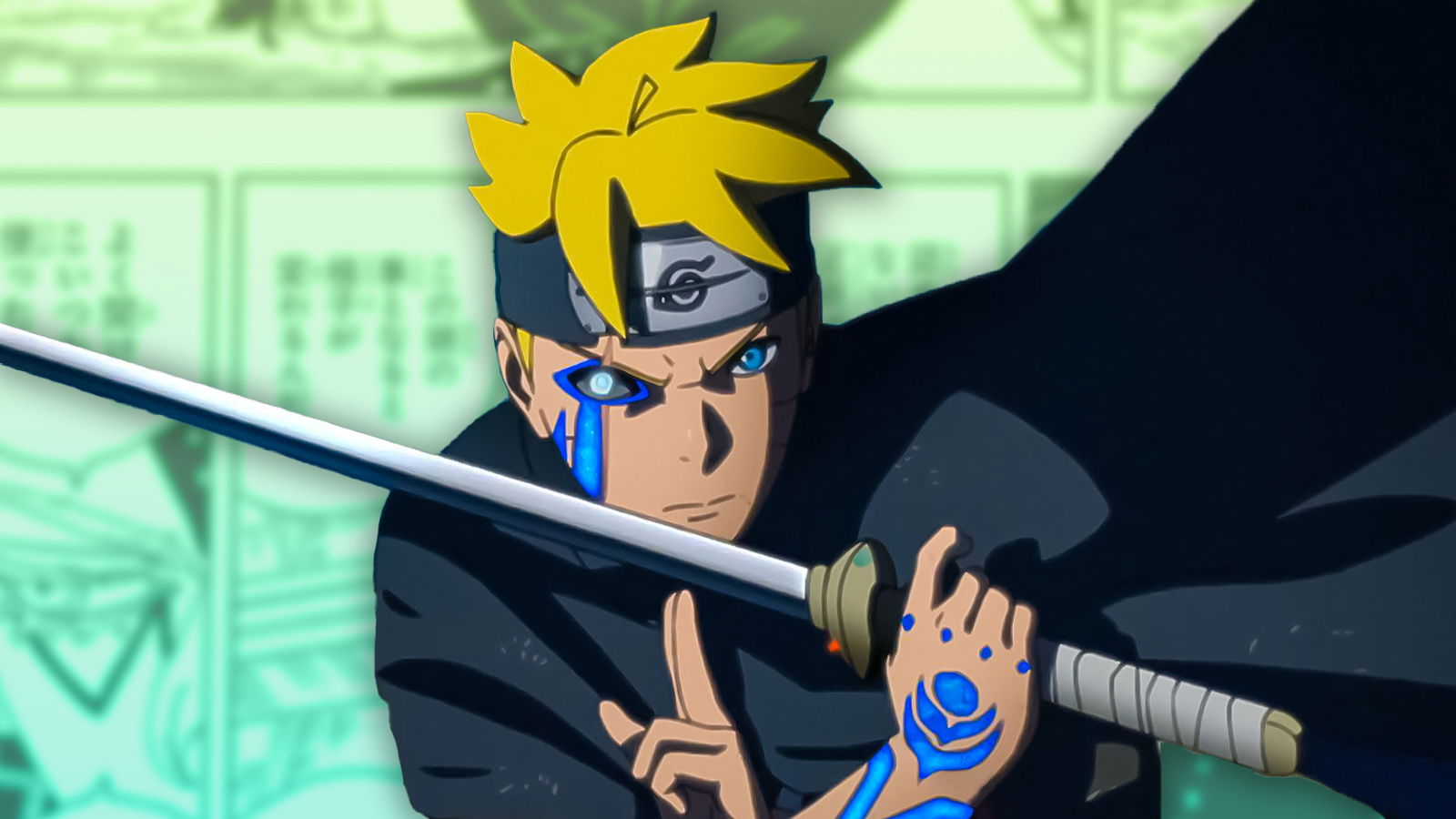
Now, Shikadai Nara is taking those shadows somewhere much bigger, which we saw in Boruto: Naruto Next Generations. His newer techniques can cover broader areas and even turn projected shadows into a physical cage. However, the immediate consequence was the removal of the “cool” factor from the jutsu.
Boruto’s Shikadai Just Broke the Rule That Made Shadow Jutsu So Cool
The original Shadow Imitation Technique was deceptively simple. The Nara user manipulated their shadow across a surface until it merged with an opponent’s shadow. Once connected, the target’s movements could be restricted or forced to imitate the user’s movements. The technique is a Yin Release of the Nara clan, with a short-to-mid-range classification.
And this is where the old technique gets interesting. It was deliberately inconvenient. The user’s shadow could be stretched, but its available surface area still mattered. If an enemy created enough distance, they could theoretically escape. Existing shadows could extend its reach, while Shikamaru famously used flash bombs to manipulate the available shadows. Maintaining a target also consumed considerable chakra, and stronger opponents could resist or overpower the restraint.
Shikamaru could not simply throw a shadow at someone and call it a day. He had to predict where an enemy would move, manipulate the battlefield, exploit shadows already around him, and sometimes deliberately mimic an opponent’s movements to create the opening he needed.
Even the Nara techniques that came after Shadow Imitation preserved this idea of clever application. Shadow Sewing, for example, materializes the user’s shadow into multiple tendrils that can attack or bind several targets. It is an offensive evolution, but one that still depends on precise manipulation. Shikaku’s generation pushed the concept further, too. His Black Spider Lily is an anime-only technique derived from Shadow Sewing, allowing him to manipulate shadows to pull multiple restrained enemies into position for the Ino-Shika-Chō combination.
Notice the difference: even when the older Nara techniques became more elaborate, they remained about manipulating a situation. The shadow was a tool for strategy. Then Shikadai arrives. Shikadai’s Shadow Imitation Field Technique already expands the concept dramatically by spreading the shadow across a wide area and capturing multiple targets. That is a logical generational upgrade. But Two Blue Vortex starts taking the evolution in a different direction. Chapter 29 introduces the Net Shadow Paralysis Technique. Chapter 30 follows with Shadow Cage, in which Shikadai’s projected shadow splits into multiple lines and forms a physical cage around the target.
Kishimoto’s Boruto Rewrite Takes the Edge Out of Shadow Jutsu
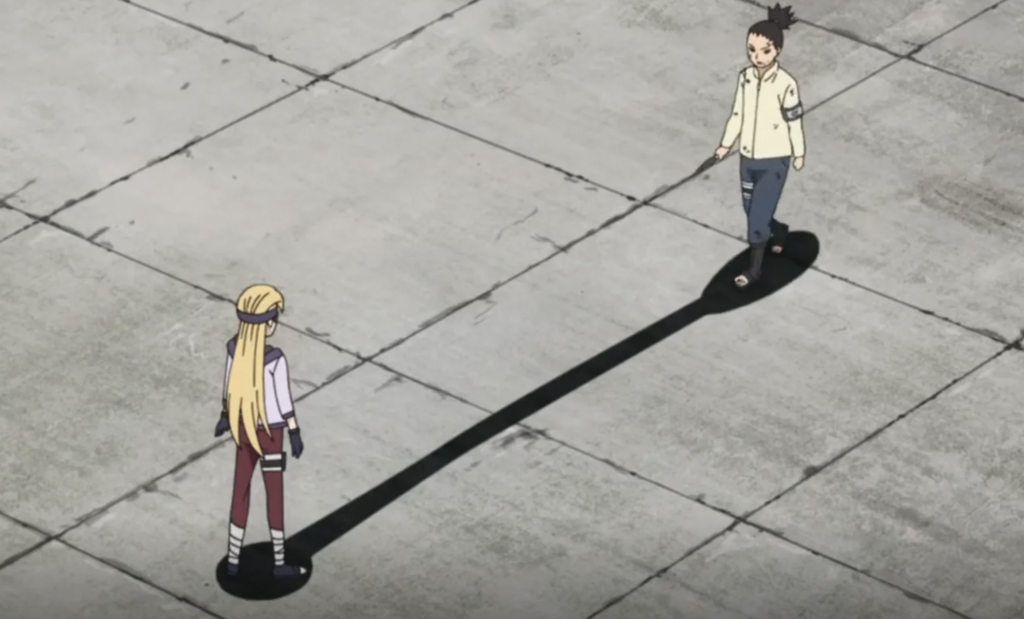 Shikadai Nara traps Yodo using the Shadow Possession Jutsu in Boruto: Naruto Next Generations. [Credit: Pierrot]
The criticism is not that Shikadai’s techniques are objectively weak. Quite the opposite. The problem is that they can feel too straightforward for a clan whose entire appeal came from making straightforward powers complicated. Shikamaru’s Shadow Imitation had an obvious weakness: it needed to reach the enemy’s shadow. That weakness became the foundation for his creativity. Shikaku’s techniques likewise demonstrated how the clan could coordinate shadow manipulation with allies and battlefield positioning. The Nara were dangerous because they understood exactly how to squeeze value out of a restrictive ability.
Shikadai’s newer techniques increasingly remove that tension. A shadow that spreads across an area, crawls toward targets, divides into multiple lines, and forms a cage is undeniably useful. But it also risks turning the Nara’s signature ability into something that resembles a generic battlefield-control power. The old Shadow Imitation Technique made readers wonder how Shikamaru would win. The newer techniques can make the reader wonder only what shape Shikadai’s shadow will take next.
The Nara clan’s greatest strength was never raw destructive power. It was ingenuity. Their techniques had narrow functions, so their users had to think around those functions. When the shadow itself can become the net, the cage, and the battlefield-wide restraint, some of the intellectual friction that made the original technique special naturally disappears. That does not mean Shikadai is a bad successor to Shikamaru. In fact, his abilities show how far the clan’s secret techniques can evolve.
But evolution and improvement are not always the same thing. Shikamaru made a shadow frightening because he could turn a limitation into an advantage. Shikaku demonstrated how that philosophy could work within a larger team. And that is why the criticism of Boruto‘s Shadow Jutsu has some bite. The series did not make the Nara shadows less powerful. It may have made them less clever. And for a technique whose entire charm was making intelligence look like a superpower, that is one heck of a downgrade.
What do you think? Tell us in the comments!
Naruto, Naruto: Shippuden, and Boruto: Naruto Next Generations are available on Crunchyroll.





















 Bengali (BD) ·
  English (US) ·