.png)
 1 week ago
7
Article content
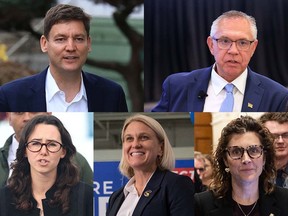
The Business Council of B.C. sent a survey on economic policies to the leaders of B.C.’s five major political parties. Here are their questions and the parties’ responses:

THIS CONTENT IS RESERVED FOR SUBSCRIBERS ONLY
Subscribe now to read the latest news in your city and across Canada.
- Unlimited online access to articles from across Canada with one account.
- Get exclusive access to the Vancouver Sun ePaper, an electronic replica of the print edition that you can share, download and comment on.
- Enjoy insights and behind-the-scenes analysis from our award-winning journalists.
- Support local journalists and the next generation of journalists.
- Daily puzzles including the New York Times Crossword.
SUBSCRIBE TO UNLOCK MORE ARTICLES
Subscribe now to read the latest news in your city and across Canada.
- Unlimited online access to articles from across Canada with one account.
- Get exclusive access to the Vancouver Sun ePaper, an electronic replica of the print edition that you can share, download and comment on.
- Enjoy insights and behind-the-scenes analysis from our award-winning journalists.
- Support local journalists and the next generation of journalists.
- Daily puzzles including the New York Times Crossword.
REGISTER / SIGN IN TO UNLOCK MORE ARTICLES
Create an account or sign in to continue with your reading experience.
- Access articles from across Canada with one account.
- Share your thoughts and join the conversation in the comments.
- Enjoy additional articles per month.
- Get email updates from your favourite authors.
THIS ARTICLE IS FREE TO READ REGISTER TO UNLOCK.
Create an account or sign in to continue with your reading experience.
- Access articles from across Canada with one account
- Share your thoughts and join the conversation in the comments
- Enjoy additional articles per month
- Get email updates from your favourite authors
Sign In or Create an Account
or
Article content

Article content
Article content
1. Cost of living
Article content
Question: The rising cost of living is a significant concern for many households in B.C. If elected, how will your government make life more affordable for British Columbians? Will you cut taxes as part of your strategy?
Article content
Advertisement 1
Article content
NDP: We will cut prices at the pump by cracking down on gouging and suspending part of the fuel tax — saving drivers up to $20 on every tank. We will also cap grocery store profit margins on the essentials, and extend the ICBC rate freeze for three more years.
Article content
By signing up you consent to receive the above newsletter from Postmedia Network Inc.
Article content
Conservatives: Families are working harder but falling further behind. That must change. We will cut provincial income taxes by $1,000 for working British Columbians, saving couples up to $2,000 annually. We will tackle rising costs, improve housing affordability and build an economy where hard work gets people ahead again.
Article content
Greens: We’ll secure 26,000 affordable homes a year, stop rent hikes between tenants, restart the $10-a-day child care expansion as we work to make it universal by 2031, and open 20 public grocery stores. We won’t raise taxes on working people. Instead, we will ensure fortunes over $50 million pay their fair share.
Article content
CentreBC: CentreBC will decrease the first income tax bracket from 5.6 per cent back to 5.06 per cent, about $540 a year for a two-income family. The renter’s tax credit rises to $600. Hydro increases capped at inflation, ICBC rates frozen until spring 2027, and 20,000 new $10-a-day child care spaces.
Article content
Advertisement 2
Article content
OneBC: OneBC would make life more affordable by immediately cutting personal and corporate income tax rates by 25 per cent, then reducing PST by two percentage points within four years. These reductions would leave more money with families and businesses, encourage investment and help British Columbians retain more of their earnings.
Article content
Article content
Article content
Article content
2. Spending and deficits
Article content
Question: Several credit agencies have outlined concerns around B.C.’s planned large deficits for the next three years. Would your government commit to balancing the budget? And if so, how and when?
Article content
NDP: Every province has budgeted deficits this year in the face of U.S. President Trump’s trade war. B.C. remains in a strong fiscal position compared with other provinces. We’ll bring down the deficit responsibly over time, but we’re not going to make people pay the price with health care cuts and higher costs.
Article content
Conservatives: British Columbians deserve a government that lives within its means and respects taxpayers. We will establish a credible path to balanced budgets, eliminate waste and restore accountability. We can’t simply cut our way to prosperity. Growing our economy and attracting investment are essential to restoring fiscal stability.
Advertisement 1
Advertisement 2
Article content
Greens: We’ll raise new revenue through modernized resource royalties, updated industrial water rates and the Fair Share Act on extreme wealth. That funds our commitments without adding to B.C.’s deficit. First-year Fair Share revenue will pay down debt, while investing in housing and health care now to save future costs.
Article content
CentreBC: A first-year Balanced Budget and Spending Control Act: the deficit falls every year after our first budget and the budget balances by 2034-35, with front-line services protected. Ministers lose part of their pay if the target is missed. An independent budget officer reports to the legislature.
Article content
OneBC: OneBC would restore balanced-budget requirements by repealing Section 2.2 of the Balanced Budget and Ministerial Accountability Act, which permits deficit forecasts through 2028-29. Every ministry would undergo an expenditure review to eliminate waste, improve efficiency and ensure government plans spending within anticipated revenues rather than relying on deficits.
Article content
Article content

Article content
3. Business confidence, investment and wage growth
Article content
Question: For several years, Canada has struggled with weak business investment and productivity growth. What will your government do to attract more business investment so people can have more opportunities and earn more?
Article content
Advertisement 3
Article content
NDP: Working with Prime Minister Carney, the B.C. NDP secured the largest private-sector investment in Canadian history with LNG Canada Phase 2. We’re working to deliver 41 major projects — more than any other province — representing over $130 billion in business investment that will create more than 50,000 jobs.
Article content
Conservatives: Our province has extraordinary potential, yet investment and opportunity are slipping away. We will eliminate PST on business investment, cut red tape and accelerate approvals. Doubling LNG production by 2032 will attract investment and create good-paying jobs. British Columbians deserve an economy that rewards ambition and hard work.
Article content
Greens: We’ll launch a green industrial strategy to grow manufacturing, clean technology and value-added resource processing in B.C., creating good-paying union jobs. We’ll help cleantech companies scale here, offer a single front door for business approvals, restore strategic freight and passenger rail corridors, and open government contracts to local companies.
Article content
CentreBC: B.C. regulatory requirements cut 25 per cent by 2030. Permitting decisions on 10 new mines by 2030. Routine permits decided within 90 days or deemed approved. The harvest back to 40 million cubic metres. The manufacturing jobs fund doubled to $60 million a year.
Article content
Advertisement 4
Article content
OneBC: OneBC would lower corporate taxes, streamline business regulation and establish clear, predictable rules and firm permitting timelines. We would review taxes that discourage investment in technology and equipment, work directly with companies that left B.C. to remove barriers to returning and attract private investment without preferential subsidies.
Article content
Article content

Article content
4. Crime and safety
Article content
Question: Many businesses across the province are reporting concerns around employee/customer safety. What policy changes would you prioritize to improve public safety in B.C. communities?
Article content
NDP: We will double funding for programs that tackle repeat violent offenders and chronic property crime, helping to reduce street disorder. Like the B.C. extortion task force, we will strike a B.C. retail theft task force to co-ordinate police efforts across the province to target those who target businesses.
Article content
Conservatives: No one should feel unsafe walking downtown, going to work or running a business. We will strengthen enforcement, address repeat violent offenders, end open hard drug use and prioritize treatment and recovery. Restoring public safety is a fundamental responsibility of government, and we will take that responsibility seriously.
Advertisement 2
Advertisement 3
Article content
Greens: Safer communities start with tackling the root causes of crime. We’ll raise disability and social assistance rates, expand affordable housing and fund supervised consumption sites. And we’ll support police by expanding mobile crisis teams, so officers aren’t the only response for people facing mental-health and substance-use challenges.
Article content
CentreBC: Five hundred more police officers, 100 a year for five years, and 60 more Crown prosecutors to ensure cases aren’t lost to delay. Repeat-and-violent-offender programs doubled. Safety and outreach teams in 20 downtowns by 2028. Treatment within 14 days and 1,000 supportive homes with on-site care.
Article content
OneBC: OneBC would prioritize public safety through provincewide prosecution policies for repeat offenders, pursuing detention where justified, enforcing bail conditions, and expanding police and Crown capacity. We would target organized retail theft, use civil forfeiture against criminal profits, and strengthen corrections programs to reduce reoffending and protect businesses.
Article content
Article content

Article content
5. Reconciliation
Article content
Question: Finding a path forward on reconciliation that is practical, affordable and in the interests of all British Columbians is a significant challenge. How do you propose to find a durable path forward on reconciliation that creates prosperity for all British Columbians?
Article content
Advertisement 5
Article content
NDP: We’re working with First Nations to create jobs and opportunities so that we can build a stronger future for everyone in B.C. And it’s working: We have more major projects on the way than any other province — and all with First Nations support. Repealing DRIPA would create economic uncertainty.
Article content
Conservatives: Reconciliation must be built on respect, trust and meaningful opportunity. We will repeal DRIPA and pursue practical partnerships that provide certainty while supporting First Nations ownership, revenue sharing and participation in development. Our goal is lasting reconciliation that strengthens communities and creates shared prosperity for generations to come.
Article content
Greens: Moving forward requires that we enact and maintain the opportunities that DRIPA provides. This means establishing accountable and transparent government-to-government relationships that bring the people of B.C. along with us. It also involves supporting and improving the modern treaty process, expanding opportunities for other constructive agreements and advancing Indigenous jurisdiction over child-welfare.
Article content
Advertisement 6
Article content
CentreBC: Negotiated modern treaties. We respect the UN Declaration as a guide, replace DRIPA with a treaty-based law, put $30 million a year into faster talks, report yearly on progress and protect private land. First Nations as owners, not just partners: $3 billion in equity loan guarantees with revenue sharing.
Article content
OneBC: Reconciliation requires truth, and listening to hard truths will make all sides unhappy. Productive negotiations require good faith from both sides; as such we will require bands to commit to fee simple ownership of properties and integration into the general economy.
Article content
Article content

Article content
6. Health care
Article content
Question: B.C.’s health care system faces issues like long wait times, emergency room closures and a shortage of family doctors. What changes would you implement to improve health care?
Article content
NDP: We have a plan to strengthen public, universal health care for everyone. We’ll train over 1,000 more doctors and nurses, cut wait times for tests and surgeries, and expand seniors care. And we’ll pay for it by asking the top 3.88 per cent of income-earners to pay a little more.
Advertisement 3
Advertisement 4
Article content
Conservatives: No family should fear an emergency room closure or wait endlessly for care. We will protect universal public health care, support front-line professionals and invest in keeping services available, including our announced $50-million rural health care fund. Our focus will be simple: patients first, timely care and better outcomes.
Article content
Greens: We’ll establish community health centres in every riding, increase safe nurse-to-patient ratios, and support the expansion of long-term care homes to decrease wait times, provide the right supports at the right time, and ease understaffing in emergency rooms. We’ll review the health authority structure to reduce bureaucracy and improve localized decision-making.
Article content
CentreBC: A family doctor or nurse practitioner team for everyone by the end of 2031. 15,000 more surgeries a year, five more MRI machines. An ER Accountability Act to halve unplanned closures. A public dashboard of waits by hospital, with CEO pay tied to targets. Public, not private.
Article content
OneBC: OneBC would encourage privately funded health care alongside a fully funded public system, expand independent surgical and diagnostic services, and increase medical-school and residency capacity. We would also restore Riverview’s long-term psychiatric function, or build a successor facility, to provide specialized care and ease pressure on hospitals and emergency departments.
Article content
Advertisement 7
Article content
Article content

Article content
7. Legacy
Article content
Question: At the end of your time as premier, what would you most want your government to be remembered for?
Article content
NDP: We’ve built a stronger B.C. by putting people first. We haven’t always got it right, but you know we’re on your side. That’s why we’re strengthening health care, lowering the cost of gas and groceries, and freezing insurance rates. We’ll keep fighting for you and your family.
Article content
Conservatives: I want British Columbians to feel hopeful about their future again. To afford a home, access health care and find opportunity close to home. I would hope to be remembered for listening, bringing people together, keeping our commitments and leaving this remarkable province stronger for the next generation.
Article content
Greens: A government that made life better for working people. One that strengthened regional economies across B.C., built permanently affordable homes at scale and made sure everyone could get health care. A government that protected the places we love and reformed our voting system so every vote truly counts.
Article content
CentreBC: That we did what we said. A family doctor for everyone who wanted one. Making life affordable. Homes built faster and a tax cut you could see on your first paycheque of 2027. A transparent government that published its results every quarter.
Article content
OneBC: OneBC would restore ethical government by speaking honestly to British Columbians, even when the truth is uncomfortable. Respect for voters begins with transparency, accountability and a willingness to tell people what they need to hear, not what is convenient.
Article content
Advertisement 4



















 Bengali (BD) ·
 English (US) ·